
European Union’s Digital Product Passport : All you need to Know

Digital Product Passport supports the EU’s goal of achieving a 55% reduction in CO₂ emissions by 2030 compared to 1990 levels.

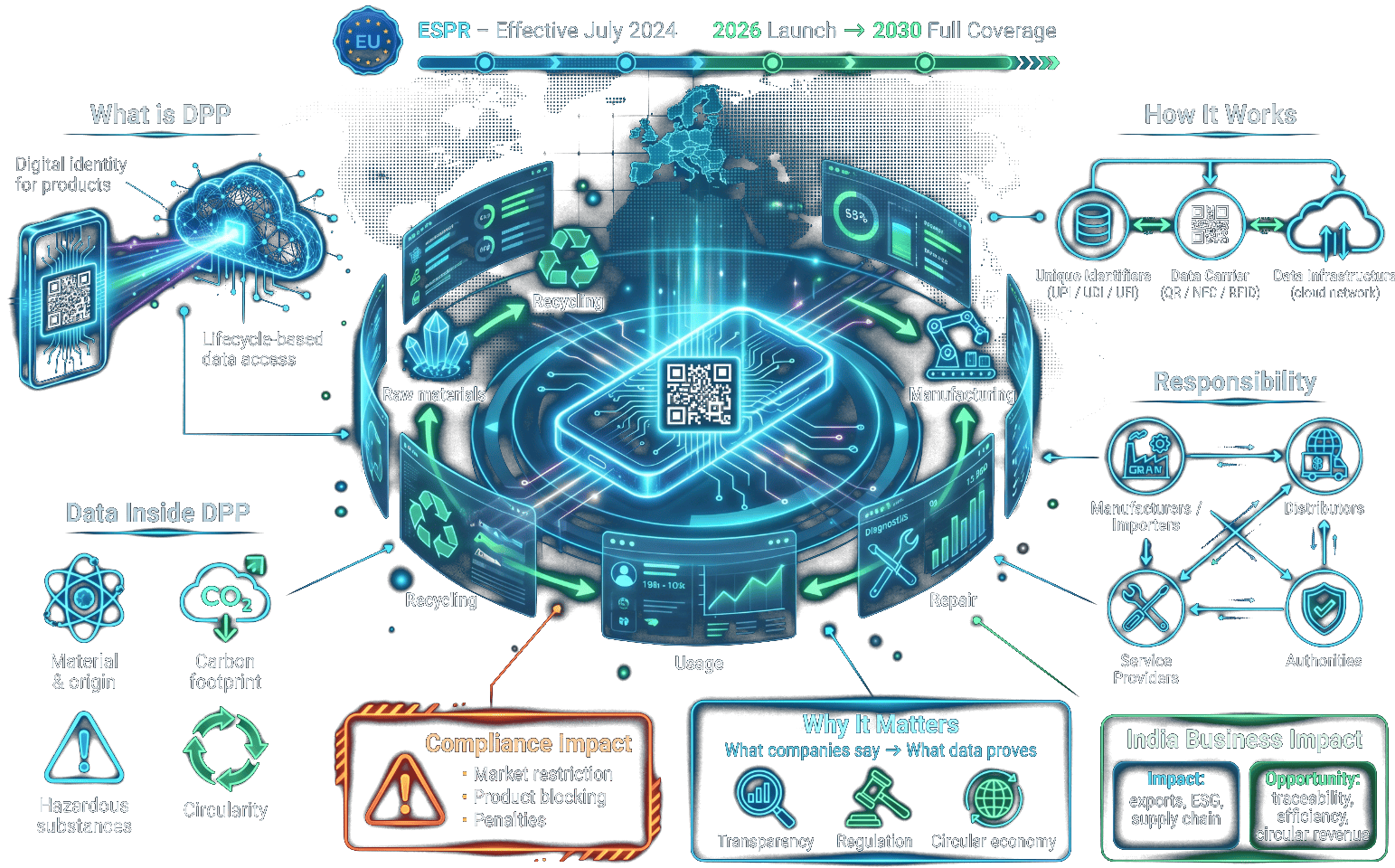
Under the Ecodesign for Sustainable Products Regulation (ESPR), effective July 2024, the Digital Product Passport (DPP) is transitioning from an ESG goal to a strict market access condition.

Starting on 2026 with batteries and industrial goods, the Digital Product Passport (DPP) will scale to cover all products sold in the EU by 2030.

What is the Digital Product Passport?

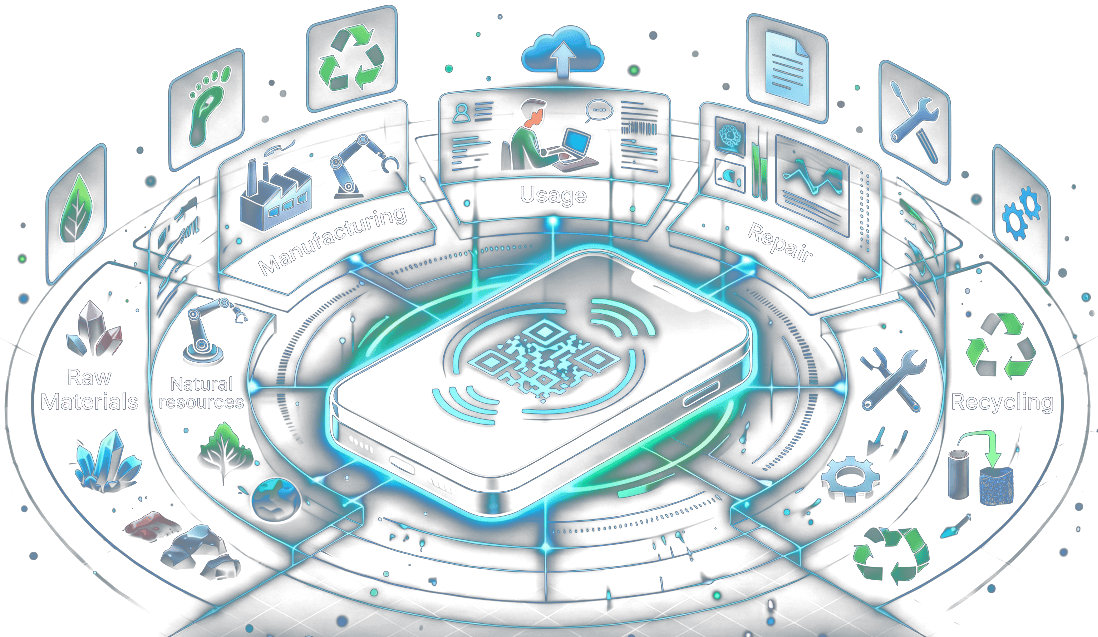
The Digital Product Passport (DPP) is essentially a digital identity for products. It is a structured, lifecycle-based record that captures critical information from raw materials to end-of-life and is linked to the product through a QR code, NFC tag, or RFID. This enables instant access to product-level data for consumers, regulators, and value chain partners.

What information does a DPP contain?

A DPP brings together data across the entire value chain, including :

  1. Material & Origin: Detailed material composition, recycled content, and the source of raw materials.
  2. Sustainability Metrics: Quantified data on carbon and environmental footprints, durability scores, and energy efficiency.
  3. Substances of Concern (SoC): Identification and location of hazardous substances that could hinder safe use or high-quality recycling.
  4. Circular Pathways: Information of disassembly, repair, maintenance, and end-of-life.
Regulatory Backbone: Ecodesign for Sustainable Products Regulation (ESPR)

Digital Product Passport (DPP) is established under the Ecodesign for Sustainable Products Regulation (ESPR) came into effect on 18th July 2024 to make sustainable products the EU standard. Its core requirements are:

  1. Standardized Data Formats: All information must be in open, non-proprietary, and machine-readable formats to ensure universal interoperability across digital systems.
  2. Lifecycle Traceability: The regulation mandates tracking a product’s entire journey, from raw material extraction and manufacturing through to repair, reuse, and end-of-life.
  3. Digital Accessibility: Data must be instantly accessible via physical data carriers such as QR codes, RFID, or NFC tags present on the product or packaging.
  4. Verification & Empowerment: This digital link enables consumers to make informed, sustainable choices while allowing authorities to perform automatic electronic checks on product authenticity and compliance.
Who is responsible?

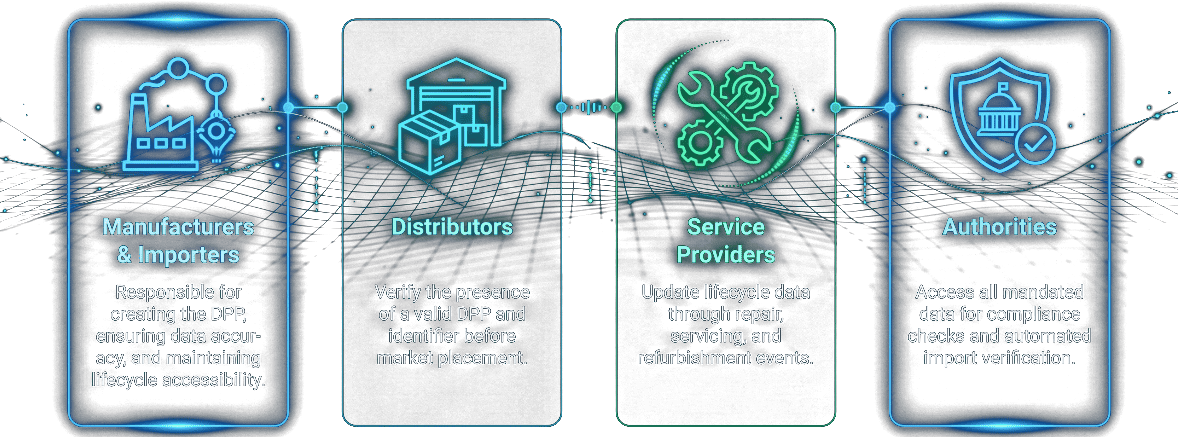
Responsibility lies with the entity placing the product on the EU market:

  1. Manufacturers and Importers: They hold primary responsibility for creating the DPP, ensuring data accuracy, and maintaining accessibility for the product’s expected lifetime.
  2. Distributors: They must verify that a valid DPP and its identifier are present before making a product available on the market.
  3. Service Providers: Authorized third parties (independent repairers, refurbishers) update the lifecycle log with repair and maintenance events.
How does the DPP system work?

The DPP is not a single central database but a distributed network of interoperable platforms. The DPP ecosystem includes:

  1. Unique Identifiers:
      1. Unique Product Identifier (UPI): Links the specific product to its passport.
      2. Unique Operator Identifier (UOI): Identifies the businesses in the value chain.
      3. Unique Facility Identifier (UFI): Identifies manufacturing or treatment sites.
  2. Data Carrier Layer : QR codes / NFC / RFID connect physical products to digital records.
  3. Data Infrastructure : Interoperable systems store and share data across the value chain, often aligned with global standards
Significance of Digital Product Passport :
  1. Enabling Circularity and Resource Efficiency: The DPP facilitates repair, reuse, remanufacturing, and high-quality recycling by providing detailed technical data and disassembly instructions to relevant actors.
  2. Empowering Informed Choices: It provides unprecedented transparency, allowing consumers and businesses to access verified sustainability metrics to make environmentally conscious purchasing decisions.
  3. Strengthening Regulatory Compliance: It acts as a robust mechanism for market surveillance and customs authorities to verify product authenticity and compliance with EU standards.
  4. Driving Global Competitiveness: The DPP encourages industrial innovation and the development of new circular business models, such as product-as-a-service, rewarding companies that prioritise sustainable design.
  5. Ensuring Data Integrity and Trust: By shifting the market from “what companies say” to “what data proves,” the DPP uses structured information to combat greenwashing and fraud.
  6. Improving Traceability: It provides a verifiable life story of a product, tracking materials and components from raw extraction to end-of-life to ensure accountability across the entire supply chain.
  7. Supporting Environmental Goals: The system is a cornerstone for achieving the European Green Deal, specifically aiming to reduce waste and facilitate a 55% reduction in CO2 emissions by 2030.
Implementation Timeline : 

The EU Central Registry goes live and the first legal mandates for priority groups (like Iron & Steel) are adopted. It serves as a “stress-test” year for infrastructure, though most physical passports won’t be mandatory until 18 months later.

Industrial/EV Battery Passports become mandatory in February 2027. Textiles and apparel begin their 18-month compliance countdown.

DPP requirements take full effect for textiles, tyres, and furniture as transition periods for these sectors conclude.

The DPP becomes a default condition for EU market entry, covering electronics and nearly all remaining regulated goods.

Systems evolve from basic compliance to deep lifecycle tracking, utilizing data for automated circular economy planning.

Summary
Article Name
European Union's Digital Product Passport : All you need to Know
Description
The Digital Product Passport (DPP) is an EU-mandated system under Ecodesign for Sustainable Products Regulation (ESPR) that gives products a digital identity, enabling full lifecycle traceability and making verified data essential for market access from 2026 onward.
Author
Publisher Name
GreenSutra
Publisher Logo
Shravani Mestry
Shravani Mestry