Carbon Footprint Solutions for

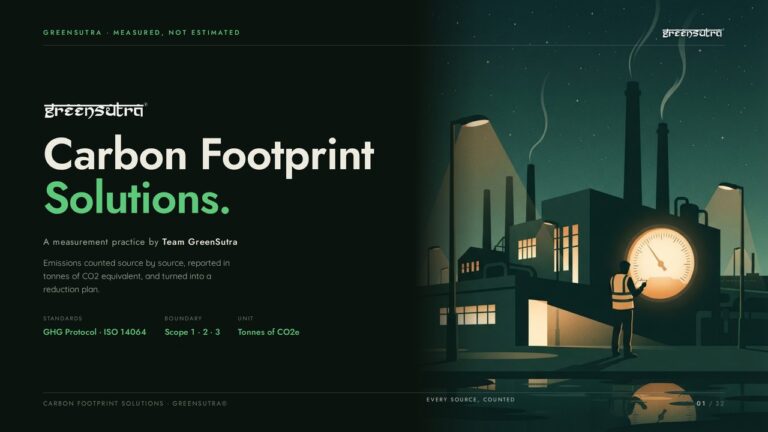
Carbon footprint assessment, reduction planning and offsets for companies, organisations, products and supply chains. GHG inventories aligned to the GHG Protocol, GRI and ISO 14064, led by a certified specialist and delivered across India as one accountable engagement.

Assess · Reduce · OffsetGHG Protocol · GRI · ISO 14064Pan India delivery
On recordFootprint per person a year4 to 25 tCO2Footprint per employee a year4 to 25 tCO2StandardsGHG Protocol · GRI · ISO 14064BoundaryScope 1 · 2 · 3BaseMumbai · Pan IndiaLeadCertified specialist
01

From climate pledges to measured action

For companies, organisations, products, supply chains and communities.

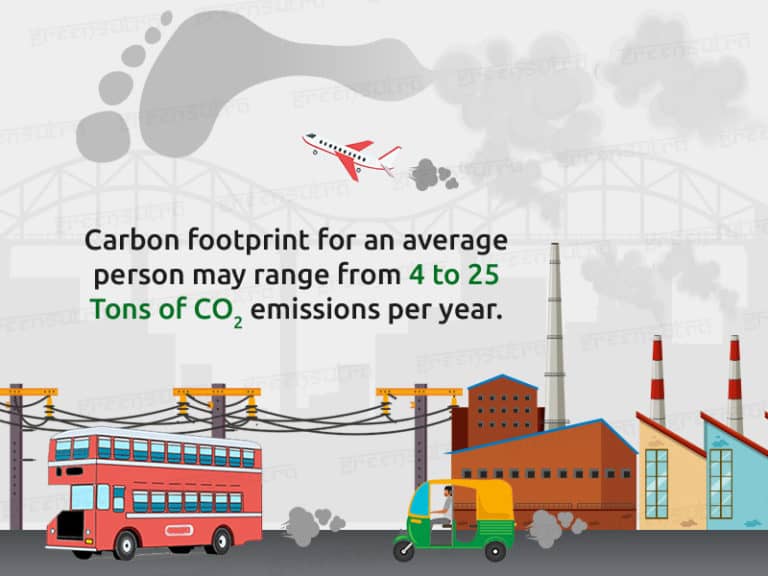
The carbon footprint of an average person may range from 4 to 25 tonnes of CO2 a year, and companies emit a comparable 4 to 25 tonnes of CO2 annually for every employee. Carbon Footprint Solutions by GreenSutra bridge the gap between climate pledges and real world action, turning environmental impact into measured, reportable progress.

Each assessment quantifies greenhouse gas emissions to globally accepted standards, the GHG Protocol, the Global Reporting Initiative (GRI) and ISO 14064, across Scope 1, Scope 2 and Scope 3. Data driven insights, customised to industry specific goals by a certified specialist, demonstrate progress that stakeholders can trust.

The engagement runs end to end: emission sources identified, the inventory estimated, reduction plans put to work and any remaining emissions offset through afforestation, verified carbon credits and renewable energy projects. Management systems support tracking, reporting and continuous improvement across operations.

Based in Mumbai and recognised among the leading climate solution firms in India, GreenSutra serves growing enterprises and established organisations across the country.

An Indian origin sustainability practice operating since 2016, GreenSutra brings the same accounting discipline to organisations worldwide.

02

How a carbon footprint engagement runs

From emission sources to a verified inventory and an actionable reduction plan.
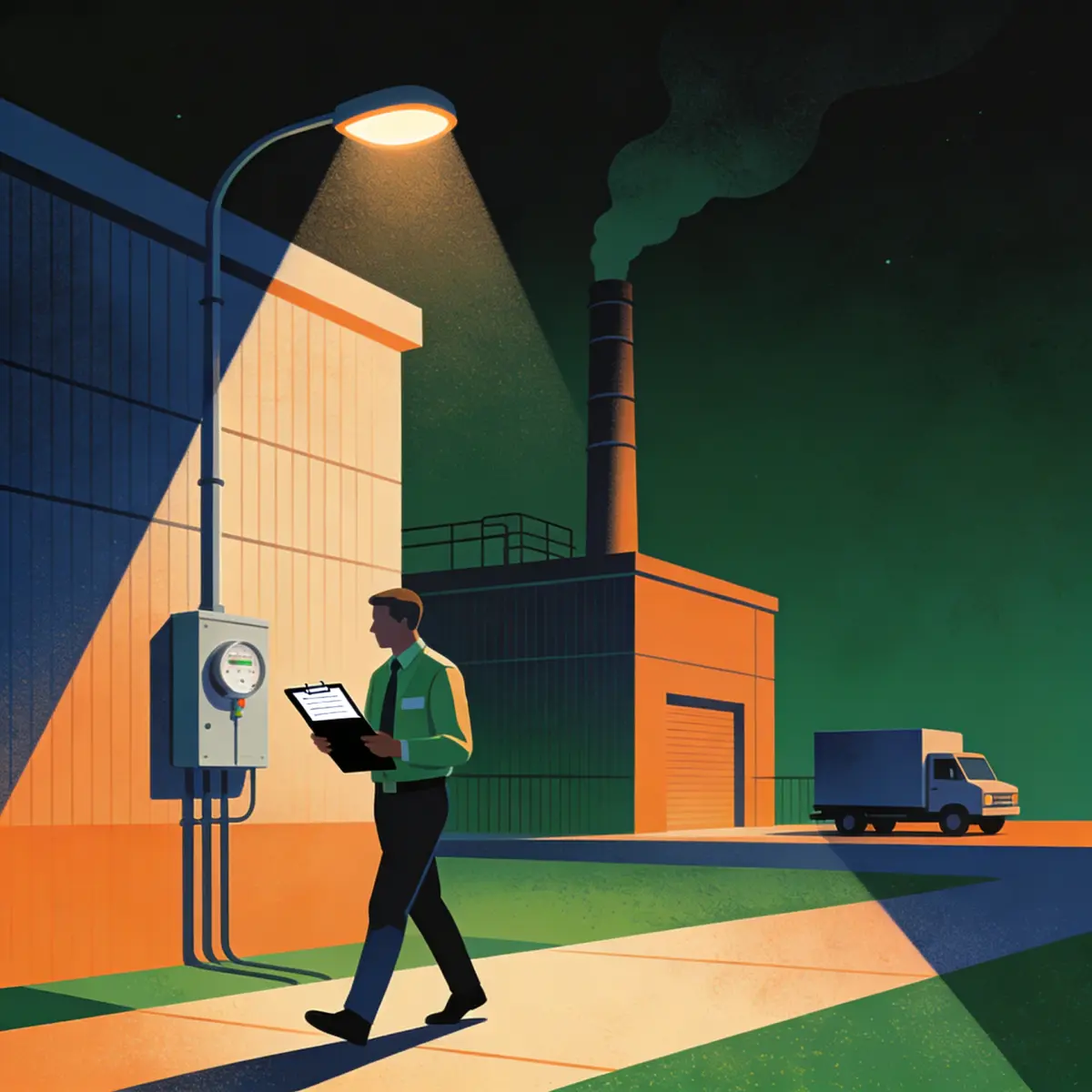
Auditor identifying emission sources on a facility walk down beside an electricity meter, a smokestack and a delivery truck at night
01

Identify emissions sources

Activities and habits contributing to the carbon footprint pinpointed across operations, uncovering inefficiencies and environmental impact.
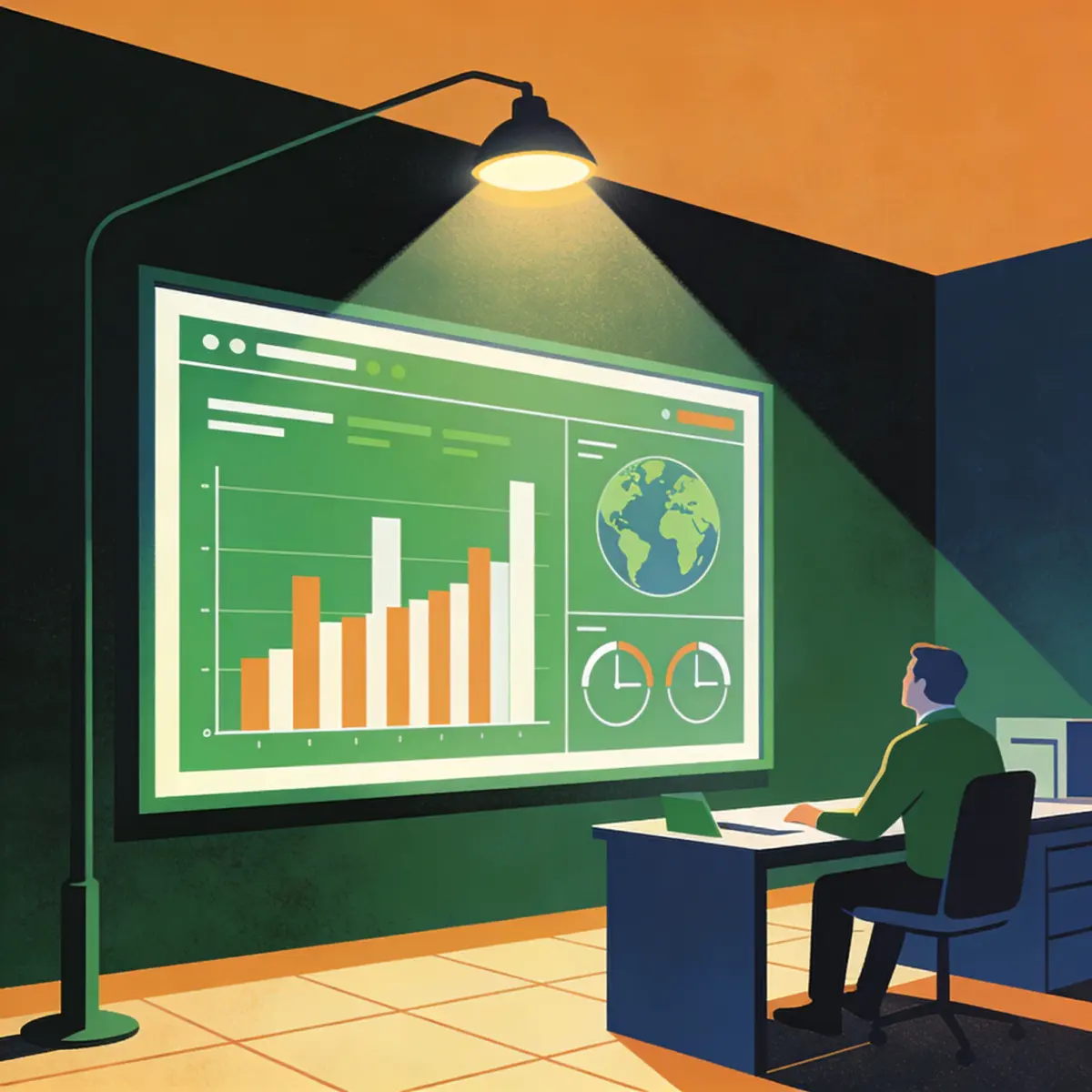
Analyst estimating greenhouse gas emissions on a wall dashboard with charts, gauges and a globe
02

Estimate GHG emissions

Greenhouse gas emissions quantified to globally recognised standards, the GHG Protocol, GRI and ISO 14064, for precise and transparent measurement across Scope 1, 2 and 3.
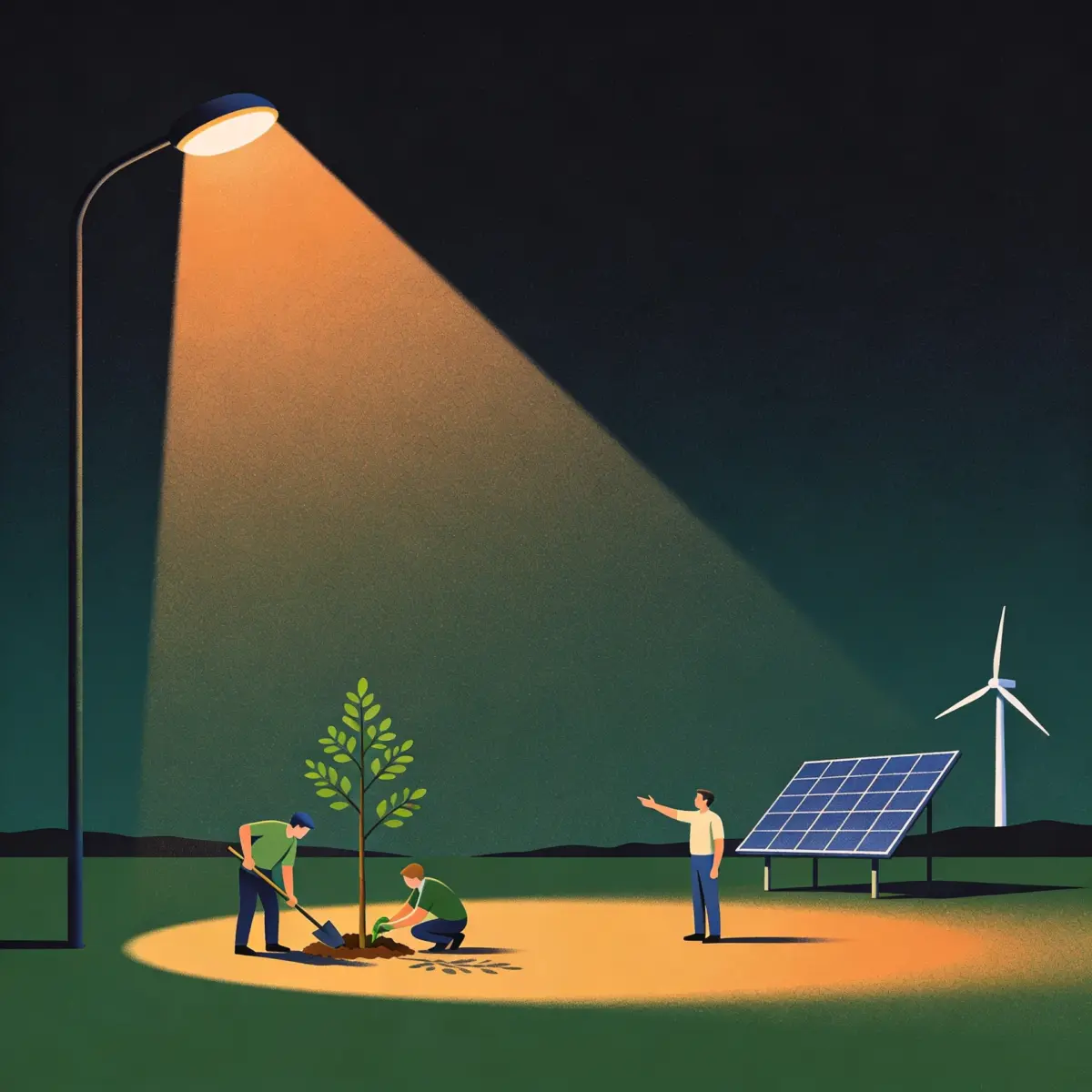
Team planting a tree beside a solar panel and a wind turbine as carbon reduction measures
03

Curate actionable recommendations

Tailored reduction recommendations built on best practice methodologies, then offsets for remaining emissions through afforestation, verified carbon credits and renewable energy projects.

03

The three scopes of a GHG inventory

Every emission source maps to Scope 1, 2 or 3 before it is measured.

1122334455667788AABBCCDDEEFFGREENHOUSE GASESCO2CH4N2OHFCsPFCsSF6NF3GHG INVENTORYΣ tCO2eAD × EF05STANDARDSGHG PROTOCOLGRIISO 14064SCOPE 1 · 2 · 3SCOPE 1 · DIRECTOWNED SOURCES ON SITESTATIONARY · MOBILE · PROCESS · FUGITIVE01SCOPE 2 · ENERGYPURCHASED ENERGY USED ON SITEELECTRICITY · STEAM · HEAT · COOLING02SCOPE 3 · UPSTREAMSUPPLIER SIDEGOODS · TRANSPORTTRAVEL · WASTE03SCOPE 3 · DOWNSTREAMCUSTOMER SIDEDISTRIBUTION · USEEND OF LIFE04DRAWINGSCOPES OF EMISSIONSSTATUSDWG NOGS·CFP·02REVCDATE2026·06
01Scope 1 · Direct

Emissions from owned and controlled sources: fuel burned on site, company vehicles, process and fugitive releases.

02Scope 2 · Energy

Indirect emissions from purchased electricity, steam, heat and cooling, generated off site and consumed on site.

03Scope 3 · Upstream

Value chain emissions on the supplier side: purchased goods and services, inbound transport, business travel and waste.

04Scope 3 · Downstream

Value chain emissions on the customer side: distribution, use of sold products and end of life treatment.

05One inventory

All scopes consolidate into a single GHG inventory in tonnes of CO2 equivalent, following the GHG Protocol, GRI and ISO 14064.

Scope 1 covers owned sources, Scope 2 covers purchased energy and Scope 3 covers the value chain on both the supplier and the customer side. The inventory totals all three in tonnes of CO2 equivalent and becomes the baseline that reduction and offset planning build on.

04

Benefits of carbon footprint solutions

What a measured, verified GHG inventory earns an organisation.

B·01

Trust and credibility

Estimation and verification of the carbon footprint demonstrate transparency and accountability to stakeholders, generating trust, a distinct market advantage and further business opportunities.

B·02

Sustainability

A carbon footprint or GHG inventory is the common first step towards sustainable practices, and lets organisations track and quantify the impact of those practices over time.

B·03

Compliance

With international accords in place and governments acting to mitigate global warming, carbon footprint and GHG inventory solutions see increasing adoption.

B·04

Additional revenue

Verified footprints reduce risk for buyers and investors, facilitating investment, and carbon credits can generate revenue once an organisation becomes carbon negative.

Stakeholders shaking hands above a sustainability report marked with a leaf emblem and a rising trend line
Credibility that compounds into opportunity
05

Why GreenSutra leads carbon footprint consulting

The reasons behind the reputation.

R·01

Certified expertise

Each assessment led by a certified specialist with proven experience across climate solutions.

R·02

Data driven insights

Assessments turn measured data into actionable insight for sustainable transformation.

R·03

Industry specific scope

Every engagement customised to the goals, operations and sector of the organisation.

R·04

End to end delivery

Assessment, reduction planning, offsets and reporting handled as one accountable engagement.

R·05

Mumbai based, pan India

Top tier environmental services delivered to clients across India from a Mumbai base.

06

Estimated for every footprint

The same accounting discipline, tuned to each kind of boundary.

01

Companies and industries

Operational footprints across facilities, fleets and purchased energy, with inventories that stand up to scrutiny.

02

Organisations and institutions

Offices, campuses and institutions measure, reduce and report emissions across their operations.

03

Products and supply chains

Footprints traced through materials, manufacturing and logistics across the value chain.

04

Communities and individuals

From households to communities, footprints estimated and reduction paths made practical.

07

Carbon footprint questions, answered

Q·01What are carbon footprint solutions?
Carbon footprint solutions identify emission sources, estimate greenhouse gas emissions to recognised standards and curate reduction and offset recommendations, giving organisations a measured path to their sustainability goals.
Q·02What standards do carbon footprint assessments follow?
Assessments adhere to globally recognised standards including the Greenhouse Gas (GHG) Protocol, the Global Reporting Initiative (GRI) and ISO 14064, covering Scope 1, Scope 2 and Scope 3 emissions.
Q·03What is meant by GHG inventory?
A greenhouse gas inventory is a cumulative annual calculation of the greenhouse gases emitted directly and indirectly to support human activities, listing emission sources and the associated emissions that can be quantified.
Q·04What are the sources of greenhouse gases?
All activities, natural and human, that release emissions into the atmosphere act as sources of greenhouse gases. In recent decades the majority of greenhouse gases released into the atmosphere have come from human activities.
Q·05What are carbon credits?
A carbon credit is a permit that allows a company, business or government to emit a set amount of greenhouse gases expressed as carbon dioxide. One carbon credit usually permits emission of a mass equivalent to one metric tonne of CO2.
Q·06Who needs a carbon footprint assessment?
Carbon footprint and GHG inventory estimation serves individuals, companies, organisations, products, supply chains and communities, whether a growing enterprise or an established organisation.
Q·07What happens after the footprint is measured?
Tailored reduction recommendations come first. Once reduction strategies are in place, remaining emissions can be offset through initiatives like afforestation, verified carbon credits and renewable energy projects, with management systems supporting tracking, reporting and continuous improvement.
08

Asked at the Expert's Corner

Real climate and carbon questions from the community, answered by the GreenSutra team.

Q · 01Green Building12,398 views

What are the characteristics of a Green Building?

All green buildings are governed by a set of principles and rules that favor saving energy and resources. Majority of the characteristics of all…

Answered by Team GreenSutra®
Q · 02Global Warming6,104 views

What is a Carbon Footprint?

Carbon Footprint is a physical measure of products and by-products contributing to greenhouse gases produced directly or indirectly by human activities. It is called…

Answered by Team GreenSutra®
Q · 03Global Warming6,039 views

What should be the carbon footprint of an average adult?

There is no standard Carbon Footprint for an average adult. This is mainly because, Carbon Footprint heavily depends on the individuals habits and lifestyle…

Answered by Team GreenSutra®
Q · 04Global Warming5,892 views

What is meant by Urban Heat Island Effect ?

Now-a-days urban heat island effect can be observed in all densely populated urban areas. Urban or Metropolitan area that are significantly higher temperatures compared…

Answered by Team GreenSutra®
Q · 05Global Warming5,585 views

What is the greenhouse effect?

[siteorigin_widget class="SiteOrigin_Widget_Image_Widget"][/siteorigin_widget] The Greenhouse Effect is one of the naturally occurring process that makes Earth a comfortable place to live. Greenhouse Effect primarily takes…

Answered by Team GreenSutra®
Q · 06Global Warming5,553 views

What is Global Warming Potential?

All the greenhouse gases differ from each other in three key aspects: Radiative Efficiency (Ability to absorb energy) At what wavelength does the gas…

Answered by Team GreenSutra®
Q · 07Global Warming5,537 views

Is there a difference between Climate Change and Global Warming ?

Yes, Climate Change and Global Warming are different phenomenon from each other even though they are interconnected to each other. Climate Change refers to…

Answered by Team GreenSutra®
Q · 08Global Warming5,457 views

What gases cause Global Warming?

Global Warming is getting global attention due the adverse effects it has on planet earth. Global warming has been greatly influenced by human activities…

Answered by Team GreenSutra®
09

Request a carbon footprint assessment

A short conversation about operations and boundaries turns into a tailored assessment plan and a clear path to reduction. Schedule a call directly or send a written brief.

01Schedule a call

Pick the service and a slot; a practitioner takes the call.

02Write to us
Contact Us
Carbon footprint assessed, reduced and offset across IndiaRequest a carbon footprint assessment
Summary
Carbon Footprint Solutions by Team GreenSutra
Article Name
Carbon Footprint Solutions by Team GreenSutra
Description
Carbon Footprint Solutions by Team GreenSutra include identification, evaluation and verification of environmental impacts, energy consumption and GHG emissions attributable to a product, package, facility and or organizations.
Author
Publisher Name
GreenSutra®
Publisher Logo