Plastic
Rigid, flexible, multi-layered and compostable plastic, recovered to recyclate and, under the 2026 amendment, fed back as recycled content.


End to end recycling solutions that turn segregated waste back into material. Stream-wise segregation, collection, processing and recovery across plastic, e-waste, paper, glass, metal and batteries, linked to the CPCB Extended Producer Responsibility certificates that discharge the obligation, delivered as one accountable engagement from Mumbai across India, so a waste stream closes the loop rather than reaching landfill.
Reviewed by Team GreenSutra · Updated 9 June 2026
For the corporates, producers, brand owners and communities who want recovery rather than disposal.
Recycling is the process of turning a waste stream back into material rather than burying it. It closes the loop that the waste hierarchy opens, taking the segregated dry stream of plastic, paper, glass, metal, electronics and batteries and recovering it into feedstock for new products, so the demand for virgin material, water and energy falls.
In India recycling is increasingly tied to compliance. The Central Pollution Control Board operates centralised Extended Producer Responsibility portals on which registered recyclers generate the tradable EPR certificates that producers, importers and brand owners buy to meet their obligations. Plastic packaging carries category-wise recycling targets and, under the 2026 amendment, a recycled-content mandate; e-waste a recycling target that rises to 80 percent; and batteries a collection target for each battery type, plus a recycled-content requirement from FY 2027-28.
Recycling Solutions by GreenSutra run the full chain. Material is segregated by stream, collected and channelised through registered recyclers, processed and recovered, and the recovery is linked to the EPR certificate that discharges the obligation. For plastic event waste, the Live Recycling Studio turns the material into lifestyle products on site, so the recovery is visible.
Based in Mumbai and delivering across India, GreenSutra carries recycling end to end, for a corporate campus, a producer meeting its EPR target, a community closing its dry-waste loop or an event recovering its plastic, so a waste stream becomes a recovered material rather than a landfilled cost.
The material streams a recycling programme recovers, and how each closes the loop.
Each material recycles differently and reaches a different destination, and plastic, electronics and batteries carry their own CPCB rules and EPR targets. Keeping the streams clean and separate at source is what preserves their recyclable value, and the first step of every engagement is to identify which materials a stream actually carries. The streams below act as the guide rather than every recyclable item.
Rigid, flexible, multi-layered and compostable plastic, recovered to recyclate and, under the 2026 amendment, fed back as recycled content.
End-of-life electrical and electronic equipment, recovered into gold, copper, aluminium and iron by registered recyclers.
Office paper, newsprint, cardboard and packaging board, pulped and recovered into new paper and board.
Bottles and container glass, recovered as cullet that melts at lower energy than virgin batch.
Ferrous and non-ferrous metal, aluminium cans and steel, recovered at a fraction of the energy of primary production.
Portable, automotive, industrial and electric-vehicle batteries, recovered for their materials by registered recyclers.
A precise check of which materials a stream carries is the first step of every recycling review.
From stream segregation to recovered material and a linked certificate.
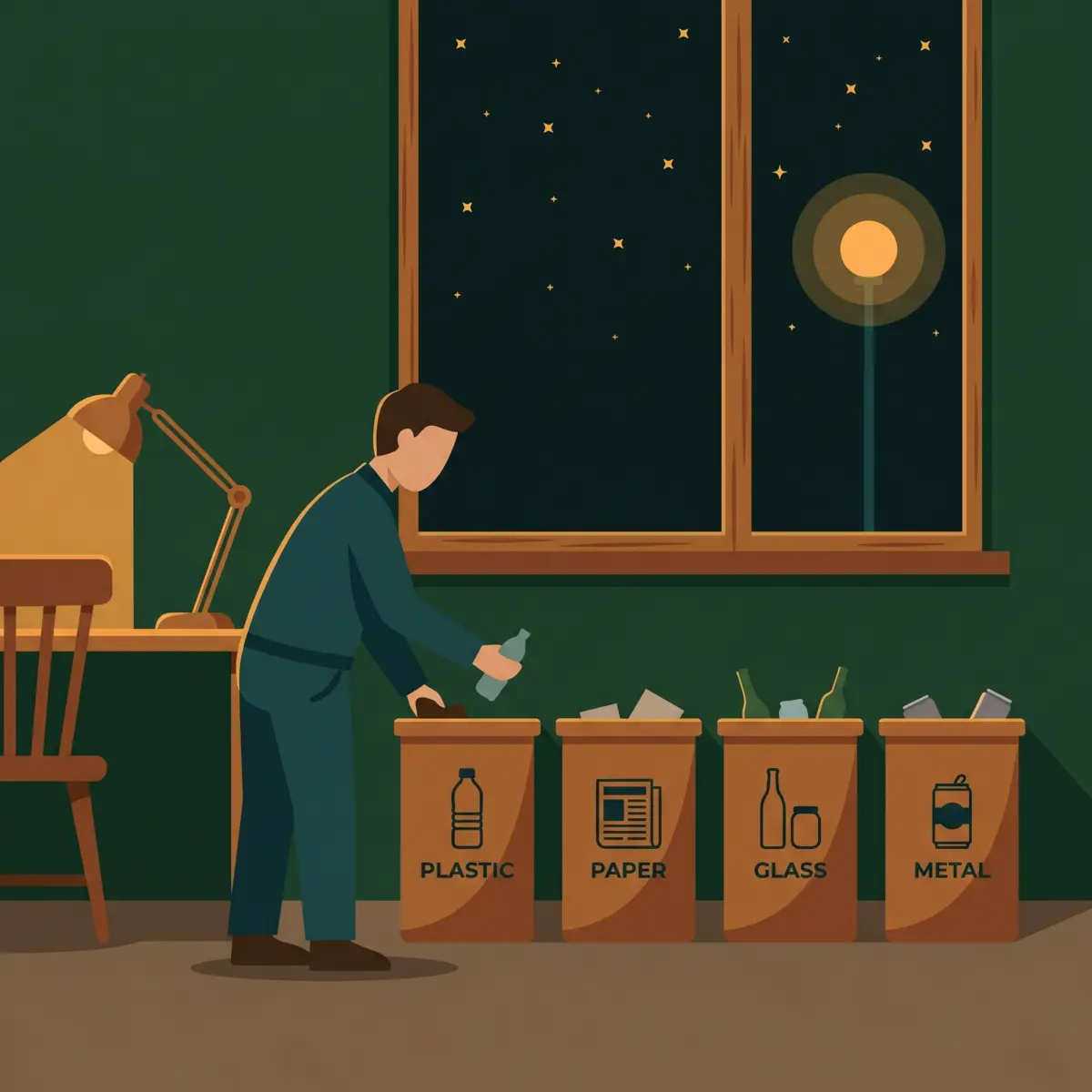
The dry recyclable stream sorted by material into plastic, paper, glass, metal, electronics and batteries, kept clean and dry so the recyclable value is preserved.
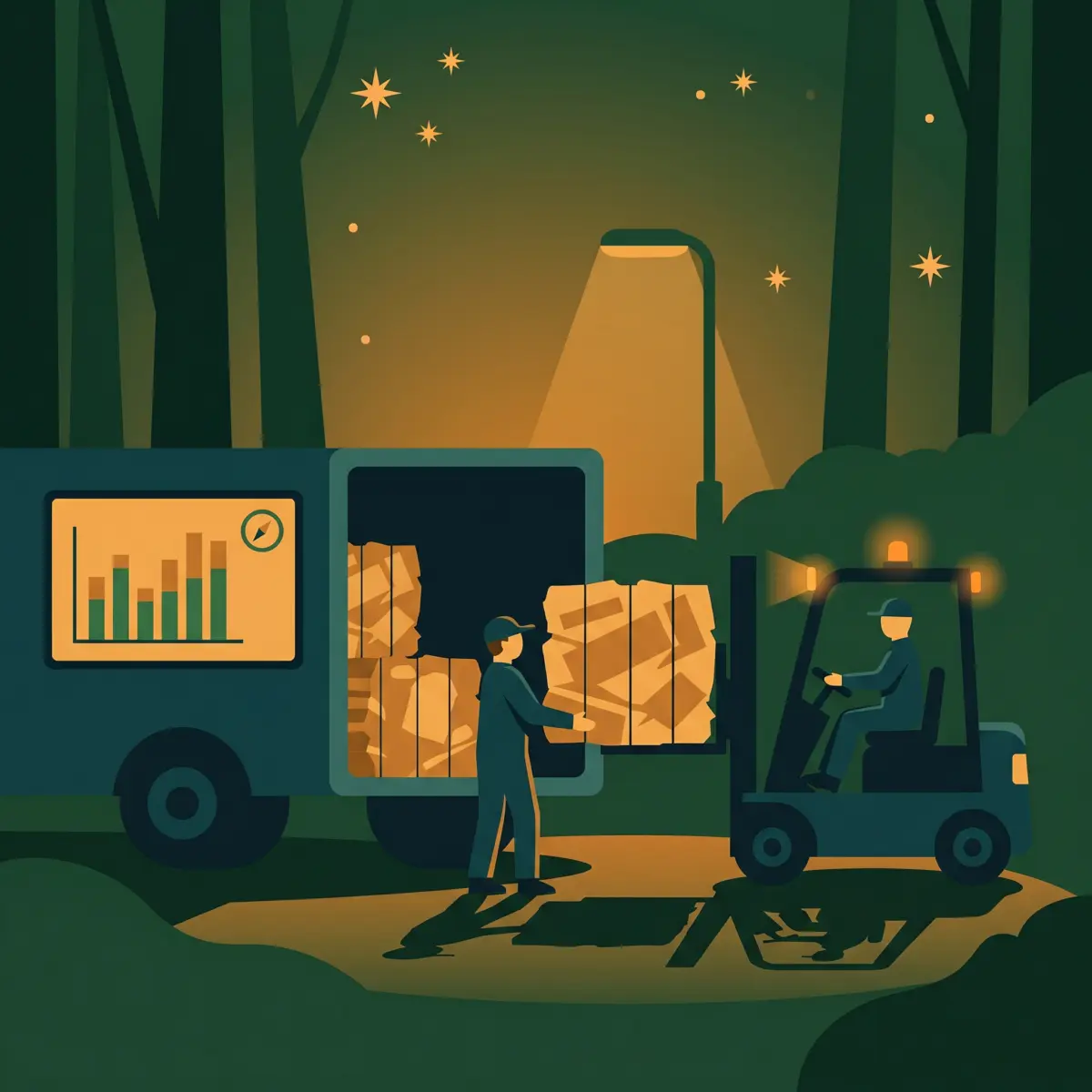
Each material collected and channelised through registered recyclers and producer responsibility organisations, with electronics and batteries routed to their authorised channels.

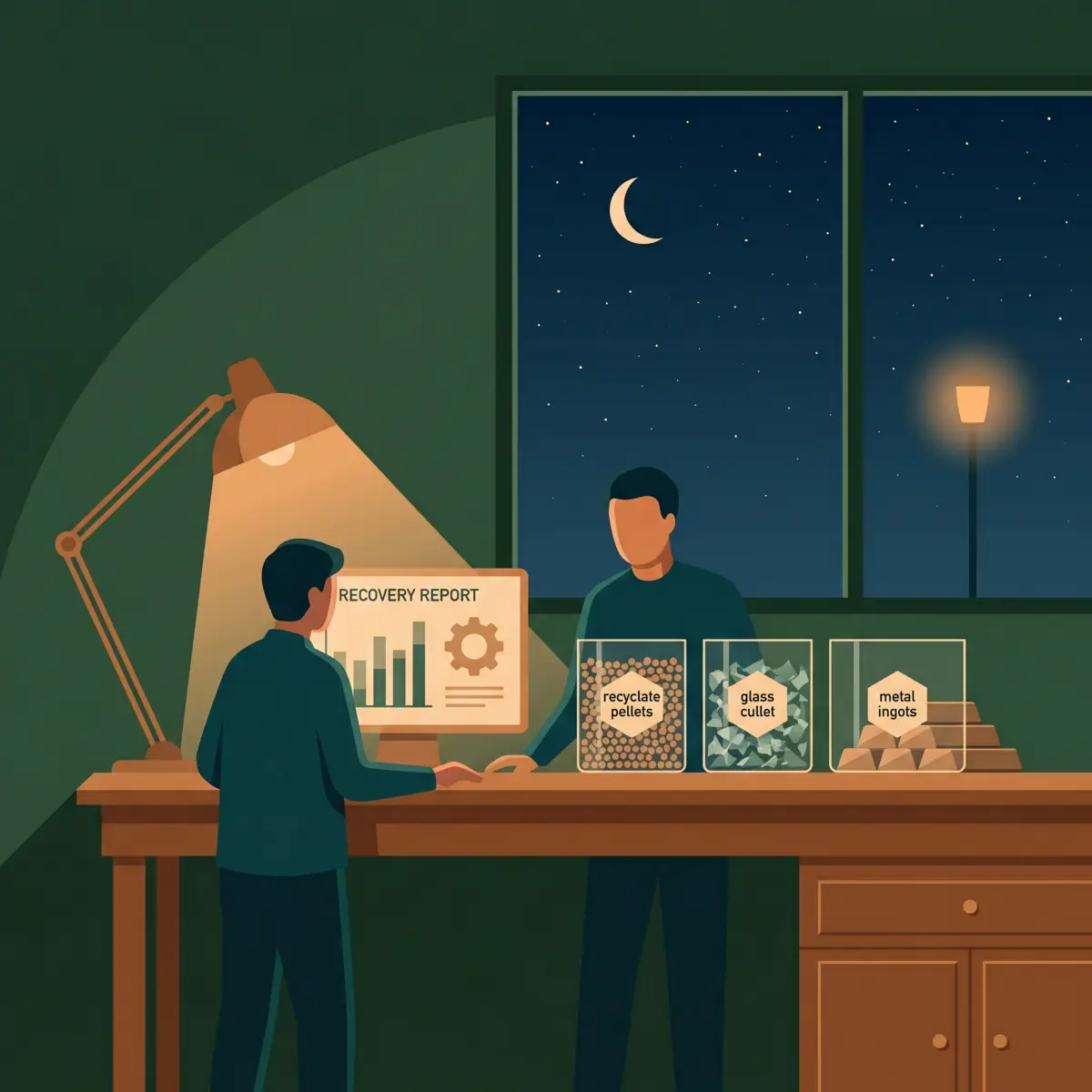
Material processed and recovered into feedstock, plastic to recyclate, paper to pulp, glass to cullet, metal to ingot and electronics to recovered gold, copper, aluminium and iron.

The recovery linked to the CPCB EPR certificate that the registered recycler generates against the recycling achieved, which the producer buys to discharge the stream-wise obligation.

Recovered material fed back as feedstock or recycled content, and the recovery measured and reported, so the loop closes and the diversion and certificates are evidenced.
Segregated material is collected, processed and recovered into feedstock, and the recovery is linked to the EPR certificate that discharges the obligation.
The dry recyclable stream is sorted by material into plastic, paper, glass, metal, electronics and batteries at source.
Each material is collected and channelised through registered recyclers and producer responsibility organisations.
Material is processed and recovered into feedstock: recyclate, pulp, cullet, ingot and recovered metals.
The registered recycler generates a tradable EPR certificate against the recycling achieved, on the CPCB portal.
Recovered material is fed back as feedstock or recycled content, closing the loop, and the recovery is reported.
A segregated material stream is collected and channelised through registered recyclers, processed and recovered into feedstock that reduces the demand for virgin material, water and energy, and the recovery is linked to the EPR certificate the recycler generates on the CPCB portal. Recovered material is fed back as feedstock or recycled content, closing the loop.
Two answers map a material onto a recycling route and the EPR link.
Two questions place a stream against the recycling routes: the materials it carries and the role of the business. The result states how each material is recovered and whether an EPR certificate is involved.
Two questions decide a recycling route: the materials a stream carries, from plastic, electronics and batteries to paper, glass and metal, and the role of the business in the stream. A recycling review turns both into a recovery route and, where regulated, the EPR certificate link.
Request a recycling review →No recyclable material is present, so the recycling routes place no obligation on the stream today. A short review confirms the position and finds any recoverable material worth segregating before it reaches landfill.
The stream carries paper, glass or metal, which recover cleanly into pulp, cullet and ingot at a fraction of the energy of virgin production. These materials are kept clean and dry, segregated by type and routed to recyclers, and while they do not carry their own EPR portal, recovering them closes the loop and feeds a Business Responsibility and Sustainability Report or an ESG disclosure.
The stream carries plastic, electronics or batteries, which recover through registered recyclers under their own CPCB rules and EPR targets: category-wise targets and recycled content for plastic packaging, a recycling target rising to 80 percent for e-waste, and collection targets for batteries that reach 70 to 90 percent depending on the type. The recovery is linked to the EPR certificate the recycler generates.
As a producer or brand owner the business places the product on the market, and the stream carries paper, glass or metal, which recover cleanly into feedstock. These do not carry a CPCB EPR portal of their own, but recovering them reduces the virgin material footprint and feeds the waste and material indicators of a BRSR or ESG disclosure.
As a producer or brand owner placing plastic, electronics or batteries on the market, the business carries an Extended Producer Responsibility obligation that is discharged by recovering the material through registered recyclers and sourcing the EPR certificates they generate on the CPCB portal. Recycling and EPR run together: the recovery is the act, and the certificate is the evidence that discharges the target.
A recycler recovers the material and, where registered on the relevant CPCB portal, generates the tradable EPR certificates that producers buy to meet their obligations. Registration is mandatory before any certificate generation, certificates are generated against the recycling achieved, and the recovered material is fed back as feedstock or recycled content to close the loop.
The materials or the role are still being mapped, so the recycling route and any EPR link cannot be fixed from the answers alone. A recycling review identifies the materials the stream carries, the role of the business and the route each material takes to recovery and, where regulated, to its EPR certificate.
A waste generator recovers material through registered recyclers and, while it does not hold the producer EPR obligation, a clean recovery record feeds its own waste and material reporting.
A producer or brand owner links the recovery to the EPR certificate that discharges its stream-wise obligation on the CPCB portal.
A recycler registers on the relevant CPCB portal and is the entity that generates the EPR certificates producers buy.
Confirming the role in the stream is part of the recycling review.
Answers stay in this browser. Nothing is sent until a contact channel is opened.
A material runs from segregation through processing to recovery and a linked certificate, and a recycling review turns that path into a closed loop with the evidence to report it.
WhatsAppRequest a recycling review →What clean segregation, recovery and a linked certificate earns a business.
A waste stream recovered into feedstock rather than landfilled, so material stays in use and the demand for virgin material falls.
Recovery linked to the CPCB EPR certificate, so a producer obligation for plastic, e-waste or batteries is met through recycling that actually happens.
Clean dry materials recovered at a fraction of the energy of virgin production, so a disposal cost becomes a recovered value.
Recovery and certificates documented, so the diversion can be reported to a BRSR or ESG disclosure and a CPCB return.
The reasons behind the reputation.
A working relationship with registered recyclers across plastic, e-waste, battery, paper, glass and metal, so each material reaches a real recovery route.
Recovery linked to the CPCB EPR certificate, so recycling discharges the producer obligation rather than running beside it.
Segregation designed to keep each material clean and separate, since contamination is what destroys recyclable value.
Segregation, collection, processing, recovery and certificate linkage handled as one accountable engagement, or any stage standalone.
Recycling delivered for corporates, producers, communities and events across India from a Mumbai base.
The same segregate, process and recover discipline, tuned to the stream and the role.
Dry-waste recovery programmes that keep paper, plastic, glass and metal clean and route them to recyclers.
Producers, importers and brand owners linking recovery to the EPR certificates that discharge their plastic, e-waste and battery obligations.
Residential communities closing the dry-waste loop with material-wise segregation and recycler routing.
Events recovering plastic on site through the Live Recycling Studio, turning event waste into lifestyle products.
Every material carries the same segregate, process and recover discipline, tuned to the stream and the role of the business.
WhatsAppRequest a recycling review →Every figure on this page traces to one of these references.
Real recycling, waste and EPR questions from the community, answered by the GreenSutra team.
What is ESRS?
The European Sustainability Reporting Standards are referred to as ESRS. Organizations that are subject to the Corporate Sustainbility Reporting Directive have to report according…
Answered by the GreenSutra team→Q · 02Sustainability4,317 viewsWhat is CSRD?
CSRD stands for Corporate Sustainability Reporting Directive. Corporate Sustainability Reporting Directive is a regulatory framework introduced by the the European Union aimed at improving…
Answered by the GreenSutra team→Q · 03Sustainability4,038 viewsWhat is GCP?
GCP stands for the Green Credit Programme, India's market based mechanism for rewarding voluntary environmental action. Notified under the Green Credit Rules, 2023, it…
Answered by the GreenSutra team→Q · 04Sustainability3,414 viewsWhen do the Ecomark Rules 2024 come in force?
The Ministry of Environment, Forest and Climate Change (MoEFCC) on 26th Septmeber 2024 notified the Ecomark Rules 2024. The Ecomark Rules, 2024 came into force from 1st October 2024, the…
Answered by the GreenSutra team→Q · 05Sustainability3,410 viewsWhat are the conditions for grant of Ecomark?
Under the Ecomark Rules 2024, an Ecomark may be granted to product(s) if they adhere or meet specific sustainability or environmental criterias such as…
Answered by the GreenSutra team→Q · 06Sustainability3,407 viewsWhat is Greenwashing?
Greenwashing may be referred to as any practice or tatic that misrepresents, misleads, conceals by means of exaggerating, making vague, false or unsubstaintiated environmental…
Answered by the GreenSutra team→Q · 07Sustainability3,394 viewsWhat is the procedure for grant of Ecomark?
The Ecomark Rules 2024 have come into force from 1st October 2024. Products that meet specific sustainability or environmental criteras may be granted an…
Answered by the GreenSutra team→Q · 08CBAM3,138 viewsWhat is the Taxonomy for Green Steel for India?
The Taxonomy for Green Steel for India is a prerequisite for the development of a coherent policy for the decarbonising the steel sector of…
Answered by the GreenSutra team→A short conversation about the materials in the stream and the role of the business turns into a tailored recovery and certificate plan. Schedule a call directly or send a written brief.
Pick the service and a slot; a practitioner takes the call.
Reading on recycling, waste and circularity from the GreenSutra journal.
Maintained by GreenSutra · Last reviewed June 2026