Global warming
GWP · CO2eGreenhouse gas emissions across the life cycle, the single category a product carbon footprint to ISO 14067 reports on its own.
Carbon footprint category

LCA GUIDE
A life cycle assessment (LCA) measures the environmental impact of a product, process or service across its whole life, from raw material extraction through manufacture, distribution, use and end of life. This guide sets out what an LCA is, the four ISO 14040 phases, how a full LCA differs from a product carbon footprint and an Environmental Product Declaration, the five boundary approaches from cradle to grave to well to wheel, the impact categories, EN 15804 for construction products, the software and databases an assessment uses, and the questions practitioners and buyers ask most.
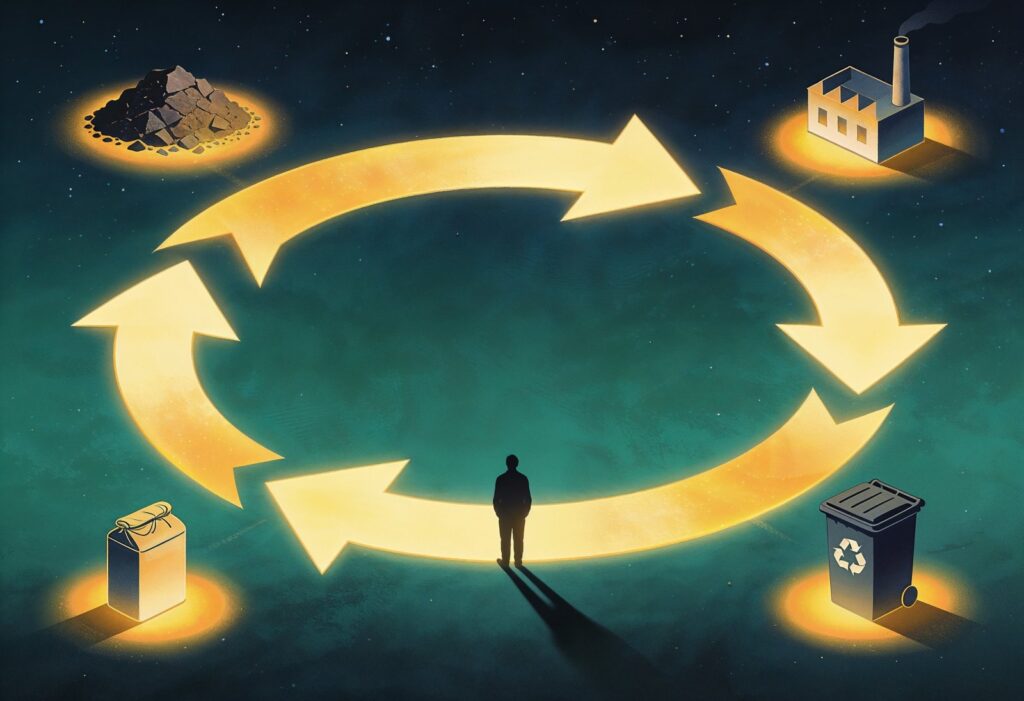
A life cycle assessment follows the ISO 14040 and ISO 14044 framework across four phases, covering several environmental impact categories rather than carbon alone.
A life cycle assessment, or LCA, evaluates the environmental impact of a product, process or service across its entire life cycle, from raw material extraction and processing through manufacture, distribution, use and final disposal.
A life cycle assessment, or LCA, evaluates the environmental impact of a product, process or service across its entire life cycle, from raw material extraction and processing through manufacture, distribution, use and final disposal. Unlike a single number, a life cycle assessment looks at many impact categories at once, so the result shows not only the carbon footprint but also the demands placed on water, land and finite resources.
Every assessment follows the globally recognised ISO 14040 principles and the ISO 14044 requirements, adopted in India as IS/ISO 14040 and IS/ISO 14044. The study moves through four phases: goal and scope definition, life cycle inventory, life cycle impact assessment and interpretation. Where a verified output is needed, the study extends to a product carbon footprint under ISO 14067 or an Environmental Product Declaration under ISO 14025.
The same modelled life cycle produces three deliverables, depending on what a buyer, a tender or a regulation asks for. A product carbon footprint to ISO 14067 sits inside the wider assessment, so a design choice that lowers carbon but raises water use stays visible rather than hidden.
The value of a life cycle assessment is the evidence it produces. That evidence supports four kinds of decision:
The lean overview and the conversion path sit on the life cycle assessment page; this guide holds the detail.
A life cycle assessment moves through four ISO 14040 phases, goal and scope definition, life cycle inventory, life cycle impact assessment and interpretation, run in order yet iterative, since interpretation can send the study back to refine the goal, the inventory or the boundary.
ISO 14044 adds the reporting requirements, and a critical review where a public comparative assertion is made. Reporting is an ISO 14044 requirement, not an official fifth phase.
The system boundary set during goal and scope decides which life cycle stages a study covers: cradle to grave is the full life cycle, while cradle to gate stops at the factory gate, and three further approaches cover circular, single-stage and fuel cases.
How far the assessed life cycle reaches depends on the system boundary fixed during goal and scope definition. The two most common approaches sit at the ends of the same axis:
Toggle the two below; three further approaches, cradle to cradle, gate to gate and well to wheel, are set out in the table that follows.
Three further approaches set the boundary differently: cradle to cradle, a circular variant where end of life material feeds new production rather than disposal; gate to gate, a single process step inside the life cycle; and well to wheel, applied to fuels and energy, combining well to tank and tank to wheel.
A one-page branded checklist sets out the six LCA scoping steps: set the goal and audience, define the functional unit, set the system boundary, choose the impact categories, plan the data sources, and decide the output needed.
The checklist PDF is attached to the confirmation email sent on submit, and the team is notified.
A full life cycle impact assessment converts the inventory into environmental impact across several categories at once, so the result covers more than carbon alone and trade offs between impacts stay visible.
A carbon footprint addresses one category, global warming potential; a full life cycle assessment evaluates several together. The cards below name representative impact categories assessed during the impact assessment phase.
Greenhouse gas emissions across the life cycle, the single category a product carbon footprint to ISO 14067 reports on its own.
Carbon footprint categoryThe contribution of emissions to the acidification of soil and water, one of the categories a full assessment characterises alongside carbon.
Multi categoryNutrient enrichment of water bodies driven by nitrogen and phosphorus releases across the product system.
Multi categoryThe demand placed on water resources across the life cycle, a category a carbon-only view misses entirely.
Multi categoryThe use of finite mineral and fossil resources, ranking the materials and stages that draw down scarce reserves.
Multi categoryThe contribution of releases to stratospheric ozone depletion, characterised together with the other categories from the same inventory.
Multi categoryA product carbon footprint to ISO 14067 sits inside this wider assessment, so a design choice that lowers carbon but raises water use stays visible rather than hidden.
A life cycle assessment produces three deliverables from the same modelled life cycle, a full multi-category LCA to ISO 14040 and 14044, an Environmental Product Declaration to ISO 14025, and a product carbon footprint to ISO 14067, each mapping onto a distinct standard so a request for one is rarely a request for another.
A life cycle assessment produces three deliverables from the same modelled life cycle, depending on what a buyer, a tender or a regulation asks for: a product carbon footprint to ISO 14067, an Environmental Product Declaration, or EPD, to ISO 14025, and a full multi-category life cycle assessment to ISO 14040 and 14044. A product carbon footprint to ISO 14067 sits inside the wider assessment, so a design choice that lowers carbon but raises water use stays visible rather than hidden:
| Aspect | Carbon footprint | Life cycle assessment |
|---|---|---|
| Impact categories covered | One category, global warming potential. | Several together, such as acidification, eutrophication, water use and resource depletion. |
| Standard | Carbon footprint to ISO 14067. | ISO 14040 and ISO 14044. |
| What it answers | Greenhouse gas emissions in a single impact category. | Environmental impact across the whole life cycle, with category trade offs made visible. |
The three outputs map onto distinct standards, so a request for one is rarely a request for another. The layered family runs from the broadest study to the single climate indicator:
| Output | Governing standard | What it reports |
|---|---|---|
| Life cycle assessment | ISO 14040 and ISO 14044. | A full multi-impact study across the life cycle, covering several environmental categories together. |
| Environmental Product Declaration | ISO 14025 Type III declaration, with EN 15804 for construction products. | A third party verified declaration of life cycle results against Product Category Rules, so declarations from different programmes compare. |
| Product carbon footprint | ISO 14067. | A single climate indicator, the greenhouse gas emissions of a product across its life cycle. |
How far that life cycle reaches depends on the system boundary set during goal and scope. The five common approaches sit over the same life cycle stages:
| Approach | Stages included | Typical use |
|---|---|---|
| Cradle to grave | The full life cycle, from raw material extraction through manufacture, distribution and use to end of life disposal. | The default scope for a complete environmental picture. |
| Cradle to gate | From extraction to the factory gate, before distribution and use. | Captures the upfront, embodied impact of a material or product. |
| Cradle to cradle | A circular variant where end of life material feeds new production rather than disposal. | Assessing recovery and recycling back into the loop. |
| Gate to gate | A single process step inside the life cycle. | Analysing one stage of manufacture in detail, and building up larger assessments. |
| Well to wheel | For fuels and energy, combining well to tank and tank to wheel. | The extraction and processing of a fuel and its use in a vehicle. |
Industries served with life cycle assessment include manufacturing, construction and building materials, packaging, fast moving consumer goods, automotive, energy and electronics. These sectors apply it to four common ends:
The measured product footprint also feeds wider disclosure, supplying product level life cycle evidence for the BRSR reporting a listed entity files on the environmental performance of its products.
Common questions on LCA purpose, the ISO standards, the functional unit, EPDs and product carbon footprints, software and databases, EN 15804, cost and EU export, answered for practitioners and buyers.
A life cycle assessment quantifies the environmental impact of a product, process or service across its full life cycle, from raw material extraction through manufacture, distribution, use and end of life. The purpose is to find where impact concentrates, compare options on a like for like basis, and support reduction, eco-design and credible environmental claims.
GreenSutra delivers life cycle assessment services across India to the ISO 14040 and ISO 14044 framework, tailored to each product and sector. The engagement runs from goal and scope through inventory, impact assessment and interpretation, and extends to product carbon footprints and Environmental Product Declarations where a verified result is required.
A life cycle assessment turns environmental performance into measured evidence. It surfaces the hotspots that drive cost and impact, informs eco-design and material choices, prepares a business for procurement and disclosure requirements, and supports claims that customers, investors and regulators can verify.
An LCA consultant defines the goal, scope, functional unit and system boundary, compiles the life cycle inventory of inputs and outputs, runs the impact assessment across the relevant categories, and interprets the results into conclusions and recommendations, following the requirements of ISO 14044.
Manufacturing, construction and building materials, packaging and fast moving consumer goods, automotive, energy and electronics use life cycle assessment to quantify impact, publish Environmental Product Declarations, answer buyer questionnaires, and meet procurement and regulatory expectations.
ISO 14040 sets the principles and framework for life cycle assessment, and ISO 14044 sets the detailed requirements and guidelines for conducting one. Both were published in 2006 and adopted in India as IS/ISO 14040 and IS/ISO 14044. A defensible study cites both.
A functional unit is the quantified description of the function a product delivers, defined during goal and scope. Every input, output and impact is referenced to it, so that two products or designs can be compared on an equal basis rather than by mass or volume alone.
A carbon footprint measures greenhouse gas emissions in a single impact category, global warming potential. A full life cycle assessment evaluates several categories at once, such as acidification, eutrophication, water use and resource depletion, across the whole life cycle. A product carbon footprint to ISO 14067 sits inside that wider assessment.
An Environmental Product Declaration is a third party verified Type III declaration under ISO 14025 that reports a product's life cycle environmental performance against Product Category Rules. The underlying study follows ISO 14040 and 14044, and an EPD is widely used in construction and procurement.
A life cycle assessment draws on the bill of materials, energy and water use, process and transport data, and end of life handling for the product. Duration depends on the system boundary and on how much primary data is available, both fixed during goal and scope definition.
A product carbon footprint applies the life cycle framework of ISO 14040 and 14044 to quantify and report only the greenhouse gas emissions of a product across its life cycle. It is the carbon view of a life cycle assessment, and often the first deliverable a buyer or tender requests.
Life cycle assessment work is commonly built in dedicated software such as SimaPro, GaBi (now LCA for Experts) and the open source OpenLCA, drawing on recognised background life cycle inventory databases, of which the ecoinvent database is the most widely used. The software models the product system and applies impact assessment methods, while the database supplies background data for materials, energy and processes that primary plant data does not cover. The choice of tool and dataset is recorded in goal and scope so the study stays transparent and repeatable.
EN 15804 is the European standard that sets the core Product Category Rules for Type III Environmental Product Declarations of construction products, defining how life cycle data is calculated, reported, verified and presented so that EPDs from different programme operators are comparable. It complements ISO 14025, which governs how EPD programmes operate. The current version is EN 15804:2012+A2:2019, and the +A2 version has been the basis required for new construction product EPDs since October 2022. It applies where a construction product EPD is being prepared, rather than to every life cycle assessment.
The cost of a life cycle assessment depends on the scope rather than a single rate. The main drivers are the system boundary chosen, cradle to gate or the wider cradle to grave, the number of products and impact categories assessed, the availability of primary data against reliance on background datasets, and whether a verified output such as an Environmental Product Declaration or a product carbon footprint is needed. A focused study on one product with good primary data sits at one end, and a multi product, third party verified programme at the other. Goal and scope definition fixes these variables, which is why a tailored proposal follows a short briefing rather than a fixed price.
There is no single universal rule that a life cycle assessment or Environmental Product Declaration must accompany every product entering the EU. The requirement is sector and regulation specific. For construction products, the revised Construction Products Regulation, Regulation (EU) 2024/3110, phases in a legal duty to declare life cycle environmental performance calculated in accordance with EN 15804. Other regimes such as the Digital Product Passport under the Ecodesign for Sustainable Products Regulation add life cycle data duties for further product groups over time, and importers of goods covered by the Carbon Border Adjustment Mechanism report embedded emissions under a dedicated EU method rather than through an EPD. Outside such specific regimes an LCA or EPD is generally voluntary, although buyers increasingly expect one.
No. A life cycle assessment has four phases under ISO 14040: goal and scope definition, life cycle inventory, life cycle impact assessment and interpretation. Reporting is a requirement set out in ISO 14044, together with a critical review where a public comparative assertion is made, rather than an official fifth phase. The four phases are iterative, so interpretation can return the study to refine the goal, the inventory or the system boundary.
The standards cited in this guide come from the International Organization for Standardization and the GHG Protocol.
This guide sets out the method; an assessment applies it to a specific product. The life cycle assessment page sets out the engagement, and the LCA Discovery tool scopes the study against the ISO 14040 and 14044 framework. A short conversation about the product, the boundary and the output needed turns into a tailored LCA plan.
Reviewed June 2026