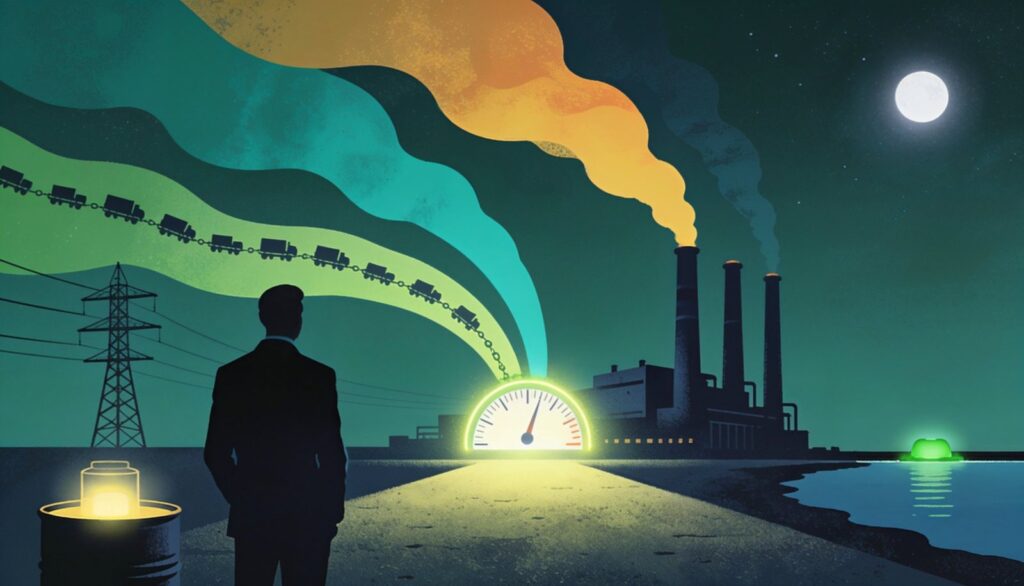
A carbon footprint is the total greenhouse gas emissions attributable to an organisation, product or activity, expressed in tonnes of carbon dioxide equivalent. This guide sets out what a carbon footprint is and how carbon accounting and the greenhouse gas inventory relate, the GHG Protocol, GRI and ISO 14064 standards, the three emission scopes, how a company footprint is calculated step by step, how carbon neutral differs from net zero, how an organisational footprint differs from a product footprint, and the questions organisations ask most.
Updated 2026 · about 8 min read · GHG Protocol · GRI · ISO 14064
A carbon footprint is quantified to globally accepted standards, the GHG Protocol, GRI and ISO 14064, across Scope 1, Scope 2 and Scope 3 emissions, and expressed in tonnes of carbon dioxide equivalent.
4 to 25 tCO2Footprint per person a year
4 to 25 tCO2Footprint per employee a year
GHG Protocol · GRI · ISO 14064Standards
Scope 1 · 2 · 3Boundary
Tonnes of CO2eHeadline unit
One tonne CO2Per carbon credit
02
What a carbon footprint is
A carbon footprint is the total greenhouse gas emissions attributable to an organisation, product or activity, expressed in tonnes of carbon dioxide equivalent, and measuring it turns environmental impact into reportable progress.
The carbon footprint is the headline figure in tonnes of CO2 equivalent; the greenhouse gas inventory is the itemised source by source ledger beneath it that the footprint is built from.
The carbon footprint of an average person may range from 4 to 25 tonnes of CO2 a year, and companies emit a comparable 4 to 25 tonnes of CO2 annually for every employee. A carbon footprint is the total greenhouse gas emissions attributable to an organisation, product or activity, expressed in tonnes of carbon dioxide equivalent, and measuring it turns environmental impact into reportable progress.
Carbon accounting is the practice of measuring and tracking the greenhouse gases an organisation, product or activity is responsible for. The carbon footprint is the headline result, expressed in tonnes of carbon dioxide equivalent, and a greenhouse gas (GHG) inventory is the structured account behind it, listing every emission source by scope. The three describe one measurement discipline at increasing levels of detail.
Carbon accounting, carbon footprint and GHG inventory compared
Term
What it is
Output
Carbon accounting
The ongoing practice of measuring, tracking and reporting greenhouse gas emissions to a recognised standard.
A repeatable measurement and reporting process.
Carbon footprint
The total greenhouse gas emissions attributable to an organisation, product, event or person.
A headline figure in tonnes of CO2 equivalent.
GHG inventory
The itemised account of emission sources across Scope 1, Scope 2 and Scope 3 that the footprint is built from.
A source by source emissions ledger.
A carbon footprint is quantified to globally accepted standards, the GHG Protocol, the Global Reporting Initiative (GRI) and ISO 14064, across Scope 1, Scope 2 and Scope 3. The measurement discipline runs end to end:
Identify the sources. Emission sources are pinpointed across operations.
Estimate the inventory. The greenhouse gas inventory is quantified to the standards above.
Reduce. Reduction plans are put to work across the value chain.
Offset the remainder. Any remaining emissions are offset through afforestation, verified carbon credits and renewable energy projects.
The conversion path and the engagement that applies this discipline to a specific organisation sit on the carbon footprint solutions page; this guide holds the detail.
Every emission source maps to one of three scopes before it is measured: Scope 1 covers owned and controlled sources, Scope 2 covers purchased energy, and Scope 3 covers value chain emissions on both the supplier and the customer side.
Scope 1 covers owned sources, Scope 2 covers purchased energy and Scope 3 covers the value chain on both the supplier and the customer side. All three consolidate into one GHG inventory in tonnes of CO2 equivalent.
Scope 1 · DirectEmissions from owned and controlled sources: fuel burned on site, company vehicles, process and fugitive releases.
Scope 2 · EnergyIndirect emissions from purchased electricity, steam, heat and cooling, generated off site and consumed on site.
Scope 3 · UpstreamValue chain emissions on the supplier side: purchased goods and services, inbound transport, business travel and waste.
Scope 3 · DownstreamValue chain emissions on the customer side: distribution, use of sold products and end of life treatment.
One inventoryAll scopes consolidate into a single GHG inventory in tonnes of CO2 equivalent, following the GHG Protocol, GRI and ISO 14064.
The inventory totals all three scopes in tonnes of CO2 equivalent and becomes the baseline that reduction and offset planning build on.
An organisational carbon footprint measures the emissions of a whole entity across an organisational boundary for a reporting year, while a product carbon footprint traces the emissions of a single product or service across its life cycle under ISO 14067.
A corporate or organisational carbon footprint measures the emissions of a whole entity across an organisational boundary, while a product carbon footprint traces the emissions of a single product or service across its life cycle under ISO 14067. The two answer different questions and follow different methods:
Organisational footprint. The emissions of a whole entity, an office, a campus, a company or an institution, consolidating Scope 1, Scope 2 and Scope 3 sources into one inventory for the reporting year.
Product footprint. The emissions of a single product or service across its life cycle, from raw materials to end of life, following life cycle assessment under ISO 14067 rather than the organisational accounting standards.
Many organisations need both. The organisational footprint underpins reporting and targets; the product footprint covers specific goods and disclosures.
One organisational boundary around an office, campus or company, consolidating Scope 1, Scope 2 and Scope 3 sources into a single inventory for the reporting year.
What it measures
The total emissions of a company, organisation or institution for a reporting year.
Boundary
An organisational boundary across Scope 1, Scope 2 and Scope 3.
Standard
The GHG Protocol, GRI and ISO 14064.
What it answers
How much the organisation emits in total, the basis for reporting and reduction targets.
The emissions of a single product traced across its life cycle from raw materials through manufacture and use to end of life, following ISO 14067.
What it measures
The emissions attributable to one product or service across its life cycle.
Boundary
A life cycle boundary from raw materials to end of life.
Standard
ISO 14067 life cycle assessment.
What it answers
The emissions of a specific good, for product disclosures and labels.
The same inventory supports wider reporting. Product level footprints follow life cycle assessment under ISO 14067, while the organisational footprint underpins disclosure and targets.
A one-page branded checklist sets out the six steps of a GHG inventory: set the boundary, collect activity data, apply emission factors, total across Scope 1, 2 and 3, review and report, then plan reduction.
Set the organisational and operational boundary
Collect activity data
Apply emission factors
Total across Scope 1, 2 and 3
Review and report the inventory
Plan reduction and offsets
The checklist PDF is attached to the confirmation email sent on submit, and the team is notified.
06
Carbon neutral, net zero and the roadmap
A measured footprint is the baseline a reduction strategy works from: a net zero roadmap measures the inventory, cuts emissions across the value chain as far as practicable, and neutralises only the residual emissions that remain.
A measured footprint is the baseline a reduction strategy works from. A decarbonisation roadmap, sometimes called a net zero roadmap, sequences the work in three moves:
Measure. Build the baseline inventory across Scope 1, Scope 2 and Scope 3.
Reduce. Cut emissions across the value chain as far as practicable.
Neutralise. Neutralise only the residual emissions that remain.
Carbon neutral and net zero are often used interchangeably, yet they are not the same commitment.
A net zero roadmap measures the baseline inventory, reduces emissions across Scope 1, 2 and 3, then neutralises the residual emissions, which shrink across the sequence.
MeasureSet the boundary and build the baseline GHG inventory across Scope 1, Scope 2 and Scope 3.
ReduceCut emissions across the value chain as far as practicable, in line with a science based trajectory.
NeutraliseNeutralise only the residual emissions that cannot be eliminated, through removals.
Net zeroDeep reduction first, then removal of what is left: the more demanding commitment.
Carbon neutralEmissions over a defined boundary balanced by an equivalent quantity offset or removed, often relying substantially on offsets.
Carbon neutral and net zero compared
Year
What it means
Emphasis
Payable share
Carbon neutral balances emissions over a boundary with offsets or removals
Net zero reduces across Scope 1, 2 and 3 first, then neutralises only the residual
The same measured inventory feeds wider reporting. For exporters, embedded emissions feed CBAM compliance and the CBAM cost calculator, and the data underpins disclosure handled in ESG reporting.
A carbon footprint is quantified to globally accepted standards: the GHG Protocol sets the accounting framework, ISO 14064 specifies how a greenhouse gas inventory is quantified and verified, and ISO 14067 covers the carbon footprint of a product across its life cycle.
The standards below are the references a credible inventory and footprint are built and assured against. They work together rather than in competition: an organisational inventory to the GHG Protocol and ISO 14064, a product footprint to ISO 14067, with GRI framing the disclosure.
GHG Protocol
Accounting framework
The Greenhouse Gas Protocol sets the corporate accounting and reporting standard for organisational inventories, defining how Scope 1, Scope 2 and Scope 3 emissions are categorised and reported.
Scope 1 · 2 · 3
GRI
Disclosure
The Global Reporting Initiative frames how emissions and wider sustainability performance are disclosed to stakeholders, so a measured footprint becomes a transparent, comparable report.
Reporting framework
ISO 14064
Quantification
ISO 14064 specifies how a greenhouse gas inventory is quantified, reported and verified at the organisation level. ISO 14064-3 sets out how a GHG assertion is validated and verified by an independent body.
Inventory · verification
ISO 14067
Product footprint
ISO 14067 covers the carbon footprint of a product across its life cycle, from raw materials to end of life, following life cycle assessment rather than the organisational accounting standards.
Life cycle · per product
A well documented GHG inventory built to the GHG Protocol and ISO 14064 is what makes independent verification straightforward.
A company carbon footprint is built in a defined sequence: set the boundary, collect activity data, multiply each activity by an emission factor to convert it into carbon dioxide equivalent, then total across Scope 1, Scope 2 and Scope 3 into one inventory that is reviewed and reported.
A company carbon footprint is built in a defined sequence. First the organisational and operational boundary is set, deciding which sites and which scopes are included. Next, activity data is collected, such as fuel use, purchased electricity, business travel and purchased goods. Each activity is then multiplied by an appropriate emission factor to convert it into carbon dioxide equivalent. The results are summed across Scope 1, Scope 2 and Scope 3 into a single inventory, which is reviewed and reported. That inventory becomes the baseline for reduction planning.
Set the boundary. The organisational and operational boundary decides which sites and which scopes are included. A focused Scope 1 and Scope 2 inventory for a single site is a smaller engagement than a full Scope 3 assessment across multiple facilities.
Collect activity data. Fuel use, purchased electricity, business travel, waste and purchased goods are gathered across operations. Data availability is usually the largest factor in timeline, so early data collection shortens the engagement.
Apply emission factors and total. Each activity is multiplied by an appropriate emission factor to convert it into carbon dioxide equivalent, and the results are summed across Scope 1, Scope 2 and Scope 3 into one inventory.
Review, report and verify. The inventory is reviewed and reported, and may be independently verified to ISO 14064-3, where a qualified body that did not prepare the inventory checks it against a recognised standard so stakeholders can rely on the figure.
The same inventory supports wider reporting. For exporters, embedded emissions feed CBAM compliance and the CBAM cost calculator; product level footprints follow life cycle assessment under ISO 14067 through LCA services; and the measured data underpins disclosure handled in ESG reporting. A carbon footprint assessment applies this discipline to a specific organisation; the engagement is set out on the carbon footprint solutions page.
Common questions on the carbon footprint, the GHG inventory, carbon accounting, the standards, calculation, cost, verification and reporting, answered for companies, organisations, products, supply chains and communities.
What are carbon footprint solutions?+
Carbon footprint solutions identify emission sources, estimate greenhouse gas emissions to recognised standards and curate reduction and offset recommendations, giving organisations a measured path to their sustainability goals.
What standards do carbon footprint assessments follow?+
Assessments adhere to globally recognised standards including the Greenhouse Gas (GHG) Protocol, the Global Reporting Initiative (GRI) and ISO 14064, covering Scope 1, Scope 2 and Scope 3 emissions.
What is meant by GHG inventory?+
A greenhouse gas inventory is a cumulative annual calculation of the greenhouse gases emitted directly and indirectly to support human activities, listing emission sources and the associated emissions that can be quantified.
What are the sources of greenhouse gases?+
All activities, natural and human, that release emissions into the atmosphere act as sources of greenhouse gases. In recent decades the majority of greenhouse gases released into the atmosphere have come from human activities.
What are carbon credits?+
A carbon credit is a permit that allows a company, business or government to emit a set amount of greenhouse gases expressed as carbon dioxide. One carbon credit usually permits emission of a mass equivalent to one metric tonne of CO2.
Who needs a carbon footprint assessment?+
Carbon footprint and GHG inventory estimation serves individuals, companies, organisations, products, supply chains and communities, whether a growing enterprise or an established organisation.
What happens after the footprint is measured?+
Tailored reduction recommendations come first. Once reduction strategies are in place, remaining emissions can be offset through initiatives like afforestation, verified carbon credits and renewable energy projects, with management systems supporting tracking, reporting and continuous improvement.
What is the difference between a carbon footprint and a GHG inventory?+
A carbon footprint is the headline result, the total greenhouse gas emissions attributable to an organisation, product or activity, expressed in tonnes of carbon dioxide equivalent. A greenhouse gas inventory is the structured account behind that figure, listing each emission source across Scope 1, Scope 2 and Scope 3. The inventory is how the footprint is built, and is what makes the number transparent and repeatable.
What is carbon accounting?+
Carbon accounting is the practice of measuring, tracking and reporting the greenhouse gas emissions an organisation or product is responsible for, to a recognised standard such as the GHG Protocol, GRI or ISO 14064. It turns scattered activity data into a consistent inventory that can be compared year on year, reported to stakeholders and used to set reduction targets.
What is the difference between carbon neutral and net zero?+
Carbon neutral means the emissions over a defined boundary are balanced by an equivalent quantity offset or removed, and can rely substantially on offsets. Net zero is a more demanding commitment: emissions are first reduced across Scope 1, Scope 2 and Scope 3 as far as possible, in line with a science based trajectory, and only the residual emissions that cannot be eliminated are neutralised through removals. Net zero emphasises reduction, while carbon neutral emphasises balancing.
How is a company carbon footprint calculated?+
A company carbon footprint is built in a defined sequence. First the organisational and operational boundary is set, deciding which sites and which scopes are included. Next, activity data is collected, such as fuel use, purchased electricity, business travel and purchased goods. Each activity is then multiplied by an appropriate emission factor to convert it into carbon dioxide equivalent. The results are summed across Scope 1, Scope 2 and Scope 3 into a single inventory, which is reviewed and reported. That inventory becomes the baseline for reduction planning.
How much does a carbon footprint assessment cost?+
The cost depends on the breadth of the engagement rather than a fixed rate. The main drivers are the boundary and number of sites, whether Scope 3 value chain emissions are included, the quality and availability of activity data, and the reporting standard the inventory must satisfy. A focused Scope 1 and Scope 2 inventory for a single site is a smaller engagement than a full Scope 3 assessment across multiple facilities. A short scoping conversation produces a tailored estimate.
How long does a carbon footprint assessment take?+
The timeline is engagement dependent. It is shaped by how readily activity data can be gathered, how wide the boundary is, the number of facilities and whether Scope 3 is in scope. A single site Scope 1 and Scope 2 inventory is quicker than a multi site assessment that traces Scope 3 emissions through the value chain. Data availability is usually the largest factor, so early data collection shortens the overall engagement.
How does a carbon footprint support CBAM, ESG and other reporting?+
A measured greenhouse gas inventory is the common evidence base several reporting tracks draw on. For exporters of covered goods, embedded emissions data supports CBAM compliance and the CBAM cost calculator. Product level footprints align with life cycle assessment under ISO 14067. The same Scope 1, Scope 2 and Scope 3 data feeds business responsibility and sustainability reporting and wider ESG disclosure, so one accounting exercise serves compliance, reporting and reduction together.
What is a corporate or organisational carbon footprint?+
A corporate or organisational carbon footprint is the total greenhouse gas emissions of a whole entity, an office, a campus, a company or an institution, measured across an organisational boundary for a reporting year. It consolidates Scope 1, Scope 2 and Scope 3 sources into a single inventory and answers how much the organisation emits overall. It differs from a product carbon footprint, which is narrower and traces the emissions of one product or service across its life cycle under ISO 14067. The organisational footprint is the basis for reporting and reduction targets, while the product footprint informs specific goods and their disclosures, and many organisations measure both.
How is a carbon footprint independently verified or assured?+
Independent verification, also called third party assurance, has a qualified body that did not prepare the inventory check it against a recognised standard so stakeholders can rely on the figure. For greenhouse gas statements this assurance is commonly performed to ISO 14064-3, the standard that sets out how a GHG assertion is validated and verified. The verifier reviews the boundary, the activity data, the emission factors and the calculations, tests a sample of evidence, and issues an opinion at a stated level of assurance. A verified inventory carries more weight with investors, buyers and regulators than an unverified one, and a well documented GHG inventory built to the GHG Protocol and ISO 14064 is what makes that verification straightforward.
What is the difference between an organisational and a product carbon footprint?+
An organisational carbon footprint measures the total emissions of a whole entity for a reporting year across an organisational boundary, consolidating Scope 1, Scope 2 and Scope 3 to the GHG Protocol, GRI and ISO 14064. A product carbon footprint is narrower and different in method: it traces the emissions of a single product or service across its life cycle, from raw materials to end of life, and follows life cycle assessment under ISO 14067. Many organisations need both, the organisational footprint for reporting and targets, and the product footprint for specific goods and disclosures.
10
Standards and sources
The standards cited in this guide are the recognised frameworks a carbon footprint and greenhouse gas inventory are built and verified against.
The carbon footprint service page converts; the sibling guides and tools cover the wider EU compliance and sustainability reporting map that a measured inventory feeds.
This guide sets out the terms and the method; an assessment applies them to a specific organisation. The carbon footprint solutions page sets out the engagement, exporters of covered goods can also see CBAM compliance and the CBAM cost calculator, product level footprints follow life cycle assessment, and the measured data feeds ESG reporting.