Non-Ferrous Metal EPR Registration and Compliance Consultants in India (2026)

GreenSutra gets producers and manufacturers of aluminium, copper and zinc products ready for India's new non-ferrous metal EPR now, so that when the CPCB portal opens the registration, the recycling target, the recycled-content plan and the returns are handled from day one rather than scrambled after a deadline. From a Mumbai base and across India.

Registration-ready before the portal opensAll eighteen Schedule X productsConsultant, not a verifierMumbai based, delivered pan IndiaReviewed and updated for 2026

Reviewed by Team GreenSutra · Updated 24 July 2026

On recordAdvisory since2016PositioningConsultant, not a verifierScopeThree metals, eighteen productsCreated by2025 hazardous-waste amendmentCommences1 April 2026, per the notificationDeliveryPan India, from Mumbai
01

Who needs non-ferrous metal EPR registration?

A quick self-check before any commitment. If a business places aluminium, copper or zinc products on the Indian market, or makes them, the new obligation almost certainly reaches it.

Non-ferrous metal EPR reaches two obligated roles. The producer, meaning the brand owner of the products and importers, carries the recycling target. The manufacturer carries a separate minimum recycled-content duty. A business is caught if it does any of the following in India:

  • sells aluminium, copper or zinc products under its own brand, from cans, foils, doors and windows to cables, utensils, appliances and fittings;
  • imports such products, or imports used products and scrap, which carries a full obligation;
  • manufactures any of the eighteen Schedule X products.

Recyclers, refurbishers, bulk consumers and collection agents also register, and registered entities may transact only with each other. Because the CPCB portal is being established rather than open, the useful step now is readiness. The full rules, the three metals and the eighteen Schedule X products are set out in the Non-Ferrous Metal EPR guide. This page is about getting ready to handle the obligation. A free EPR discovery confirms which role applies and scopes it.

02

What GreenSutra handles, end to end

The whole non-ferrous metal obligation, from readiness now to a filed return once the portal opens.

GreenSutra runs the complete non-ferrous metal obligation, starting with the readiness work that pays off the moment the portal opens. One specialist EPR team owns every part that catches businesses out: the correct Schedule X classification for each product, the recycling target that attaches to it, the recycled-content plan a manufacturer needs, the EPR certificates that discharge the target, and the half-yearly and annual returns. The rules themselves are set out in the Non-Ferrous Metal EPR guide; this is the service that gets them handled.

The complete non-ferrous metal EPR service

A single engagement covers the readiness audit and role determination, Schedule X classification, recycling-target computation, the Schedule XIII recycled-content plan, registration on the CPCB portal once it opens, EPR certificate procurement and reconciliation, the refurbishing route where it fits, the half-yearly and annual returns, data reconciliation and audit support, importer handling, and penalty response. The scope list sets out each line.

What GreenSutra needs, and what it does once the portal opens

Readiness moves fastest when the data is gathered once. GreenSutra asks for a short set of documents and product weights now, so that registration and the first target computation can be completed the day the portal opens rather than started then.

The non-ferrous metal EPR document split: what the business provides, and what GreenSutra does
What GreenSutra needs from the businessWhat GreenSutra does
Company registration and tax identifiers (PAN, GST, CIN, IEC for importers)Confirms the producer and manufacturer roles and the scope
The list of aluminium, copper and zinc products placed on the market or madeClassifies each product against the eighteen Schedule X families
The weight of each product placed on the market, by metalComputes the recycling target and the recycled-content plan
The authorised person detailsRegisters on the CPCB portal once it opens and files the returns

GreenSutra sends a non-ferrous metal EPR readiness checklist on request, so the file is complete before the portal opens. Request the non-ferrous EPR readiness checklist.

03

Non-ferrous EPR engagement models and getting ahead of the deadline

Transparent structure, honestly scoped. Four ways to engage, why early readiness pays, and where a consultant earns its place. No rupee figure is posted, because the certificate market and the fees are not yet notified.

Four ways to engage

Non-ferrous metal EPR is priced by the shape of the obligation, not by a flat list price, because the weight of metal placed on the market and the spread across the eighteen products vary widely. There are four named ways to engage. Crucially, no rupee figure can honestly be posted yet: the certificate market opens with the portal and the Environmental Compensation rate and fees are not yet notified, so every quote is scoped from a short data audit and attached to the numbers once the CPCB publishes them.

Non-ferrous metal EPR engagement packages
PackageWhat it coversWho it fitsHow the quote is scoped
Readiness (now)Role determination, Schedule X classification, a first target and recycled-content estimate, and the data assembled so registration is same-day when the portal opensAny producer or manufacturer that wants to be compliant from day oneFrom a short data audit of the products placed on the market
Registration (on portal opening)CPCB portal registration for the producer and manufacturer roles, the first target computation and the action planA business registering as the portal goes liveFrom the readiness output
Managed-Compliance retainer (annual)Everything kept live: target true-up, certificate procurement, half-yearly and annual returns, amendment monitoring and audit supportA producer that wants the stream run for itFrom annual volumes and the metal mix
Manufacturer recycled-content packageThe Schedule XIII recycled-content plan built and tracked against the per-metal ramp for aluminium, copper and zincManufacturers carrying the supply-side dutyFrom product lines and metal use

Why early readiness pays

The obligations commenced on 1 April 2026, so the financial year 2026-27 is already the first compliance year even though the portal is still being established. A business that assembles its data and settles its classification now is ready to register and compute its target the day the portal opens, rather than reconstructing a year of quantities under time pressure. Early readiness also surfaces the recycled-content duty in time to change sourcing, which cannot be fixed retroactively.

Self-prepare in-house, or bring in a consultant

A business can prepare and, once the portal opens, register itself. Whether that is the right call depends on how easily its products classify across the eighteen families, whether it can carry two obligations at once, and whether it can track a brand-new rule as the CPCB issues guidance. The comparison below sets out the difference dimension by dimension.

Self-preparing in-house versus a non-ferrous EPR consultant, dimension by dimension
DimensionSelf-preparing in-houseGreenSutra as consultant
Reading a brand-new ruleInterpreted in-house from a 2025 hazardous-waste amendmentTracked against the live CPCB position as guidance is issued
Schedule X classificationJudged in-house across eighteen product families and carve-outsConfirmed product by product against the correct Schedule X family
Two obligations at onceThe recycling target and the recycled-content duty tracked separatelyBoth carried together, so neither is missed
Target computationMisread easily, because the target lags placed-on-market by the average product lifeComputed from the weight placed on the market in the correct lagged base year
Portal readinessStarted when the portal opens, under time pressureAssembled now, so registration is same-day
Half-yearly and annual returnsRemembered and filed by internal staffFiled on a managed calendar so a deadline is not missed
Environmental Compensation exposureCarried by the business if a target is misread or a return slipsReduced by getting the classification, target and plan right the first time
04

How a non-ferrous EPR engagement runs

Six stages, from a readiness audit now to a managed retainer once the portal opens, so the first compliance year closes cleanly.

Consultant sorting aluminium, copper and zinc products into labelled Schedule X category lanes during a non-ferrous EPR readiness audit
01

Readiness audit and role scoping

A short review of the aluminium, copper and zinc products a business places on the market or makes, the roles it holds, and the prior-year weights, so the obligation is understood while there is time to prepare.

Consultant scoping the non-ferrous metal recycling target beside a chart and sorted aluminium and copper products
02

Classification and target scoping

Each product classified to its Schedule X family, the recycling target scoped from the lagged base year, and the Schedule XIII recycled-content plan drafted for manufacturers, so both obligations are sized before registration.

Consultant preparing a CPCB non-ferrous metal EPR registration at a desk beside a wall chart of metal products
03

Registration when the portal opens

Registration carried through the CPCB portal for the producer and manufacturer roles the moment it is functional, with the company documents and product weights already assembled so it is same-day, and the compliance action plan set out.

Registered recycler melting and refining recovered non-ferrous metal into ingots while weight-based EPR credits move on screen
04

Credit procurement and fulfilment

Weight-based EPR certificates sourced from registered recyclers, who melt and refine the recovered metal, and reconciled against the target once the certificate market opens. GreenSutra sources those credits and does not issue or verify them.

Consultant filing a non-ferrous metal EPR return into a wall of records with a ticked compliance checklist
05

Half-yearly and annual filing

The half-yearly return by 31 October and the annual return by 30 June filed on the portal and the records kept audit-ready, with the operative dates confirmed on the live portal rather than assumed.
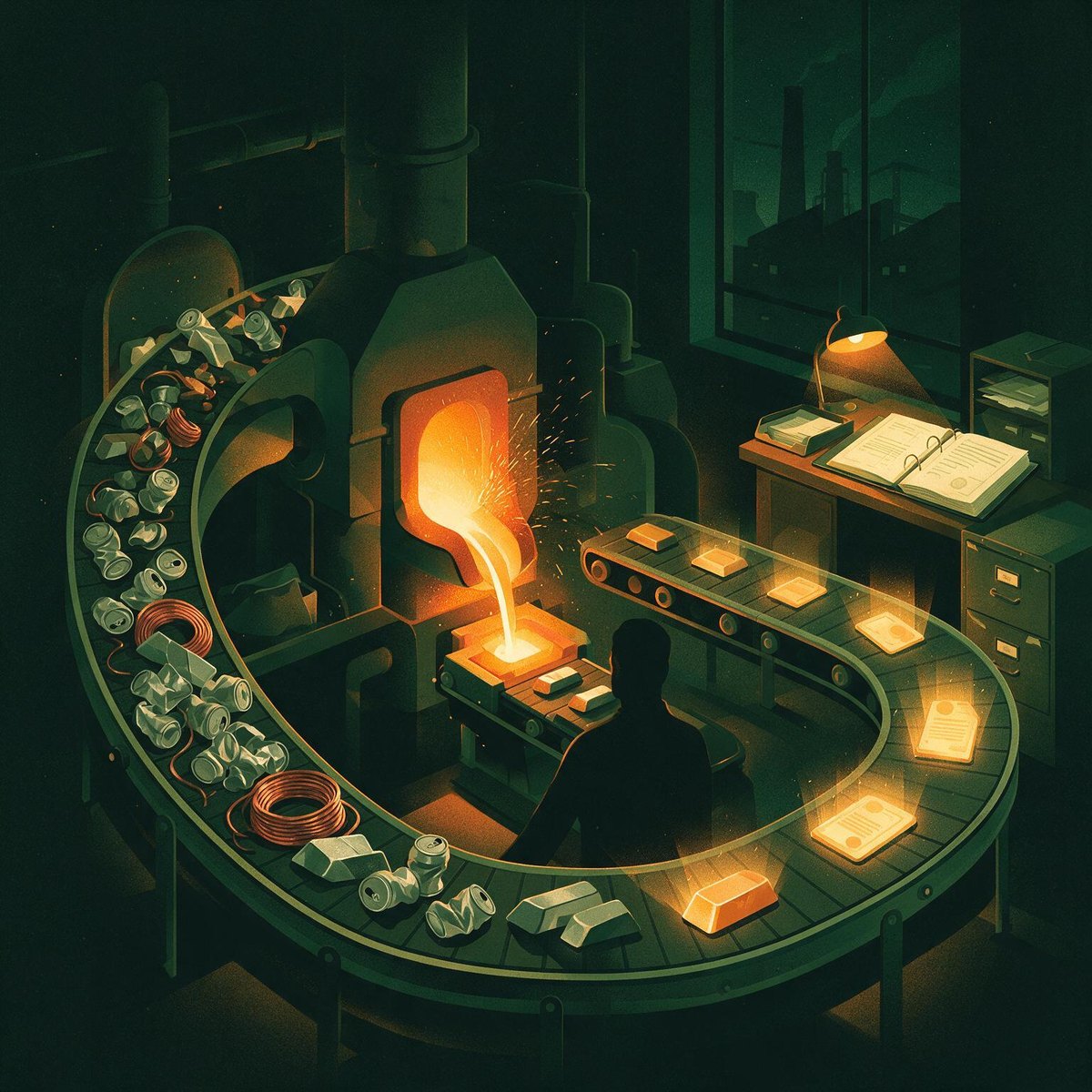
Aluminium, copper and zinc products flowing through a registered recycler into EPR credits and a filed CPCB return under a managed retainer
06

Managed-compliance retainer

The obligation kept current year on year as the target ramps and the recycled-content mandate phases in, with credits reconciled and both obligations trued up, so each year closes cleanly.

05

Which organizations need non-ferrous metal EPR

Producers, importers and manufacturers of aluminium, copper and zinc products across these sectors carry a non-ferrous metal EPR obligation. Here is what each faces and how GreenSutra handles it.

01

Aluminium packaging and can makers

Beverage and aerosol cans and packaging foils are Schedule X items on high volumes. GreenSutra classifies the range, computes the target and gets the producer ready to register.

02

Building and architectural products

Doors, windows, shutters, composite panels, partitioning, grills and roofing sheets span several Schedule X families. GreenSutra scopes the full portfolio and the producer obligation.

03

Copper cable and wire producers

Conductor cables, wires and strips, other than automobile grade, carry the producer obligation. GreenSutra classifies the range and prepares the registration and returns.

04

Electrical and appliance makers

Motors, pumps, transformers, generator sets and centralised air-conditioning plants are Schedule X items. GreenSutra brings the range into scope and computes the target.

05

Utensil, furniture and consumer brands

Utensils, furniture, sanitary ware and fittings are covered. GreenSutra classifies each product and gets the brand-owner obligation ready.

06

Importers of products and scrap

Importers of new products are producers, and importers of used products and scrap carry a full obligation. GreenSutra registers the importer and accounts for the used-import obligation.

07

Manufacturers under the recycled-content duty

Manufacturers carry the Schedule XIII minimum recycled-content mandate, rising per metal. GreenSutra builds and tracks the recycled-content plan so the supply-side duty is met.

08

Bicycle, toy and apparel-fitting makers

Aluminium alloy bicycles, toys and apparel fittings such as buckles and zips are Schedule X items. GreenSutra brings the range into scope and files the returns on time.

Whichever sector fits, the readiness, target, certificates and returns run the same accountable way. A short scoping conversation sizes the obligation before any commitment.

Get non-ferrous EPR ready
06

What a non-ferrous EPR engagement puts on the record

The deliverables behind the service. A readiness position and a tracker of the obligation, never a certificate GreenSutra could not issue.

D·01

A documented readiness position

Roles, classification, a first target and the recycled-content plan assembled, so registration is same-day when the portal opens.

D·02

A non-ferrous EPR compliance tracker

A clear view of the target due, the recycled-content ramp, the certificates to procure and the returns filed. A tracker of the obligation, not a certificate, which only registered recyclers generate.

D·03

Audit-ready evidence

Quantities and records kept so a CPCB query meets a complete file, not gaps, and any Environmental Compensation exposure is contained.

D·04

Continuity year on year

The managed retainer keeps the record current as the target ramps and the recycled-content mandate phases in.

Aluminium, copper and zinc products flowing through a registered recycler into EPR credits and a filed CPCB return
The non-ferrous obligation turned into a documented, audit-ready record
07

Why GreenSutra for non-ferrous metal EPR

The reasons behind the reputation.

R·01

Consultant, not a verifier

GreenSutra classifies, computes the target, plans recycled content, sources EPR credits from registered recyclers and files returns. It never claims to verify recycling or issue certificates, which only CPCB-registered recyclers can do.

R·02

Ready before the deadline

Because the obligation has already commenced but the portal is still being established, GreenSutra gets the data and classification settled now, so a business registers and computes its target from day one.

R·03

Both obligations, one team

The recycling target and the Schedule XIII recycled-content duty carried together, so the supply-side mandate is not discovered too late to act on.

R·04

Transparent, honestly hedged

Four named packages and a quote scoped from a data audit, with no invented rupee figure while the certificate market and fees are unpublished. The structure is clear about what is settled and what is still awaited.

R·05

A pan-India track record since 2016

GreenSutra has advised on compliance across India since 2016, with an established registered-recycler network for EPR credit fulfilment.

R·06

Mumbai based, delivered pan India

A specialist EPR desk in Mumbai serving producers, importers and manufacturers across India, with LCA, carbon and ESG under the same roof when the obligation grows into wider reporting.

08

Non-ferrous metal EPR, the practical questions

Q·01When does non-ferrous metal EPR start in India?
Per the notification, the obligations commence on 1 April 2026, so the financial year 2026-27 is the first compliance year and the recycling target begins at 10 per cent. The regime was created by the Hazardous and Other Wastes (Management and Transboundary Movement) Amendment Rules, 2025, notified as G.S.R. 438(E) on 1 July 2025. The exact operative status is confirmed against the current CPCB position, because the commencement date had already been extended once.
Q·02Can a business register for non-ferrous EPR now?
Not yet, as far as can be confirmed. The rules require the CPCB to make a dedicated online portal functional within six months of commencement, which is about October 2026, and non-ferrous is not yet on the CPCB list of live EPR portals. The useful work now is readiness, so registration and the target computation are same-day when the portal opens. GreenSutra does the readiness now and registers the moment the portal is live.
Q·03How much does non-ferrous metal EPR cost?
No rupee figure can honestly be given yet. The main cost is the EPR certificates needed to meet the target, and their price is pegged to an environmental-compensation rate that the CPCB has not yet published, on a certificate market that opens with the portal. Registration and audit fees are also not yet notified. GreenSutra scopes the obligation in tonnes now and attaches the cost as soon as the figures are published, rather than posting an invented number.
Q·04Is there a separate Non-Ferrous Metal Waste Rules?
No. There is no standalone non-ferrous metal law. The regime is created by a 2025 amendment to the Hazardous and Other Wastes (M&TM) Rules, 2016, which inserts a new Chapter VIII and Schedules X to XIII. The phrase Non-Ferrous Metal Waste Rules is an informal market name for that amendment, which is why the correct citation matters when checking a registration or a notice.
Q·05Which products are covered?
Eighteen finished-product families made of aluminium, copper or zinc are listed in Schedule X, from beverage cans, foils, doors and windows and utensils to cables, transformers, generator sets, bicycles, apparel fittings and toys. Four items, covering motors, cables, electrical fittings and transformers, carry an other than automobile grade carve-out. GreenSutra classifies each product against the eighteen families.
Q·06Who carries the obligation, the producer or the manufacturer?
Both, differently. The producer, meaning the brand owner and importers, carries the recycling target. The manufacturer carries the separate minimum recycled-content duty under Schedule XIII. A business can be both. GreenSutra determines which roles apply and carries whichever obligations attach.
Q·07What is the recycled-content mandate?
Under Schedule XIII, a manufacturer must build a minimum share of recycled metal into new products, beginning in the financial year 2028-29 at 5 per cent for all three metals and rising by 2031-32 to 10 per cent for aluminium, 20 per cent for copper and 25 per cent for zinc. It is a supply-side duty that can require sourcing changes, so GreenSutra plans it early rather than late.
Q·08Do importers of non-ferrous products or scrap need EPR?
Yes. An importer of new products is a producer and registers accordingly. An importer of used products or scrap is also a producer and, in addition, carries a full hundred per cent obligation on what it imports. GreenSutra registers importers and accounts for the used-import obligation.
Q·09What are the returns and when are they due?
A registered producer files a half-yearly return by 31 October and an annual return by 30 June of the following financial year. The first annual return, for the financial year 2026-27, falls due on 30 June 2027. GreenSutra files both on a managed calendar and confirms the operative dates on the portal, since administrative extensions are common.
Q·10What does GreenSutra do before the portal opens?
The readiness work: it determines the roles, classifies every product against the eighteen Schedule X families, estimates the recycling target and the recycled-content plan from prior-year weights, and assembles the documents. That way, registration and the first target computation are completed the day the portal opens rather than started then.
Q·11Can GreenSutra take over non-ferrous EPR from another consultant?
Yes. GreenSutra reviews the current readiness or registration position, identifies anything outstanding, and continues the obligation without a gap. For a new stream, the handover is usually about making sure the classification and the two obligations were set up correctly in the first place.
Q·12Does GreenSutra issue or verify EPR certificates?
No. GreenSutra is an EPR consultant, not a verifier or a certificate issuer. EPR certificates are generated only by registered recyclers on the CPCB portal; GreenSutra sources the matching credits, computes the target and files the returns. It does not issue, verify or guarantee a certificate or a registration.
Q·13How does non-ferrous EPR overlap with e-waste or battery EPR?
The rules are currently silent on how non-ferrous metal already regulated under the e-waste, battery or end-of-life-vehicle streams is treated, and the CPCB is expected to clarify the overlap through guidelines. GreenSutra flags the open question during scoping and keeps the treatment in step with the CPCB position as it is settled, rather than guessing.
Q·14Does GreenSutra work with businesses outside Mumbai?
Yes. GreenSutra is Mumbai based and delivers pan India. A producer, importer or manufacturer in Delhi, Bengaluru, Chennai, Hyderabad, Pune, Ahmedabad or anywhere else works with one accountable team, because the CPCB portal is centralised.
09

EPR questions, answered

Common Extended Producer Responsibility questions from producers, importers and manufacturers, answered by the GreenSutra team.

Q · 01EPR4,404 views

What is EPR?

EPR stands for Extended Producer Responsibility. It is a policy under which Manufacturers and or Producers are given the responsibility to collect, treat and…

Answered by the GreenSutra team
Q · 02EPR4,363 views

How are the targets calculated for Plastic, E-waste and Batter waste EPR?

Central Pollution Control Board (CPCB) auto-generates the target after the registered organization uploads the total quantity of plastic, e-waste, and battery waste on the portal.…

Answered by the GreenSutra team
Q · 03EPR4,364 views

What is meant by a Refurbisher?

Any person or organization who repairs used electrical and electronic equipment with the intention of increasing its life beyond its original lifespan and using…

Answered by the GreenSutra team
Q · 04EPR4,032 views

What is meant by PRO?

PRO stands for Producer Responsibility Organization. A PRO is an agency or an organization which helps organizations and businesses fullfil their EPR requirements. How…

Answered by the GreenSutra team
Q · 05EPR4,438 views

What is the validity of Plastic, E-Waste and Battery Waste EPR registrations?

The Center for Pollution Control Board has issued respective guidelines for Plastic, E-Waste and Battery Waste EPR outlining the validity of their respective registrations…

Answered by the GreenSutra team
Q · 06EPR4,122 views

Where do the eligible entities apply registration for EPR ?

The entities shall apply on the respective Plastic, E-Waste and Battery Waste online portal developed by Central Pollution Control Board (CPCB) for the registration…

Answered by the GreenSutra team
10

Get non-ferrous metal EPR ready

A short conversation about the aluminium, copper and zinc products placed on the market or made, and the roles that attach, turns into a tailored non-ferrous EPR readiness plan and a scoped quote, at no charge and no commitment. GreenSutra's EPR desk works from Unit 43, Apollo Industrial Estate, Paperbox Road, Andheri East, Mumbai 400093, Maharashtra, and delivers across India.

01Schedule a call

Pick the service and a slot; a practitioner takes the call.

02Write to us
Contact Us
Preferred reply channel

Non-Ferrous Metal EPR get registration-ready across IndiaGet non-ferrous EPR ready