

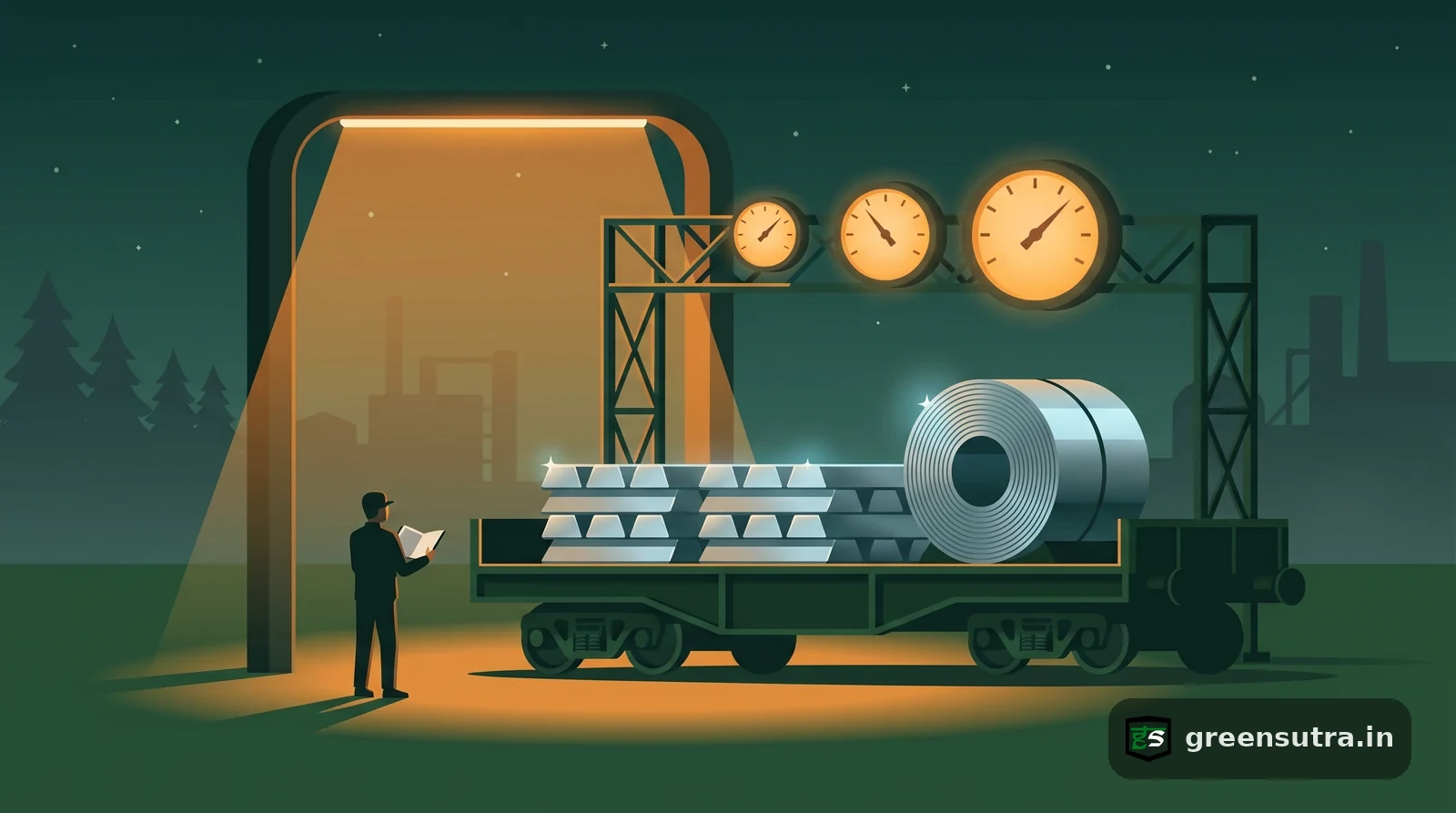
CBAM cost for an aluminium exporter is the product of three multipliers: embedded emissions per tonne, either a marked up default or a verified actual figure, times the EU ETS-linked certificate price, EUR 75.36 average in Q1 2026, times a payable share climbing from 2.5 percent in 2026 to 100 percent by 2034.
The three multipliers behind every CBAM bill
Since 1 January 2026 the CBAM certificate bill has been the product of three numbers: embedded emissions per tonne, the certificate price and the payable share. Embedded emissions come either from origin-specific default values published in Implementing Regulation (EU) 2025/2621, which carry a mark-up of 10 percent in 2026, 20 percent in 2027 and 30 percent from 2028, or from actual installation data verified by an accredited verifier. Aluminium is an Annex II good, so only direct emissions are priced; indirect, electricity related emissions are excluded. The certificate price tracks the EU ETS and averaged EUR 75.36 per tonne of CO2e in Q1 2026. The payable share starts at 2.5 percent in 2026 and climbs to 100 percent by 2034. The EU importer buys the certificates, but the cost flows into the prices offered to exporters.
Why the same tonnage costs different amounts
Identical tonnage can produce very different certificate bills. Four things drive the spread:
- Product mix: India defaults climb with each stage of working, from 1.87 tCO2e per tonne for unwrought metal to 4.13 for plates, sheets and foil, so the same tonnage is assessed differently by product.
- Production route: primary aluminium smelted from ore embeds far more carbon than recycled, scrap-based metal.
- Country of origin: direct intensity estimates from the Hasanbeigi / ORF 2025 dataset put India at 1.75 tCO2e per tonne against 2.28 for China, the highest of the major routes.
- Year: the mark-up and the payable share both rise on fixed schedules, so an unchanged shipment costs more each year.
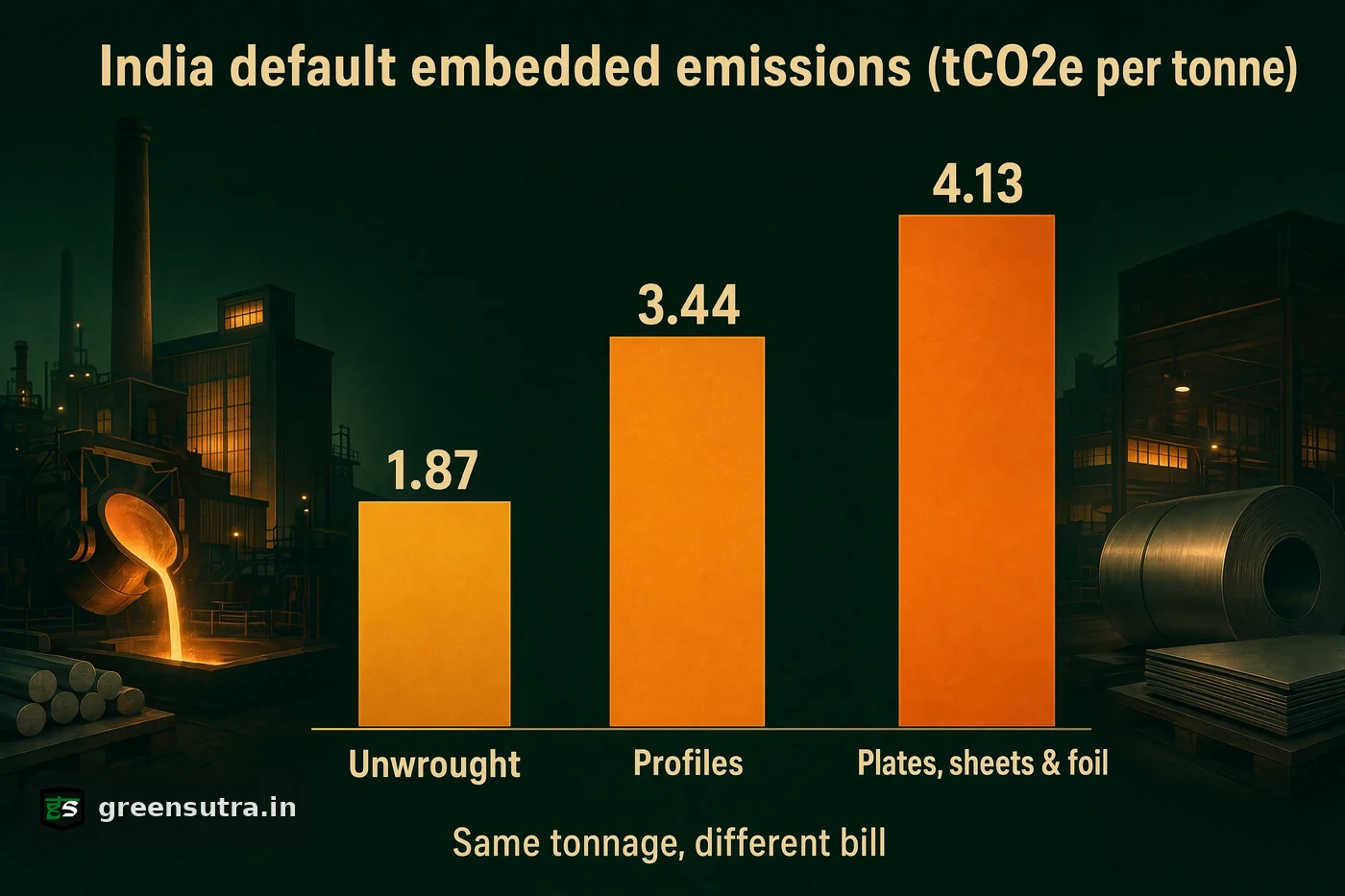
| Product | CN | Base default (tCO2e/t) | 2026 with mark-up |
|---|---|---|---|
| Unwrought aluminium | 7601 | 1.87 | 2.06 |
| Profiles (incl. hollow) | 7604 (profiles) | 3.44 | 3.79 |
| Plates, sheets, strip | 7606 | 4.13 | 4.54 |
| Foil | 7607 | 4.13 | 4.54 |
Source: Implementing Regulation (EU) 2025/2621, Annex I, India values. Direct emissions only.
How to put a real number on an export line
A credible figure starts from the exporter’s product mix, tonnage, route and origin, never from a generic per tonne quote. The full India default list by CN code sits in the companion answer on Indian aluminium default values. The fastest route to an estimate is the CBAM cost calculator, which models all three multipliers year by year through 2034. Exporters ready to test actual installation data against the defaults can begin with a CBAM discovery and engage GreenSutra’s CBAM consulting service to prepare data for verification by an accredited verifier.
Sources: Regulation (EU) 2023/956 · Implementing Regulation (EU) 2025/2621 · European Commission CBAM portal