


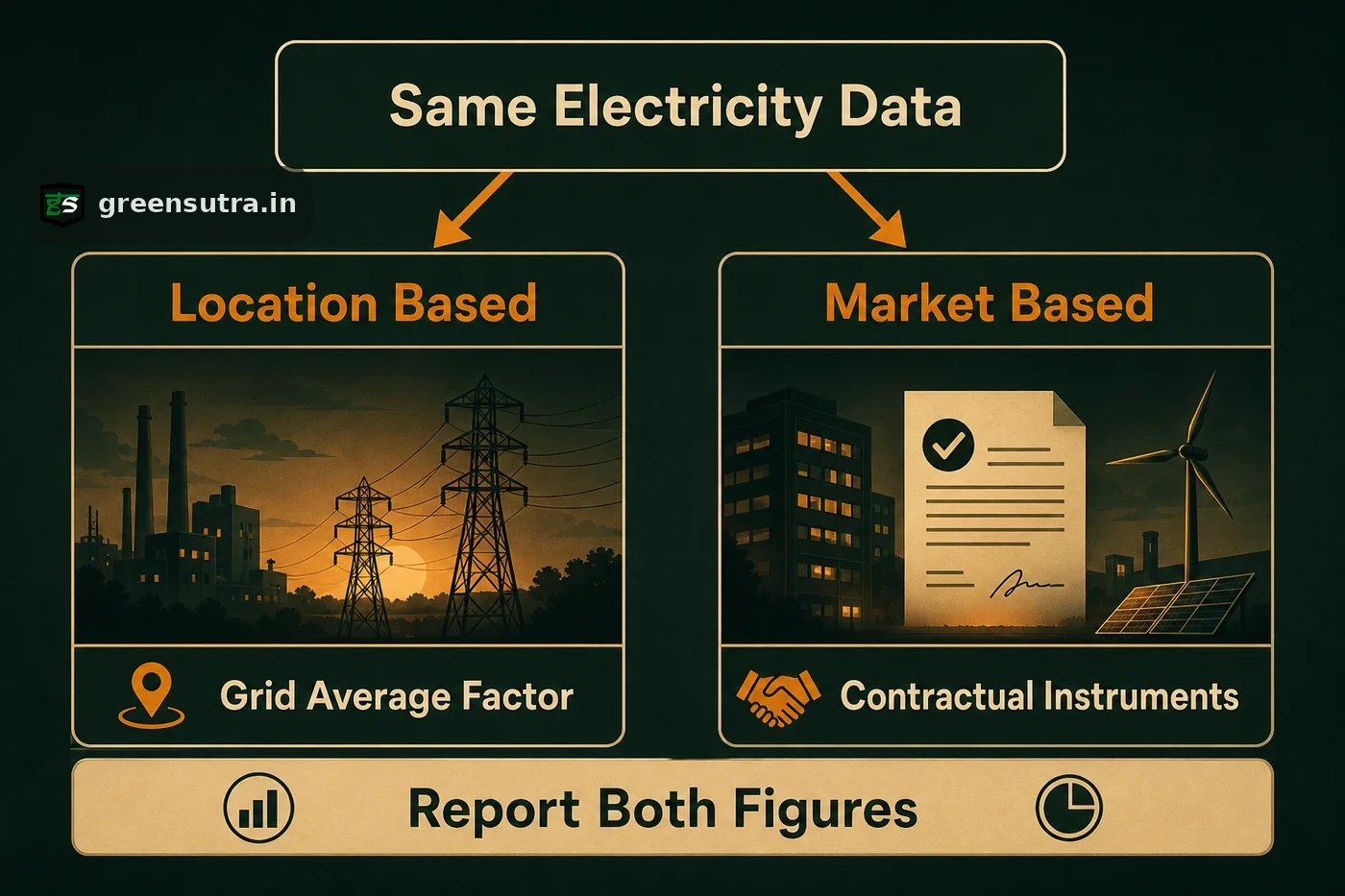
Scope 2 market based versus location based are the two GHG Protocol methods for reporting purchased electricity emissions: the location based method applies a grid average emission factor, while the market based method reflects contractual instruments such as renewable energy certificates, guarantees of origin and power purchase agreements, reported together as dual reporting.
Scope 2 dual reporting under the GHG Protocol
The GHG Protocol Scope 2 Guidance, published in 2015 as an amendment to the Corporate Standard, requires organisations that operate in markets offering contractual electricity instruments to report Scope 2 emissions by both methods at once, a practice known as dual reporting. Scope 2 covers indirect emissions from purchased electricity, steam, heat and cooling that are generated off site and consumed on site. Neither method is optional where such instruments exist. Independent carbon footprint consulting can set the boundary, gather electricity data and prepare both figures to a recognised standard. A revision of the Scope 2 Guidance is under public consultation, yet the 2015 Guidance remains the operative standard.
Location based versus market based
The location based method reflects the average emissions intensity of the grid where consumption occurs, applying a grid average emission factor. The market based method reflects the emissions of the electricity an organisation has chosen to purchase through contractual instruments, with any uncontracted load valued at a residual mix factor that represents the grid after contracted generation is removed. Where a residual mix factor is not available, the location based figure stands in its place. Both methods draw on the same metered electricity consumption and differ only in the emission factor applied to it.
| Aspect | Location based | Market based |
|---|---|---|
| Basis | Average intensity of the local grid | Electricity contractually chosen |
| Factor applied | Grid average emission factor | Contractual instruments, residual mix for uncontracted load |
| Instruments | None, reflects the physical grid | RECs, guarantees of origin, PPAs, supplier specific tariffs |
| Fallback | Not applicable | Location based figure stands where no residual mix factor exists |
Contractual instruments recognised under the market based method include:
- renewable energy certificates (RECs)
- guarantees of origin (GOs)
- power purchase agreements (PPAs)
- supplier specific tariffs
Why both figures matter
Reporting both figures prevents an organisation from claiming a low market based number without disclosing the underlying grid exposure, keeping the disclosure transparent and comparable. The same electricity data feeds a single greenhouse gas inventory across Scope 1, Scope 2 and Scope 3. Practical method, boundary and instrument choices are explained in the carbon footprint guide. Where independent assurance is needed, verification of the inventory to ISO 14064-3 is performed by a qualified body that did not prepare it, not by the consultant.
Sources: GHG Protocol Scope 2 Guidance · ISO 14064-3