


When a steel product’s origin has no published country default value and no verified data, CBAM applies a deliberately high fallback default, 3.48 tonnes of CO2e per tonne for pig iron. The value is set high on purpose, so verified installation data or a valid country default usually lowers the declared figure.
CBAM has no single default value for steel. Where a consignment carries neither verified installation data nor a published default for its country of origin, a fallback default applies, and it is pitched deliberately high so that supplying real data almost always brings the declared figure down. Because the fallback is product-specific, it differs across pig iron, direct reduced iron, flat-rolled products and the rest of the iron and steel group.
How CBAM selects the value
A steel declaration draws on the first available of three sources, in order:
- Verified actual installation data, confirmed by an accredited verifier, takes priority.
- Failing that, the default value published for the country of origin applies, carrying its annual mark-up.
- Only where neither exists does the high fallback default step in.
Pig iron across origins
For pig iron, the country figures sit well below the fallback:
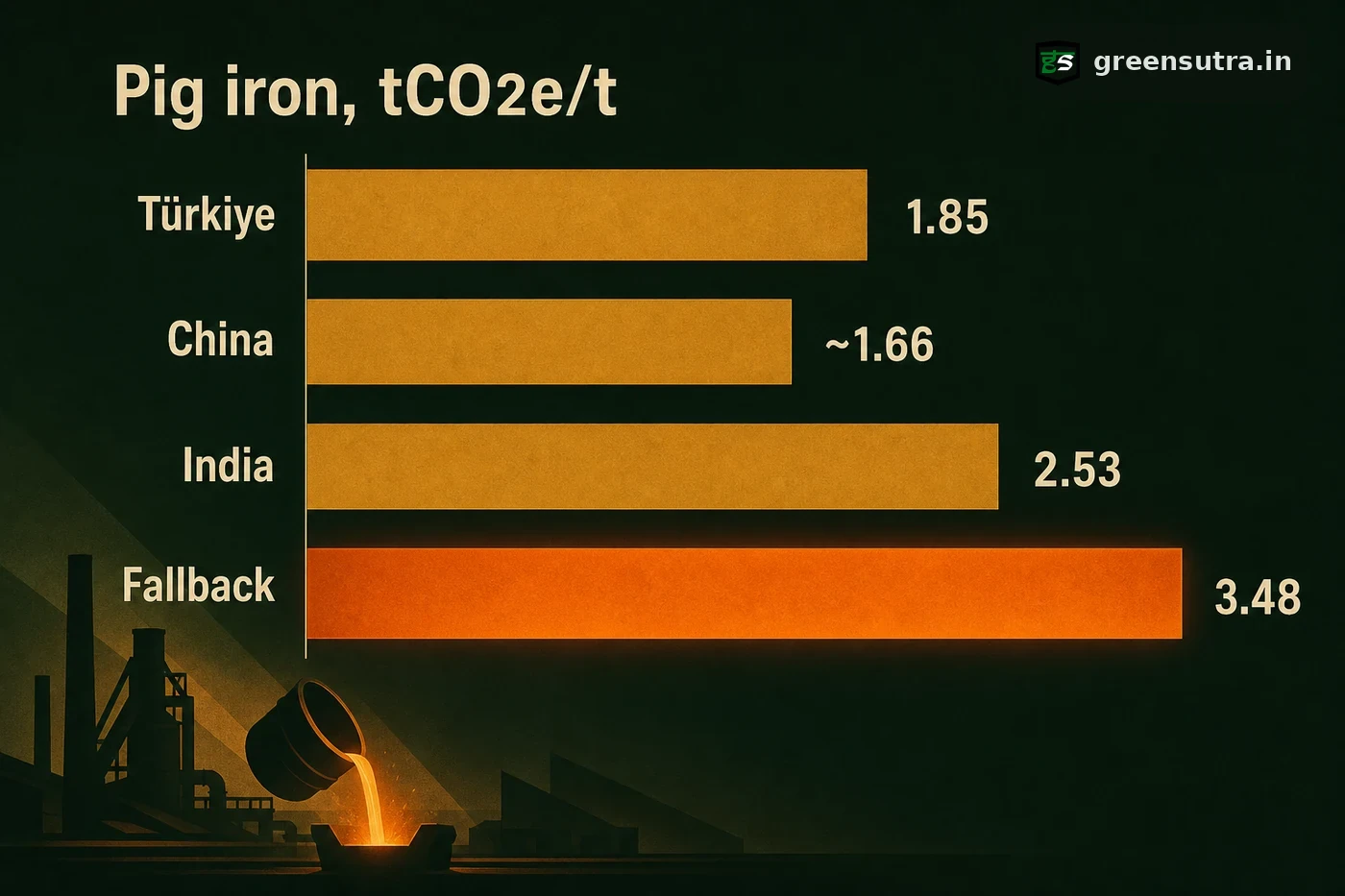
| Origin basis | Pig iron (tCO2e per tonne) |
|---|---|
| India country value | 2.53 |
| Türkiye country value | 1.85 |
| China country figure | about 1.66 |
Iron and steel count direct embedded emissions only, so the production route rather than electricity explains most of the spread between origins. Each country value undercuts the fallback, which is why a correct country default or verified plant data reduces the charge.
Goods moving through traders are the most likely to land on the fallback, because origin emissions data does not always reach the declarant in time. CBAM compliance support covers declarant status, embedded-emissions calculation and certificate exposure, including which value applies to a given product and origin. A CBAM guide sets out how to keep verified data with the consignment.
Sources: Regulation (EU) 2023/956 · Implementing Regulation (EU) 2025/2621 · European Commission CBAM