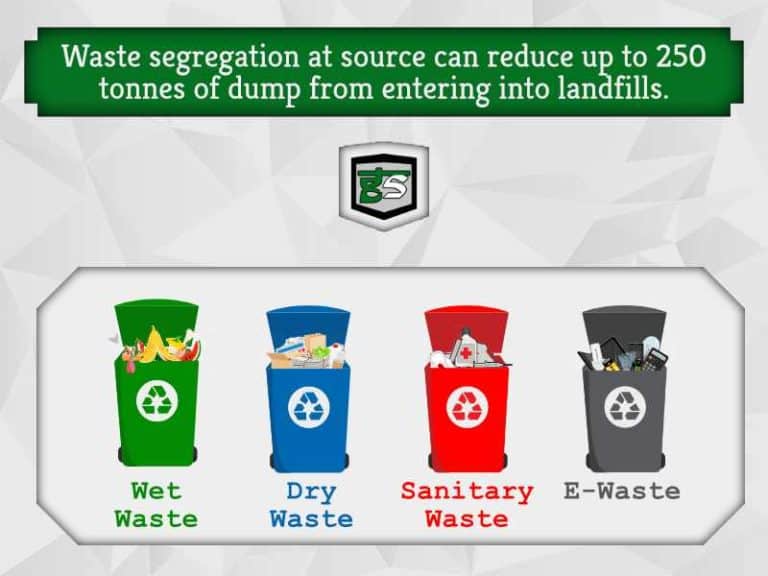
Wet waste
Food waste, kitchen and canteen waste, garden and landscaping waste, and other biodegradable matter.


End to end waste management for corporates, industries, communities and events. Characterisation and quantification, segregation at source under the Solid Waste Management Rules, collection, transport and treatment, with the designs, layouts and reporting that turn a waste stream into a managed, compliant and recoverable resource, delivered from Mumbai across India.
Reviewed by Team GreenSutra · Updated 9 June 2026
For the corporates, industries, communities and events that generate waste and carry the duty to manage it.
Waste management is every activity that handles waste from the moment it is generated to the point it is treated, and the activities vary with the type and the quantity of the waste. In India the duty starts at source: the Solid Waste Management Rules, 2016, require waste to be segregated into wet, dry and domestic hazardous streams and handed to authorised collectors or the local body.
The scale is the reason the duty matters. India generates on the order of 1.7 lakh tonnes of municipal solid waste a day, the bulk of it collected but a large share still reaching landfill rather than treatment. A managed programme reverses that order by working up the waste hierarchy, from reduce and reuse to recycle and recover, with disposal as the last resort rather than the default.
Waste Management Services by GreenSutra cover the full chain. Waste is characterised and quantified, a segregation, collection, transport and treatment system is designed with the layouts and signage to run it, and the streams that carry their own rules, plastic packaging under the Plastic Waste Management Rules, electronics under the E-Waste Rules and construction debris under the C and D Waste Rules, are routed to the right destination through registered recyclers.
Based in Mumbai and delivering across India, GreenSutra carries the engagement end to end, for a corporate campus, an industrial site, a residential community or an event, so a waste stream becomes a managed, compliant and recoverable resource rather than a cost and a liability.
The streams an operation generates, how each is segregated and where each is routed.
Not all waste is treated the same way. Some is composted, some recycled, some recovered for energy and some must be handled as hazardous, and the first step of every engagement is to characterise which streams an operation actually generates and in what quantity. The streams below act as the guide rather than every covered item.
Food waste, kitchen and canteen waste, garden and landscaping waste, and other biodegradable matter.
Paper and cardboard, plastic, glass, metal and other clean, dry recyclable material.
Household chemicals, batteries, tubelights, expired medicines and other domestic hazardous items.
Sanitary napkins, diapers and similar items, wrapped and handed separately as the rules require.
End-of-life electrical and electronic equipment, routed under the E-Waste Rules through registered recyclers.
Concrete, soil, brick, wood and metal debris from construction and demolition, from bulk generators.
A precise characterisation of which streams an operation generates, and in what quantity, is the first step of every waste management review.
From a waste audit to a segregated, treated and reported system.
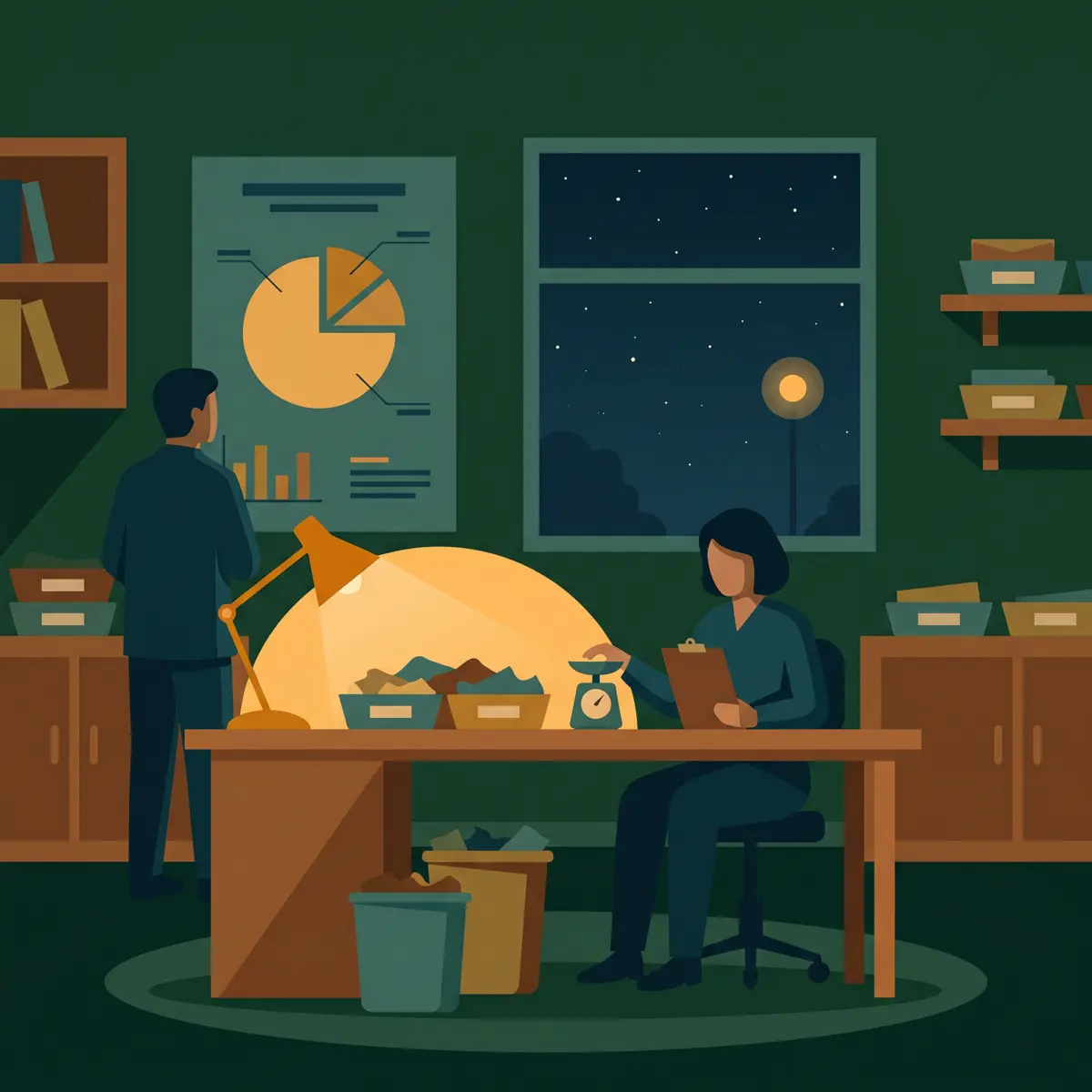
Waste streams sampled, characterised and quantified across the operation, so the mix of wet, dry, hazardous and special waste and the quantities are known before any system is designed.
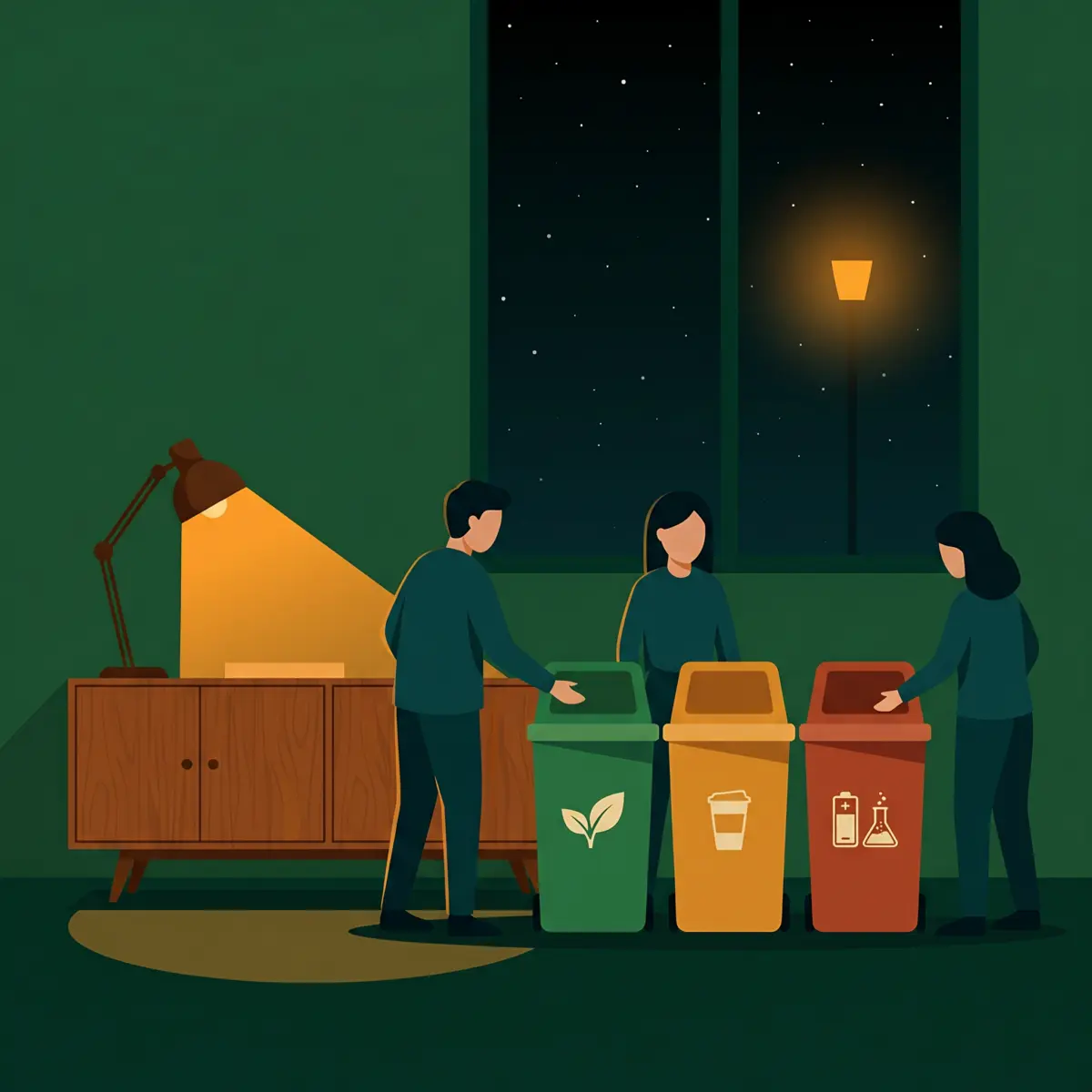
A segregation system designed to the Solid Waste Management Rules, with colour-coded bins, collection points, layouts and signage that make sorting at source the default rather than an afterthought.
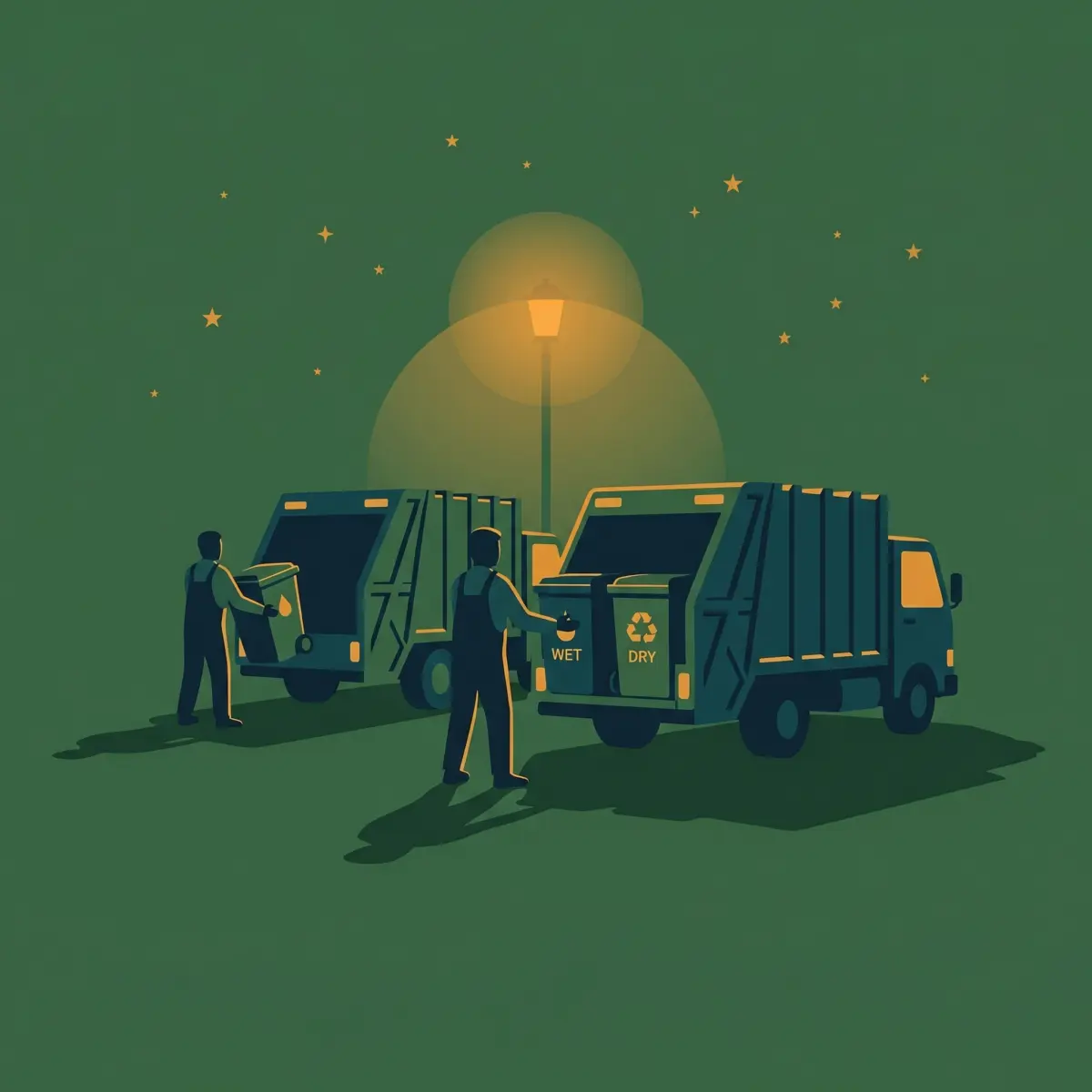
Collection and transport arranged through authorised handlers, with separate channels for each stream so segregated waste stays segregated all the way to its treatment destination.

Each stream routed to its destination, wet waste to composting or biomethanation, dry waste to registered recyclers, and special streams to authorised facilities, so material is recovered rather than landfilled.

Diversion measured and documented, with the records and reporting that evidence the recovery achieved and meet the obligations of the Solid Waste Management Rules and the local body.
Waste is characterised, segregated at source, collected separately and worked up the hierarchy from reduce and reuse to recycle and recover, with disposal last.
The waste streams an operation generates are sampled and quantified, so the mix of wet, dry, hazardous and special waste is known.
Waste is sorted at the point it is generated into wet, dry and domestic hazardous streams under the Solid Waste Management Rules.
Each segregated stream is collected and transported separately through authorised handlers, so the separation holds to the destination.
Streams are worked up the hierarchy: wet waste to composting, dry waste to recycling, and recoverable material to energy, before disposal.
The diversion achieved is measured and reported, evidencing the recovery and meeting the obligations of the rules.
A waste stream is characterised and quantified, segregated at source into wet, dry and domestic hazardous fractions under the Solid Waste Management Rules, collected separately through authorised handlers, and worked up the waste hierarchy from reduce and reuse to recycle and recover, with disposal as the last resort. The diversion achieved is measured and reported.
Two answers map an operation onto a segregation and routing plan.
Two questions place an operation against the waste rules: the streams it generates and the kind of operation it is. The result states how the streams are segregated and routed and what to confirm next.
Two questions decide a waste plan: which streams an operation generates, from wet and dry to hazardous, electronic and construction waste, and the kind of operation it is. A waste audit turns both into a segregation, collection and treatment system under the Solid Waste Management Rules.
Request a waste management review →No significant waste stream is generated, so the segregation and routing duties sit light on the operation today. A short waste audit confirms the position and finds any stream worth segregating before it grows, since the Solid Waste Management Rules apply once waste is generated at scale.
Wet and food waste is the dominant stream, so the management plan is built around segregation at source and on-site or local composting or biomethanation, which turns the biodegradable fraction into compost or energy rather than landfill. The Solid Waste Management Rules treat bulk generators of wet waste as responsible for processing it as far as practicable on site.
Dry recyclable material, paper, plastic, glass and metal, is the dominant stream, so the plan is built around clean segregation and routing to registered recyclers, with plastic packaging also carrying Extended Producer Responsibility under the Plastic Waste Management Rules. Keeping the dry stream clean and dry is what preserves its recyclable value.
Domestic hazardous and sanitary waste is present, so it must be segregated and handed to authorised handlers separately from the wet and dry streams, wrapped as the Solid Waste Management Rules require. Mixing it back into general waste is both a compliance failure and a contamination of the recyclable stream.
End-of-life electrical and electronic equipment is generated, so it is routed under the E-Waste (Management) Rules 2022 through registered recyclers on the CPCB e-waste portal, separately from the municipal streams. A bulk consumer of electronics carries record-keeping duties for the e-waste it hands over.
Construction and demolition debris is generated, so it is segregated and routed to an authorised C and D facility under the Construction and Demolition Waste Rules 2016, which place obligations on bulk generators of 20 tonnes or more in a day. Concrete, soil, brick and metal are recovered rather than landfilled where a facility exists.
More than one stream is generated, so the operation needs a full programme: characterisation, a segregation system to the Solid Waste Management Rules, separate collection, and each stream routed to its destination, wet to composting, dry to registered recyclers, and hazardous, electronic and construction waste to their authorised channels. The streams that carry their own rules are handled under them rather than mixed back into the municipal waste.
The streams or the operation are still being mapped, so the segregation and routing plan cannot be fixed from the answers alone. A waste audit characterises and quantifies the streams an operation generates and sets the segregation, collection and treatment plan against the Solid Waste Management Rules.
A corporate or office site segregates at the desk and the pantry, with the dry stream the largest recyclable fraction and the wet stream from the canteen the priority for on-site processing.
An industrial site carries process and packaging waste alongside the municipal streams, so the characterisation extends to the production waste and any hazardous fraction under its own rules.
A residential community segregates household waste at source, with wet-waste composting and dry-waste recycling run at the community level and the local body as the authorised channel.
An event generates a concentrated, short-duration waste load, so segregation, on-site recovery and the routing of single-use plastic are designed into the event plan ahead of the day.
Answers stay in this browser. Nothing is sent until a contact channel is opened.
A waste stream runs from characterisation through segregation to recovery, and a waste review turns that path into a managed, compliant and recoverable system.
WhatsAppRequest a waste management review →What a characterised, segregated and treated waste system earns an operation.
Segregation, handling and reporting aligned to the Solid Waste Management Rules and the linked plastic, e-waste and C and D rules, so the duty is met cleanly.
Waste worked up the hierarchy, so the wet, dry and recoverable fractions become compost, recyclate and energy rather than landfill.
Clean segregation turns a disposal cost into a recoverable resource, and the dry stream into a stream with value.
Diversion measured and documented, so the recovery achieved can be reported to the local body, the board and a BRSR or ESG disclosure.

The reasons behind the reputation.
Every engagement opens with a characterisation, so the system is designed for the waste an operation actually generates, not a template.
Specialists fluent in the Solid Waste Management Rules and the linked plastic, e-waste and C and D regimes, so segregation and routing are compliant by design.
A working relationship with composters, registered recyclers and authorised handlers, so each stream reaches a real destination.
Audit, design, collection, treatment and reporting handled as one accountable engagement, or any stage standalone.
Waste management delivered for corporates, industries, communities and events across India from a Mumbai base.
The same characterise, segregate and treat discipline, tuned to the operation.
Campuses and commercial premises, with desk and pantry segregation, canteen wet-waste processing and a clean dry stream.
Manufacturing sites, with process and packaging waste characterised alongside the municipal streams and any hazardous fraction.
Residential communities, with community-level composting, dry-waste recycling and the local body as the authorised channel.
Concentrated, short-duration waste loads, with segregation, on-site recovery and single-use plastic routing designed into the event plan.
Every operation carries the same characterise, segregate and treat discipline, tuned to the waste it generates and the rules it sits under.
WhatsAppRequest a waste management review →Every figure on this page traces to one of these references.
Real waste, recycling and compliance questions from the community, answered by the GreenSutra team.
What is ESRS?
The European Sustainability Reporting Standards are referred to as ESRS. Organizations that are subject to the Corporate Sustainbility Reporting Directive have to report according…
Answered by Team GreenSutra®→Q · 02Sustainability3,738 viewsWhat is CSRD?
CSRD stands for Corporate Sustainability Reporting Directive. Corporate Sustainability Reporting Directive is a regulatory framework introduced by the the European Union aimed at improving…
Answered by Team GreenSutra®→Q · 03Sustainability3,483 viewsWhat is GCP?
→Q · 04Sustainability2,860 viewsWhen do the Ecomark Rules 2024 come in force?
The Ministry of Environment, Forest and Climate Change (MoEFCC) on 26th Septmeber 2024 notified the Ecomark Rules 2024. The Ecomark Rules, 2024 came into force from 1st October 2024, the…
Answered by Team GreenSutra®→Q · 05Sustainability2,854 viewsWhat are the conditions for grant of Ecomark?
Under the Ecomark Rules 2024, an Ecomark may be granted to product(s) if they adhere or meet specific sustainability or environmental criterias such as…
Answered by Team GreenSutra®→Q · 06Sustainability2,849 viewsWhat is Greenwashing?
Greenwashing may be referred to as any practice or tatic that misrepresents, misleads, conceals by means of exaggerating, making vague, false or unsubstaintiated environmental…
Answered by Team GreenSutra®→Q · 07Sustainability2,834 viewsWhat is the procedure for grant of Ecomark?
The Ecomark Rules 2024 have come into force from 1st October 2024. Products that meet specific sustainability or environmental criteras may be granted an…
Answered by Team GreenSutra®→Q · 08CBAM2,585 viewsWhat are the salient features of the Green Steel Taxonomy of India?
As per definitation, Green Steel shall be expressed as percentage of greenness of steel which is produced from the steel plant having emissions intensity…
Answered by Team GreenSutra®→A short conversation about the operation, the waste it generates and the duties it carries turns into a tailored segregation and treatment plan. Schedule a call directly or send a written brief.
Pick the service and a slot; a practitioner takes the call.
Reading on waste, recycling and circularity from the GreenSutra journal.
Maintained by GreenSutra · Last reviewed June 2026