

CBAM covers aluminium products under CN codes 7601 to 7616 of Annex I, Regulation (EU) 2023/956: unwrought metal, powders, bars, profiles, wire, plates and sheets, foil, tubes, structures such as doors and towers, tanks, casks and cans, gas containers, stranded cables and other articles. Imports below 50 tonnes a year per importer are exempt; only direct emissions are priced.
Aluminium goods in scope: CN 7601 to 7616
CBAM covers aluminium through the CN code list in Annex I of Regulation (EU) 2023/956, which runs from heading 7601 to heading 7616. Aluminium is one of six covered product groups alongside iron and steel, cement, fertilisers, hydrogen and electricity. The span is deliberately wide: it begins at unwrought metal leaving the smelter and extends through semi-finished forms to finished articles such as window frames, cans and cables. Reservoirs and tanks, compressed-gas containers and tube and pipe fittings also fall inside the range. Since 1 January 2026 the definitive regime applies, so EU importers of any product on this list surrender CBAM certificates against its embedded emissions.
Product families and representative CN codes
Each aluminium product family maps to a representative CN heading in Annex I.
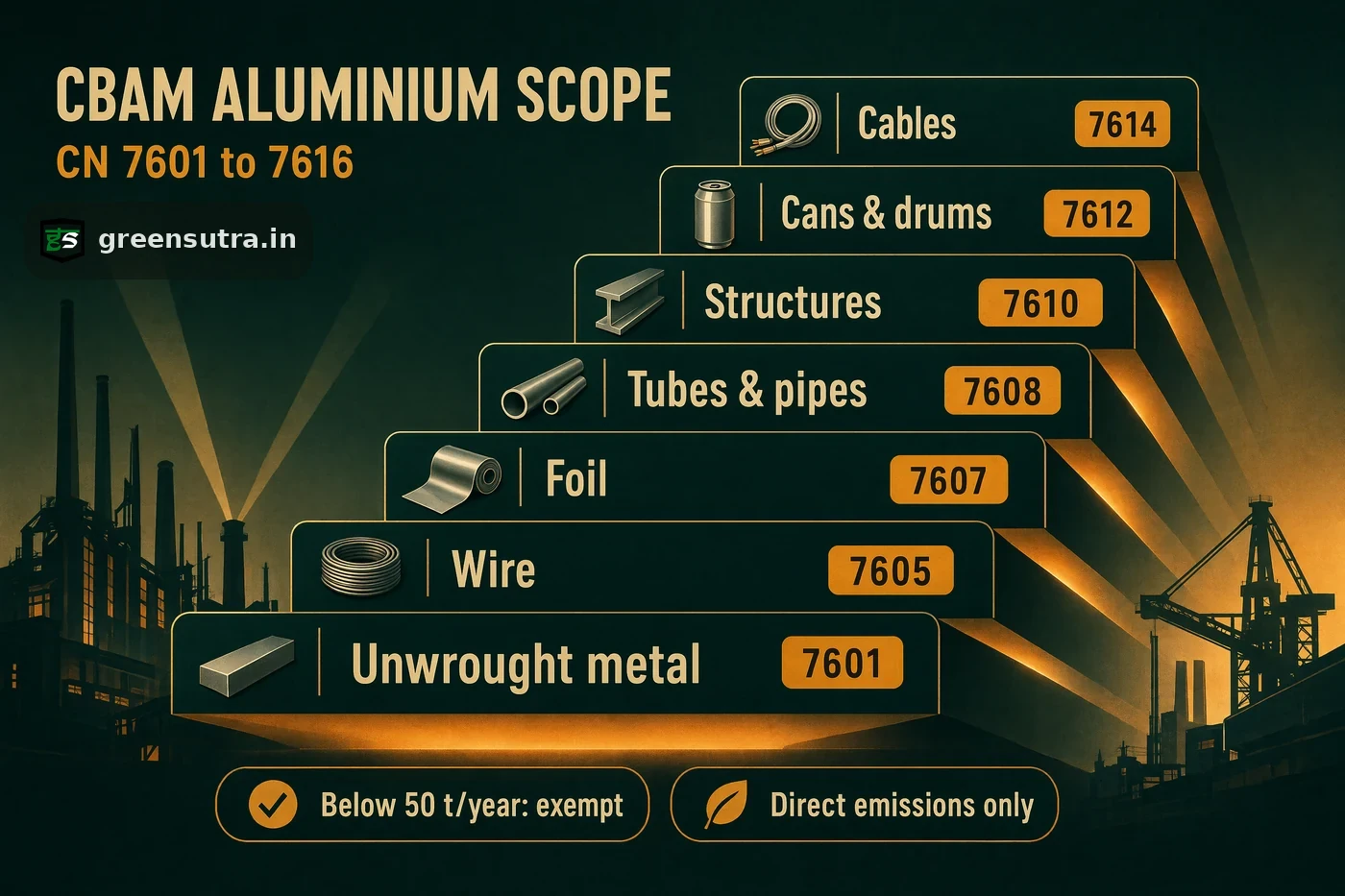
| Product family | Representative CN |
|---|---|
| Unwrought aluminium | 7601 |
| Powders and flakes | 7603 |
| Bars, rods and profiles (including hollow profiles) | 7604 |
| Wire | 7605 |
| Plates, sheets and strip | 7606 |
| Foil | 7607 |
| Tubes and pipes | 7608 |
| Structures: doors, windows, frames, bridges, towers | 7610 |
| Casks, drums and cans | 7612 |
| Stranded wire and cables | 7614 |
| Nails, cloth, netting and other articles | 7616 |
Source: Annex I, Regulation (EU) 2023/956.
Rules that shape the aluminium scope
Three rules decide how the list applies in practice.
- A de-minimis threshold exempts importers whose covered imports stay below 50 tonnes in a year.
- Aluminium is an Annex II good, so only direct embedded emissions are priced; indirect, electricity related emissions stay outside the current scope, and the grid mix behind a smelter does not add to the certificate obligation.
- Production route drives the number: primary metal smelted from ore carries far more embedded carbon than recycled, scrap-based metal.
Where verified installation data is missing, country-specific default values apply; the India set is detailed in CBAM default values for Indian aluminium. The sector overview shows where aluminium sits among the six covered groups, and the CBAM guide walks the compliance timeline step by step. Exporters preparing installation data can engage GreenSutra’s CBAM consulting service; verification itself always rests with an accredited verifier.
Sources: Regulation (EU) 2023/956 · European Commission CBAM page