


A Digital Product Passport readiness assessment maps a product’s data against the ESPR priority product groups and the EU battery passport rule, then records every gap before each obligation applies. A DPP gap analysis runs four moves: a scope check, a data inventory across supply tiers, an identifier and data-carrier check, and a prioritised gap register.
What a readiness assessment establishes
A Digital Product Passport is a structured electronic record introduced by the Ecodesign for Sustainable Products Regulation, Regulation (EU) 2024/1781. A readiness assessment is the first deliverable of a DPP engagement. It establishes where a product sits against the European framework and exactly what is missing before each obligation applies. Because the specific requirements are set product group by product group through delegated acts, the assessment first fixes which rules will apply and when.
How a DPP gap analysis is done
A DPP gap analysis runs four structured moves that turn the framework into a product specific action list.
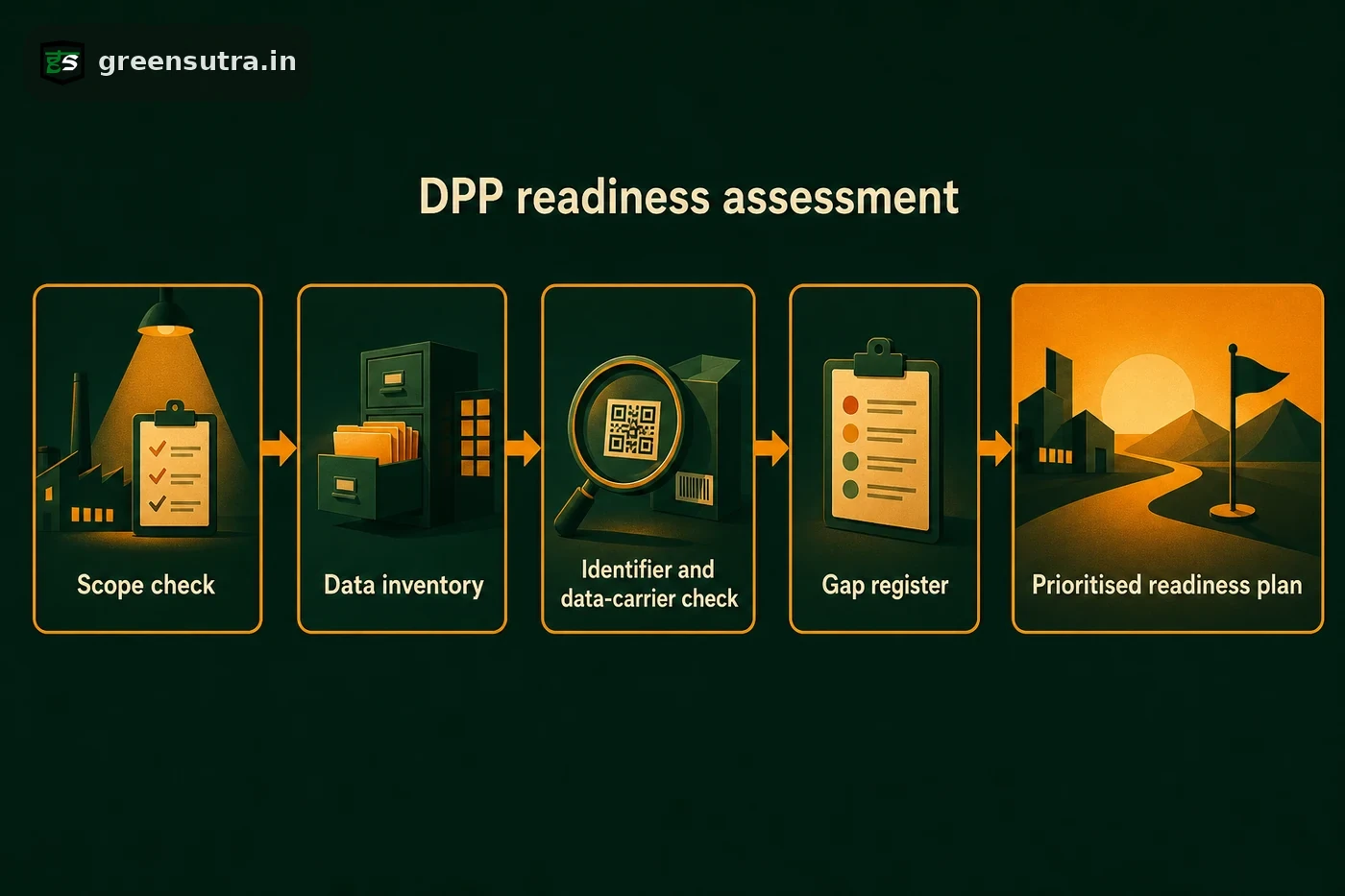
| Move | What it does |
|---|---|
| Scope check | Places each product against the ESPR priority groups (textiles with a focus on apparel, furniture, tyres, mattresses, iron and steel, aluminium) and the dated battery passport rule. |
| Data inventory | Maps what product level data already exists across supply tiers against what a passport needs: material composition, recycled content, substances of concern, durability, repair and end of life. |
| Identifier and carrier check | Confirms whether unique product, operator and facility identifiers and a machine readable data carrier such as a QR code are in place. |
| Gap register | Lists each missing item with the work to close it, sequenced into a prioritised plan. |
The output is a prioritised readiness plan, sequenced against the indicative Working Plan years and the 18 February 2027 battery passport date, so effort lands on the products and gaps that matter first.
GreenSutra’s five-step readiness method
Once the gaps are known, GreenSutra’s Digital Product Passport Readiness service closes them across five steps: map the data against the ESPR priority groups and the battery passport rule; assemble the record of material composition, recycled content, substances of concern, durability, repair and end of life across every supply tier; secure the unique product, operator and facility identifiers and a machine readable data carrier such as a QR code; ready the identifiers for the central EU registry the Commission must set up by 19 July 2026; and maintain the passport so it stays accurate, complete and up to date. The DPP readiness guide sets out the same method as a checklist, and a DPP discovery brief is the structured first step.
Sources: Regulation (EU) 2024/1781 (ESPR) · Regulation (EU) 2023/1542 (EU Battery Regulation) · COM(2025) 187 final, ESPR Working Plan 2025-2030