

CBAM for Iron and Steel Exporters
Carbon Border Adjustment Mechanism (CBAM) compliance for exporters of iron and steel to the European Union, worldwide, and for the EU importers who declare them. Embedded emissions of iron and steel products calculated from installation data, CBAM reports prepared for verification by accredited verifiers, and certificate exposure estimated and managed, as one accountable engagement delivered from Mumbai.
Reviewed by Team GreenSutra · Updated 20 July 2026
What CBAM means for iron and steel exporters
Iron and steel is the most CBAM exposed sector, and the exposure is worldwide.
The Carbon Border Adjustment Mechanism (CBAM) prices the carbon emissions embedded in imported goods, and iron and steel is one of the six covered product groups. It is the most exposed of them: across most exporting economies iron and steel makes up the majority of the value shipped to the EU under CBAM. The European Union imported about 39.5 billion euro of iron and steel in 2024, so the definitive regime, which has applied since 1 January 2026, reprices market access for every major supplier rather than any one country. GreenSutra works as a CBAM consultant, carrying iron and steel exporters across India and worldwide, and the EU importers and authorised declarants who file for them, from transition era reporting into full definitive compliance.
Exposure tracks the production route and the country of origin. The table below shows the leading suppliers of iron and steel to the EU and how CBAM bears on each.
| Market | Iron and steel to the EU, 2024 | CBAM exposure |
|---|---|---|
| India | €3.9 billion, the largest supplier | Iron and steel is around 90 percent of India's CBAM covered exports to the EU. GTRI estimates a 15 to 22 percent price cut to absorb the cost. |
| South Korea | €3.6 billion | Supply dominated by integrated blast furnace mills, a higher emissions route. |
| China | €3.5 billion, plus €12.5 billion of steel articles | Blast furnace heavy, running about 2.0 to 2.2 tonnes of CO2 per tonne. |
| Türkiye | €3.5 billion | Electric arc furnace heavy, a below average emissions intensity, so comparatively better placed. |
| Vietnam | over €2.2 billion | Iron and steel is around 96 percent of Vietnam's CBAM covered exports to the EU. |
Trade values from Eurostat, 2024. The CBAM cost of any specific mill turns on its production route and verified emissions, and default values differ by country of origin, so the figures above frame exposure rather than fix a bill. A first step for any exporter is the structured CBAM discovery brief, after which exposure feeds the CBAM cost calculator. The full deadlines and methods are set out in the CBAM compliance guide.
Iron and steel products and their default values
The India default embedded-emissions values that apply where verified data is not supplied.
Coverage follows the combined nomenclature (CN) code of each good, spanning most of chapter 72 and listed headings of chapter 73, from upstream iron such as pig iron and direct reduced iron to finished steel. The India defaults below count direct emissions only, and each carries a mark-up of 10 percent in 2026, 20 in 2027 and 30 from 2028.
The representative values below span the iron and steel range, from upstream pig iron and direct reduced iron through hot-rolled and stainless flat products. Each is a single country-of-origin default; the figure for a specific mill turns on its own production route and, where supplied, its verified emissions.
| Product | Representative CN | India default (tCO2e/t) |
|---|---|---|
| Pig iron | CN 7201 | 2.53 |
| Direct reduced iron (DRI) | CN 7203 | 4.20 |
| Hot-rolled flat products | CN 7208 | 4.28 |
| Hot-rolled bars and rods | CN 7213 · 7214 | 4.27 to 4.32 |
| Stainless flat products | CN 7219 | 6.49 to 6.50 |
Values are specific to the country of origin, so the India set differs elsewhere: for pig iron, India 2.53 against about 1.66 for China and 1.85 for Türkiye. Source: Implementing Regulation (EU) 2025/2621, Annex I. Estimate a specific product, volume and route in the CBAM cost calculator.
How an iron and steel CBAM engagement runs
From exposure assessment to a prepared, declared and managed certificate position.
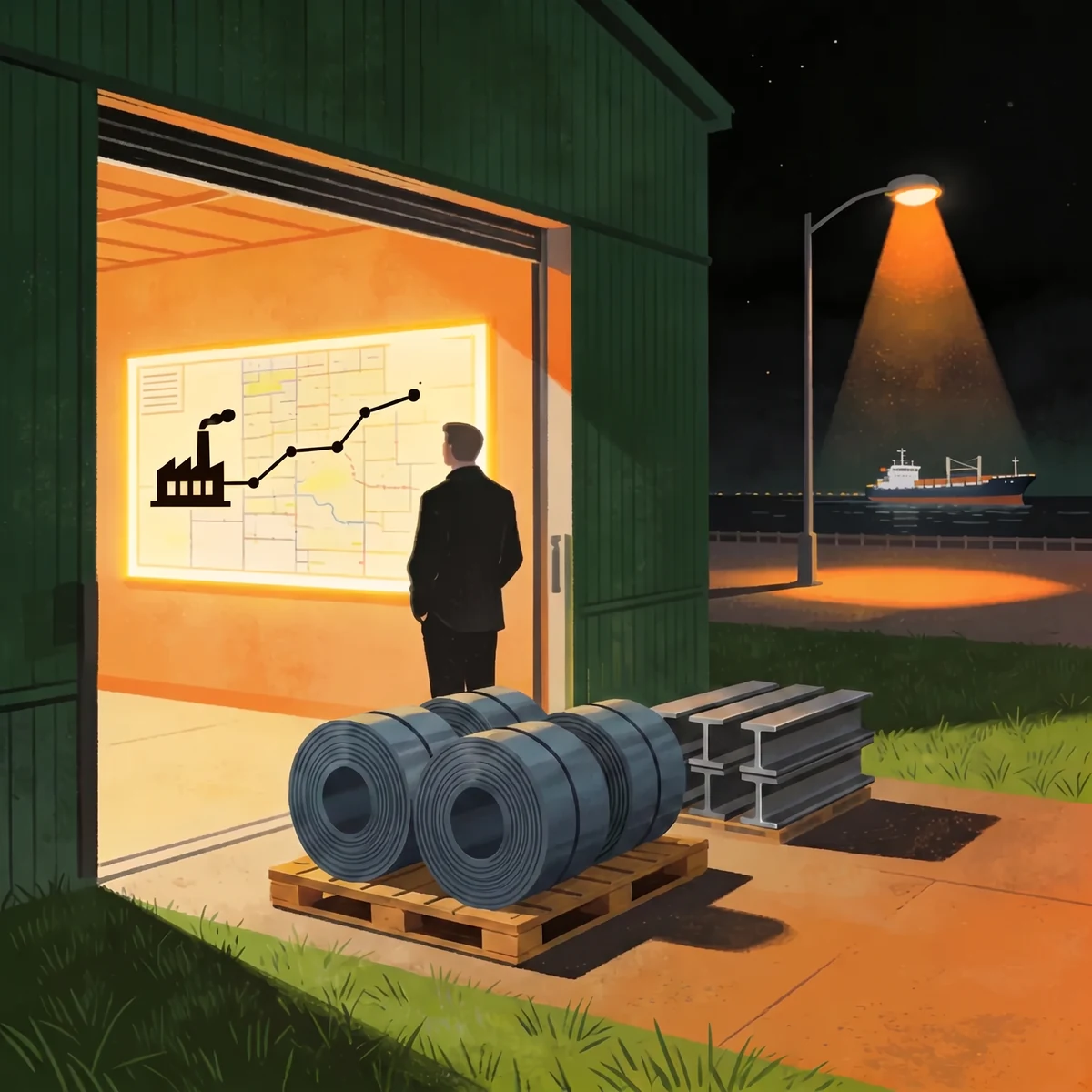
Assess CBAM exposure
Iron and steel products, CN classification, production route, export destinations and volumes mapped against the definitive regime, the de minimis threshold and the authorised declarant requirement.
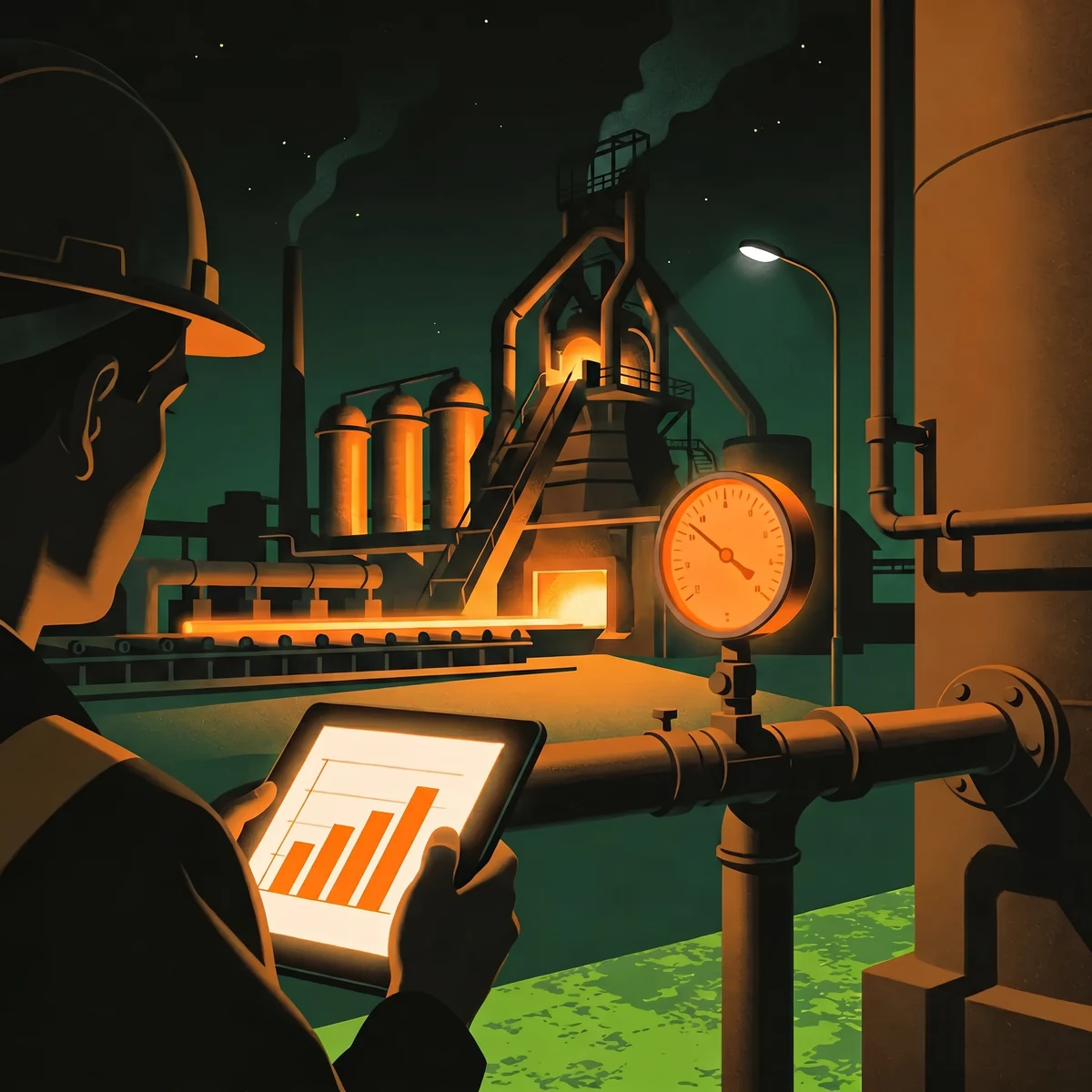
Calculate embedded emissions
Direct embedded emissions of each product quantified from actual installation and production route data following the EU methodology, in place of default values that carry a regulatory mark-up, then prepared for verification.
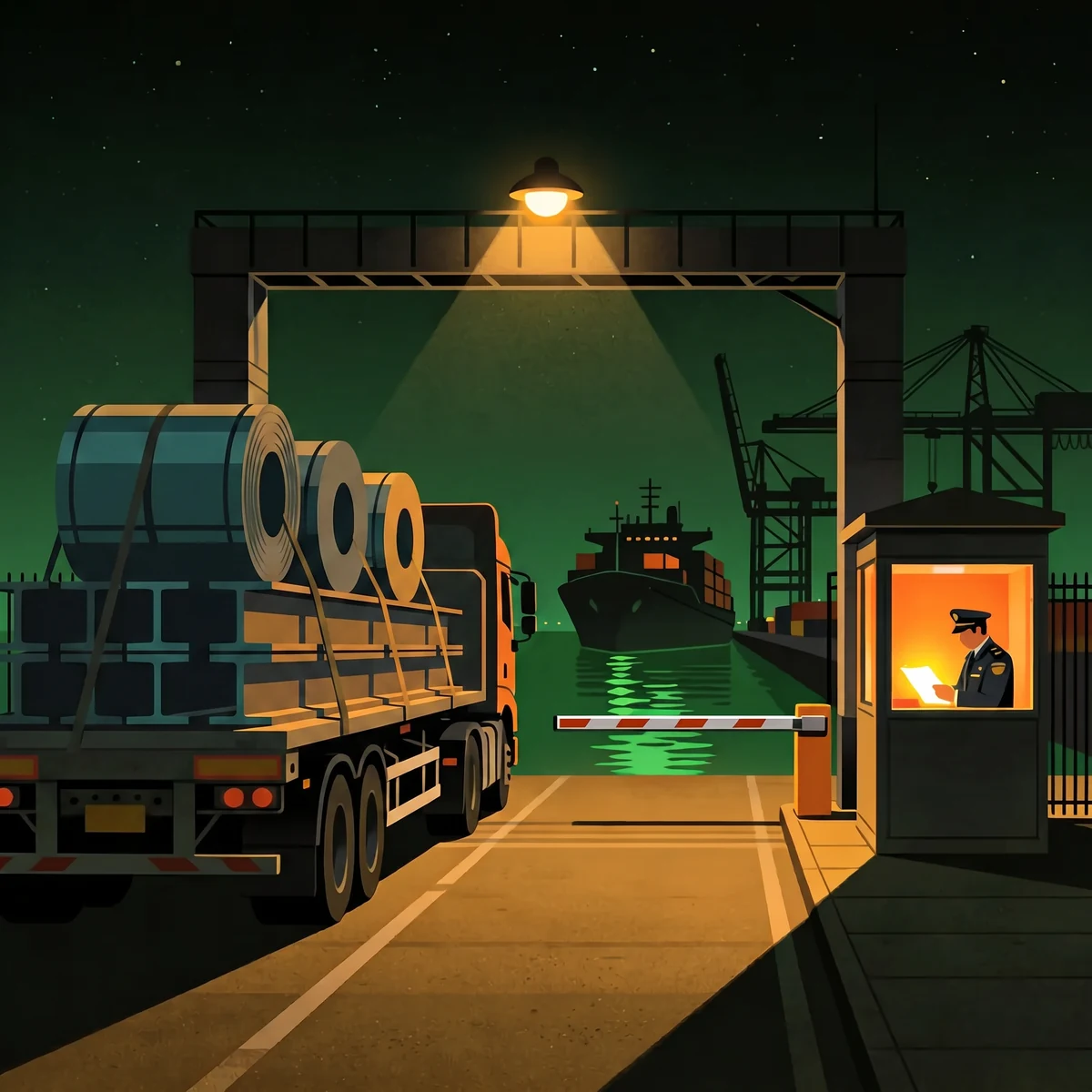
Prepare for accredited verification
Installation data and the monitoring methodology behind it prepared for confirmation by an accredited verifier, so the declared embedded emissions stand on evidence rather than marked up default values.
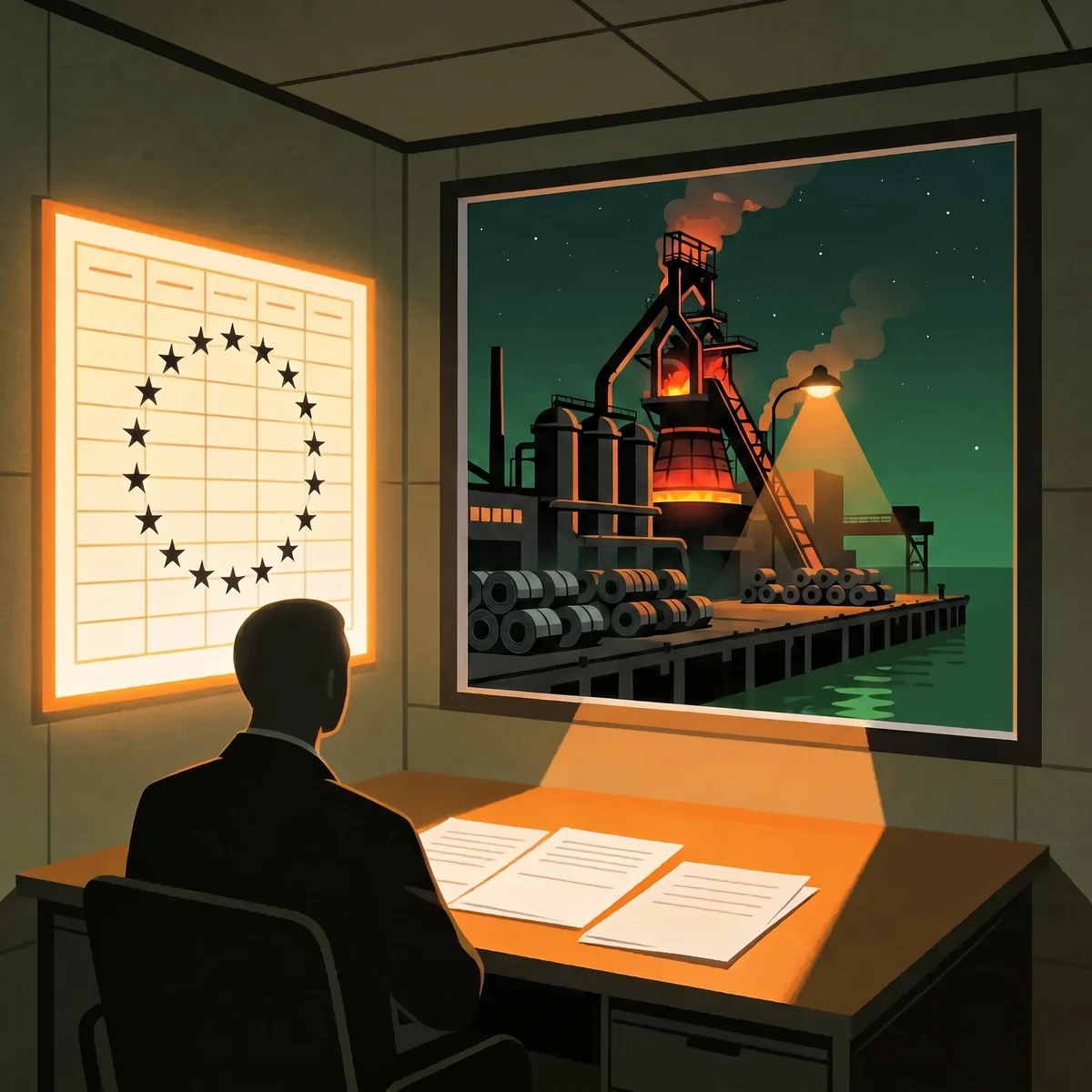
Report through the CBAM registry
Verified data shared with EU importers and authorised declarants through the central CBAM registry, and the annual declaration prepared so every covered consignment is accounted for.
Manage CBAM exposure and reduce
Certificate exposure tracked against the EU ETS price, any carbon price paid at origin deducted, and a reduction pathway built to lower the embedded emissions and the cost over time.
How CBAM works for iron and steel
The border mechanism follows the embedded emissions of an iron or steel good from the mill across the European border to the certificate that is surrendered.
A mill produces an iron or steel good. Embedded emissions are set by the production route, so a blast furnace product carries far more than a scrap based electric arc furnace one.
The direct embedded emissions are measured from installation data, or estimated with a country and product specific default value that carries a regulatory mark-up. Indirect, electricity related emissions are not priced for iron and steel.
An accredited verifier confirms the actual data, which is shared with the European importer through the central CBAM registry.
The good crosses the European border, where an authorised CBAM declarant reports the embedded emissions for the year above the 50 tonne de minimis.
CBAM certificates are surrendered for the direct embedded emissions, priced off the EU ETS, with any carbon price already paid at origin deducted.
Direct embedded emissions are measured at the mill, verified and shared through the CBAM registry, then declared at the European border by an authorised declarant who surrenders certificates priced off the EU ETS. Iron and steel is an Annex II good, so only direct emissions are priced. First surrender, covering 2026 imports, falls on 30 September 2027.
Embedded emissions follow each iron and steel product from the mill to the European border, and a readiness review turns that path into a measured, verified compliance plan.
WhatsAppRequest a CBAM readiness review →What CBAM readiness earns an iron and steel exporter
The gains of moving from marked up default values to verified installation data.
Market access retained
Verified embedded emissions data keeps iron and steel products moving into the European market under the definitive regime without compliance friction.
Lower certificate cost
Actual verified data replaces the high marked up default, so the certificate obligation reflects the real production route rather than a penalty estimate.
Trusted supplier status
Sharing verified data through the CBAM registry positions the mill as a preferred supplier to European importers and declarants.
Decarbonisation advantage
A reduction pathway lowers embedded emissions over time, an advantage that grows as the payable share climbs toward 100 percent in 2034.
CBAM for iron and steel exporters, answered
Q·01Which iron and steel products does CBAM cover?
Q·02What are the CBAM default values for iron and steel, and are they the same everywhere?
Q·03Does CBAM count indirect, electricity emissions for steel?
Q·04How much will CBAM cost iron and steel exporters?
Q·05Does verified data really lower the CBAM cost for steel?
Q·06Who verifies the emissions data, and can a verifier in India do it?
Request a CBAM readiness review for iron and steel
A short conversation about iron and steel products, production route, export volumes and the European buyers involved turns into a tailored CBAM plan. Schedule a call directly or send a written brief.
Pick the service and a slot; a practitioner takes the call.
Reviewed by Dhvanil Vakharia, Founder, GreenSutra®. Mechanical engineer (B.E., University of Mumbai) leading GreenSutra's sustainability and environmental compliance practice in Mumbai since 2016. Advises exporters, manufacturers and EU importers on CBAM compliance and carbon accounting.
Maintained by GreenSutra · Last reviewed July 2026