

Waste Tyre EPR Registration and Compliance Consultants in India (2026)
GreenSutra manages the whole waste tyre producer obligation end to end, from CPCB registration on the waste tyre portal and the weight-based recycling target to EPR certificate procurement from registered recyclers, the retreading route and the returns, from a Mumbai base and across India, so tyre compliance becomes a managed, evidenced record rather than an in-house burden.
Reviewed by Team GreenSutra · Updated 24 July 2026
Who needs waste tyre EPR registration?
A quick self-check before any commitment. If a business places new tyres on the Indian market, or imports waste tyres, the producer obligation reaches it.
Waste tyre EPR places the obligation on the producer. A business is a producer, and registers with the CPCB, if it does any of the following in India:
- manufactures and sells new tyres;
- sells new tyres made by others under its own brand;
- sells imported new tyres, or imports vehicles fitted with new tyres;
- is an automobile manufacturer importing new tyres for vehicles sold domestically;
- imports waste tyres, which carries its own separate obligation.
There is no turnover-based exemption. Recyclers and retreaders also register on the CPCB portal, and generate the certificates producers buy, but they do not carry the producer target. The six producer categories, the five recycling end-products, the target ramp and the retreading route are set out in the Waste Tyre EPR guide. This page is about getting the obligation handled. A free EPR discovery confirms whether registration is due and scopes it.
What GreenSutra handles, end to end
The whole waste tyre producer obligation, run as one accountable engagement.
GreenSutra runs the complete waste tyre obligation, from first registration to a filed return, so it stops being an in-house burden. One specialist EPR team owns every part that catches businesses out: the correct producer category, the weight-based recycling target that lags placed-on-market by two years, the EPR certificates that discharge it, the retreading route where it fits, and the returns. The rules themselves are set out in the Waste Tyre EPR guide; this is the service that gets them handled.
The complete waste tyre EPR service
A single engagement covers registration and the action plan, producer-category classification, recycling-target computation, EPR certificate procurement and reconciliation, the retreading route where it fits, waste-tyre importer handling, the quarterly and annual returns, data reconciliation and audit support, and penalty response. The scope list sets out each line.
What GreenSutra needs, and what it does on the portal
Registration moves fastest when the paperwork is gathered once. GreenSutra asks for a short set of documents, then carries the portal work itself.
| What GreenSutra needs from the business | What GreenSutra does on the CPCB portal |
|---|---|
| Company registration and tax identifiers (PAN, GST, CIN, IEC for importers) | Files the registration in the correct producer, recycler or retreader class |
| The tyres placed on the market, or waste tyres imported, by quantity and year | Classifies the producer category and computes the recycling target |
| The State board Consent to Operate and factory or plant details | Sets out the compliance action plan |
| Any prior EPR login, if a registration is being migrated | Procures EPR certificates from registered recyclers and files the returns |
GreenSutra sends a waste tyre EPR document and readiness checklist on request. Request the waste tyre EPR checklist through a short scoping.
Waste tyre EPR pricing, engagement models and ongoing compliance
Transparent structure, honestly scoped. Four ways to engage, a scoping tool, a managed retainer, and where a consultant earns its place.
Four ways to engage
Waste tyre EPR is priced by the shape of the obligation, not by a flat list price, because the quantity of tyres placed on the market varies widely and the certificates needed vary with it. There are four named ways to engage. No rupee figure is posted here, because the environmental-compensation rate, the certificate price and the fees are set by CPCB guidelines and move; every quote is scoped from a short data audit.
| Package | What it covers | Who it fits | How the quote is scoped |
|---|---|---|---|
| Registration (one-time) | CPCB registration, producer-category classification, first-year target computation and the action plan | A producer registering for the first time | From a short data audit of the tyres placed on the market |
| Managed-Compliance retainer (annual) | Everything kept live: target true-up, EPR certificate procurement, the quarterly and annual returns, amendment monitoring and audit support | A producer that wants waste tyre EPR run for it | From annual volumes placed on the market |
| Importer package | Registration and the flat previous-year obligation for importers of waste tyres, with the pyrolysis-import constraint handled | Importers of waste tyres | From the number of import lines and volumes |
| Recycler and retreader package | Registration, returns and the monthly information duty for recyclers and retreaders that generate certificates | Recyclers and retreaders | From plant capacity and end-product lines |
Estimate the waste tyre EPR obligation before committing
A waste tyre EPR target and cost calculator is in build. Until it ships, a free EPR discovery is the scoping tool: it confirms whether registration is due, the producer category in play and an indicative cost band in a few structured questions.
Ongoing waste tyre EPR compliance and the managed retainer
Waste tyre EPR is not a one-time registration. Once registered, the obligation recurs: the quarterly and annual returns fall due, EPR certificates have to be procured and reconciled, and the target is trued up as the tyres placed on the market move. The Managed-Compliance retainer carries that year on year. The full filing calendar is in the Waste Tyre EPR guide; GreenSutra tracks the operative dates on the live portal, since CPCB routinely issues administrative extensions.
Self-file on the CPCB portal, or bring in a consultant
A business can register and file itself. Whether that is the right call depends on how its tyres map to the producer categories, how it will source certificates from registered recyclers, and whether it can carry the quarterly and annual continuity. The comparison sets out the difference dimension by dimension.
| Dimension | Self-filing in-house | GreenSutra as consultant |
|---|---|---|
| CPCB portal navigation | Learned once, repeated each cycle by internal staff | Handled as routine work across many filings |
| Producer-category classification | Judged in-house across the six producer categories | Confirmed against the correct producer category |
| Target computation | Often misread, because the target lags placed-on-market by two years and carries a wear-and-tear factor | Computed from the quantity placed on the market in the correct lagged base year |
| Certificate sourcing | Sourced ad hoc from whichever recycler is found | Sourced from an established registered-recycler network and reconciled on the portal |
| Retreading route | Deferral rarely tracked to end-of-life disposal | The one-year deferral tracked until the tyre is disposed of through a registered recycler |
| Returns | Remembered and filed by internal staff | Filed on a managed calendar so a deadline is not missed |
| Environmental Compensation exposure | Carried by the business if a target is misread or a return slips | Reduced by getting the category, target and certificates right the first time |
How a waste tyre EPR engagement runs
Six stages, from a data audit to a managed retainer, so a one-time registration becomes an ongoing clean record.

Discovery and tyre audit
A short review of the new tyres placed on the market, or the waste tyres imported, and the producer category they fall in, with prior-year quantities assembled.

Classification and target scoping
The producer category confirmed, the weight-based recycling target scoped from the two-year-lagged base year and the wear-and-tear factor, so the obligation is sized before registration.

Portal registration and action plan
The registration carried through the CPCB waste tyre portal to grant, with the company documents assembled so a query does not stall it, and the compliance action plan set out.
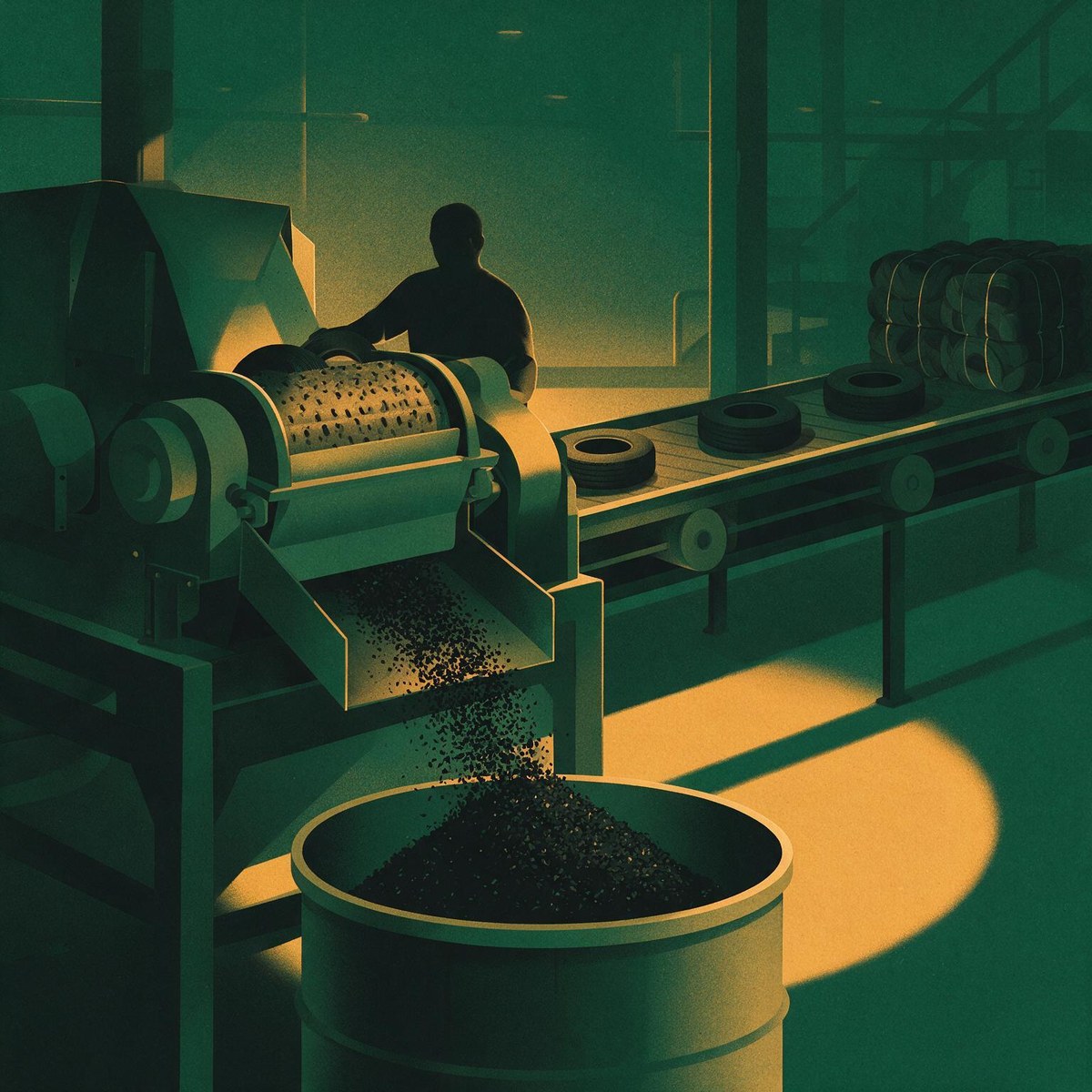
Certificate procurement and fulfilment
EPR certificates sourced from registered recyclers and reconciled against the target, with the retreading route handled where it fits. GreenSutra sources those certificates and does not issue or verify them.

Filing and periodic compliance
The quarterly and annual returns filed on the portal and the records kept audit-ready, with the operative dates confirmed on the live portal rather than assumed.

Managed-compliance retainer
The obligation kept current cycle on cycle as the tyres placed on the market move, with certificates reconciled and the target trued up, so each period closes cleanly.
Which organizations need waste tyre EPR
Producers, importers, recyclers and retreaders across these sectors carry a waste tyre EPR obligation. Here is what each faces and how GreenSutra handles it.
Tyre manufacturers
Domestic makers of new tyres are producers on what they place on the market. GreenSutra registers the producer, computes the target and runs the returns.
Automobile and vehicle makers
Automobile makers importing new tyres for domestic vehicles, and importers of vehicles fitted with tyres, are producers. GreenSutra scopes the range and handles the registration.
Own-brand and private-label sellers
Businesses selling tyres made by others under their own brand carry the producer obligation. GreenSutra classifies the category and runs the whole obligation.
Importers of new tyres
Importers selling imported new tyres are producers on the same two-year-lagged target base. GreenSutra registers the importer and files the returns.
Importers of waste tyres
A waste-tyre importer carries a flat 100 per cent obligation on the previous year. GreenSutra handles the separate accounting and the pyrolysis-import constraint.
Tyre recyclers
Recyclers converting waste tyres into recognised end-products register and generate certificates. GreenSutra handles registration, the monthly information and the returns.
Retreaders
Retreaders renewing structurally sound worn tyres register and generate retreading certificates. GreenSutra handles the registration and the deferral tracking.
Marketplaces and D2C tyre sellers
Platforms and direct sellers of tyres carry the producer obligation where they place tyres under their own brand. GreenSutra covers the registration and the returns.
Whichever sector fits, the registration, target, certificates and returns run the same accountable way. A short scoping conversation sizes the obligation before any commitment.
WhatsAppBook a free EPR consultation →What a waste tyre EPR engagement puts on the record
The deliverables behind the service. A tracker of the obligation, never a certificate GreenSutra could not issue.
A documented compliance record
Registration, classification, target, certificates and returns kept in one place, so the obligation is discharged on evidence rather than assertion.
A waste tyre EPR compliance tracker
A clear view of the target due, the certificates procured with their validity, the retreading deferrals and the returns filed. A tracker, not a certificate, which only registered recyclers generate.
Audit-ready evidence
Quantities reconciled against recycler figures and records kept, so a CPCB or state board query meets a complete file, not gaps, and any Environmental Compensation exposure is contained.
Continuity cycle on cycle
The managed retainer keeps the record current as volumes move and the return deadlines shift.
Why GreenSutra for waste tyre EPR
The reasons behind the reputation.
Consultant, not a verifier
GreenSutra classifies, computes the target, sources EPR certificates from registered recyclers and files returns. It never claims to recycle, verify recycling or issue certificates, which only CPCB-registered recyclers can do.
The whole obligation, one team
Registration, classification, target, certificate sourcing, the retreading route and the returns handled end to end.
Target read correctly
The two-year-lagged base and the wear-and-tear factor applied correctly, so the obligation is neither over nor under bought.
Sector playbooks
A specific approach for tyre manufacturers, automobile makers, importers, recyclers and retreaders.
A pan-India track record since 2016
GreenSutra has advised on compliance across India since 2016, with an established registered-recycler network for EPR certificate fulfilment.
Mumbai based, delivered pan India
A specialist EPR desk in Mumbai serving producers and importers across India, with LCA, carbon and ESG under the same roof.
Waste tyre EPR, the practical questions
Q·01How much does waste tyre EPR registration cost in India?
Q·02Who needs waste tyre EPR registration?
Q·03What is the correct CPCB waste tyre portal?
Q·04What is the waste tyre EPR target?
Q·05Does GreenSutra procure EPR certificates for tyres?
Q·06How does retreading affect the obligation?
Q·07Can waste tyres be imported to make pyrolysis oil?
Q·08When are waste tyre EPR returns due?
Q·09Does GreenSutra issue or verify EPR certificates?
Q·10Can GreenSutra take over waste tyre EPR from another consultant?
Q·11Do recyclers and retreaders need to register too?
Q·12Does GreenSutra work with businesses outside Mumbai?
Waste tyre EPR questions, answered
Real EPR questions from producers and importers, answered by the GreenSutra team.
What is EPR?
EPR stands for Extended Producer Responsibility. It is a policy under which Manufacturers and or Producers are given the responsibility to collect, treat and…
Answered by the GreenSutra team→Q · 02EPR4,658 viewsHow are the targets calculated for Plastic, E-waste and Batter waste EPR?
Central Pollution Control Board (CPCB) generates the target on its portal from the quantity the registered entity places on the market, not from the…
Answered by the GreenSutra team→Q · 03EPR4,662 viewsWhat is meant by a Refurbisher?
Any person or organization who repairs used electrical and electronic equipment with the intention of increasing its life beyond its original lifespan and using…
Answered by the GreenSutra team→Q · 04EPR4,334 viewsWhat is meant by PRO?
PRO stands for Producer Responsibility Organization. A PRO is an agency or an organization which helps organizations and businesses fullfil their EPR requirements. How…
Answered by the GreenSutra team→Q · 05EPR4,752 viewsWhat is the validity of Plastic, E-Waste and Battery Waste EPR registrations?
The Center for Pollution Control Board has issued respective guidelines for Plastic, E-Waste and Battery Waste EPR outlining the validity of their respective registrations…
Answered by the GreenSutra team→Q · 06EPR4,420 viewsWhere do the eligible entities apply registration for EPR ?
The entities shall apply on the respective Plastic, E-Waste and Battery Waste online portal developed by Central Pollution Control Board (CPCB) for the registration…
Answered by the GreenSutra team→Book a free waste tyre EPR consultation
A short conversation about the tyres placed on the market, or the waste tyres imported, turns into a tailored waste tyre EPR plan and a scoped quote, at no charge and no commitment. GreenSutra's EPR desk works from Unit 43, Apollo Industrial Estate, Paperbox Road, Andheri East, Mumbai 400093, Maharashtra, and delivers across India.
Pick a slot; a practitioner takes the call.
Field notes and stories
Reading on recovery, recycling and the circular economy from the GreenSutra journal.

Maintained by GreenSutra · Last reviewed July 2026