

CBAM covers iron and steel across most of CN chapter 72 and listed headings of chapter 73: pig iron, direct reduced iron, crude and semi-finished steel, flat-rolled products, bars, rods, tubes, pipes, screws, bolts, nuts and steel structures. Annex I of Regulation (EU) 2023/956 gives the definitive list; imports of no more than 50 tonnes per importer per year are exempt.
What the iron and steel scope includes
CBAM applies to iron and steel goods across most of CN chapter 72 together with listed headings of chapter 73. Coverage runs the full length of the value chain: upstream pig iron, direct reduced iron and crude and semi-finished steel, then flat-rolled products, bars, rods, tubes and pipes, through to finished articles such as screws, bolts, nuts and steel structures. Iron and steel is one of six product groups under the mechanism, which has operated in its definitive form since 1 January 2026.
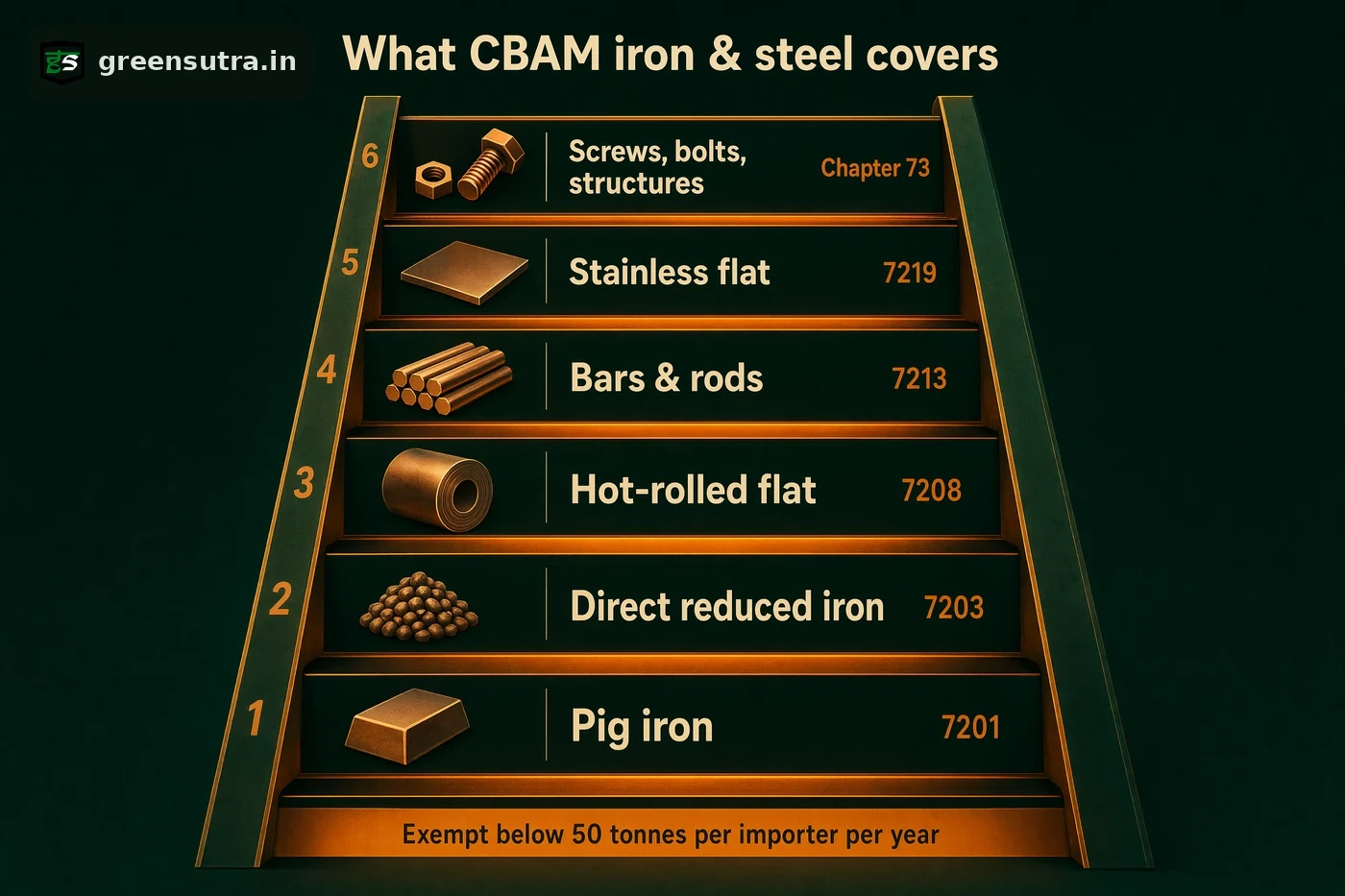
| Product family | Representative CN codes |
|---|---|
| Pig iron | 7201 |
| Direct reduced iron (DRI) | 7203 |
| Hot-rolled flat products | 7208 |
| Bars and rods | 7213 · 7214 10 |
| Stainless flat products | 7219 11 · 7219 31 |
| Tubes, pipes, screws, bolts, nuts, steel structures | Listed headings of chapter 73 |
Representative headings only. Annex I of Regulation (EU) 2023/956 carries the definitive product list, and scope follows the CN code declared at customs.
Two rules that limit the obligation
Being in scope is not the same as owing certificates. Two boundary rules decide whether covered iron and steel goods trigger a certificate obligation. The first is the de-minimis threshold: an importer bringing in no more than 50 tonnes of covered goods per year falls outside the obligation entirely. The second is emissions scope: iron and steel is an Annex II good, so only direct embedded emissions are priced. Indirect, electricity related emissions are still monitored and reported, but they add nothing to the certificate bill for steel, in contrast with cement and fertilisers, where direct and indirect emissions both count.
How to confirm a product is covered
Confirming CBAM scope for a specific product starts and ends with the CN code. Four checks settle the question:
- Match the CN code on the customs declaration against Annex I of Regulation (EU) 2023/956; the CBAM guide walks through the covered product groups.
- Cross-check the boundary with the other covered groups in the community answer on which sectors are covered under CBAM.
- For goods confirmed in scope, origin-specific default values set the fallback exposure where actual emissions data is not used; the companion answer on CBAM default values for Indian steel exports lists the India set.
- Where volumes are material, a CBAM consulting service can map the full product list to Annex I, calculate embedded emissions and prepare the CBAM report, with verification performed separately by an accredited verifier.
Sources: Regulation (EU) 2023/956 · European Commission, CBAM