


CBAM covers cement under combined-nomenclature heading CN 2523 plus calcined kaolinic clays at CN 2507 00 80. The scope reaches cement clinker, grey and white Portland cement, aluminous cement and other hydraulic cements, with clinker carrying the bulk of the embedded carbon that drives the charge.
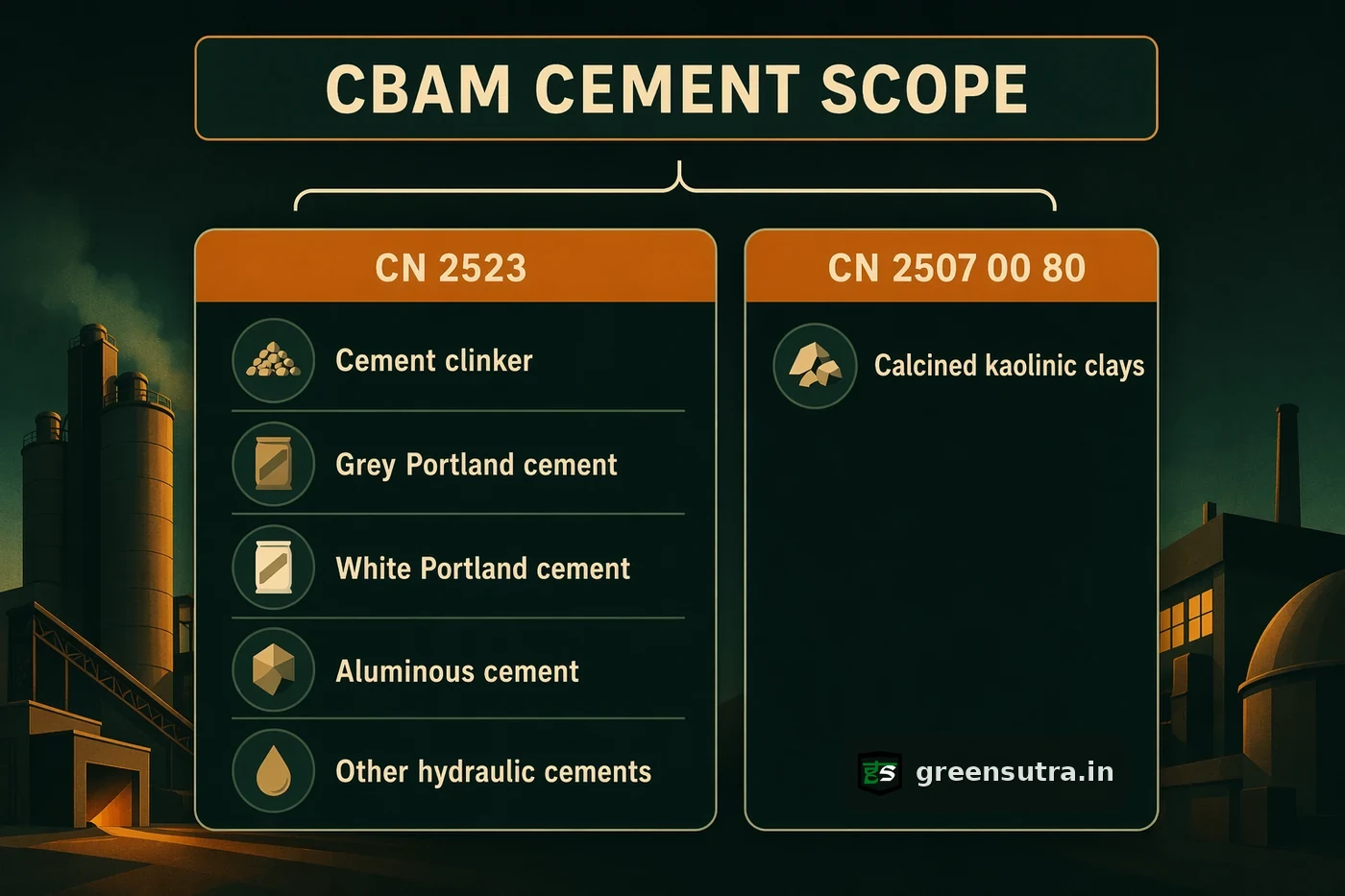
Cement enters the Carbon Border Adjustment Mechanism through two combined-nomenclature positions. Heading CN 2523 carries the main products: cement clinker, grey and white Portland cement, aluminous cement and other hydraulic cements. A second line, CN 2507 00 80, brings calcined kaolinic clays into scope. Because coverage follows the CN code, a cement position is in scope when its customs classification matches one of these headings, whatever its brand, grade or end use.
Where cement sits among the covered goods
Cement is one of six product groups the mechanism regulates. The others are:
- iron and steel
- aluminium
- fertilisers
- electricity
- hydrogen
Cement and fertilisers share a feature the other four lack: their embedded emissions count both direct and indirect emissions. Direct emissions come from the kiln, where limestone is calcined and fuel is burned. Indirect emissions come from the electricity used in production, mainly grinding.
Why clinker dominates the embedded carbon
Clinker is the calcined intermediate that gives cement most of its embedded carbon, so a finished cement with a lower clinker factor carries a smaller embedded total. Two practical points follow for anyone mapping a product list:
- the clinker line and the kaolinic-clay line each carry their own CBAM obligation, separate from finished cement
- a declaration built only around bagged finished cement can miss those upstream positions
GreenSutra’s consultants find that clinker and calcined-clay lines are the ones most often overlooked when a first product list is drawn up. CBAM advisory covers declarant status, embedded-emissions calculation and certificate obligations across the full product list. The CBAM guide sets out which headings apply to a given cement range.
Sources: Regulation (EU) 2023/956 · Implementing Regulation (EU) 2025/2621 · European Commission CBAM