

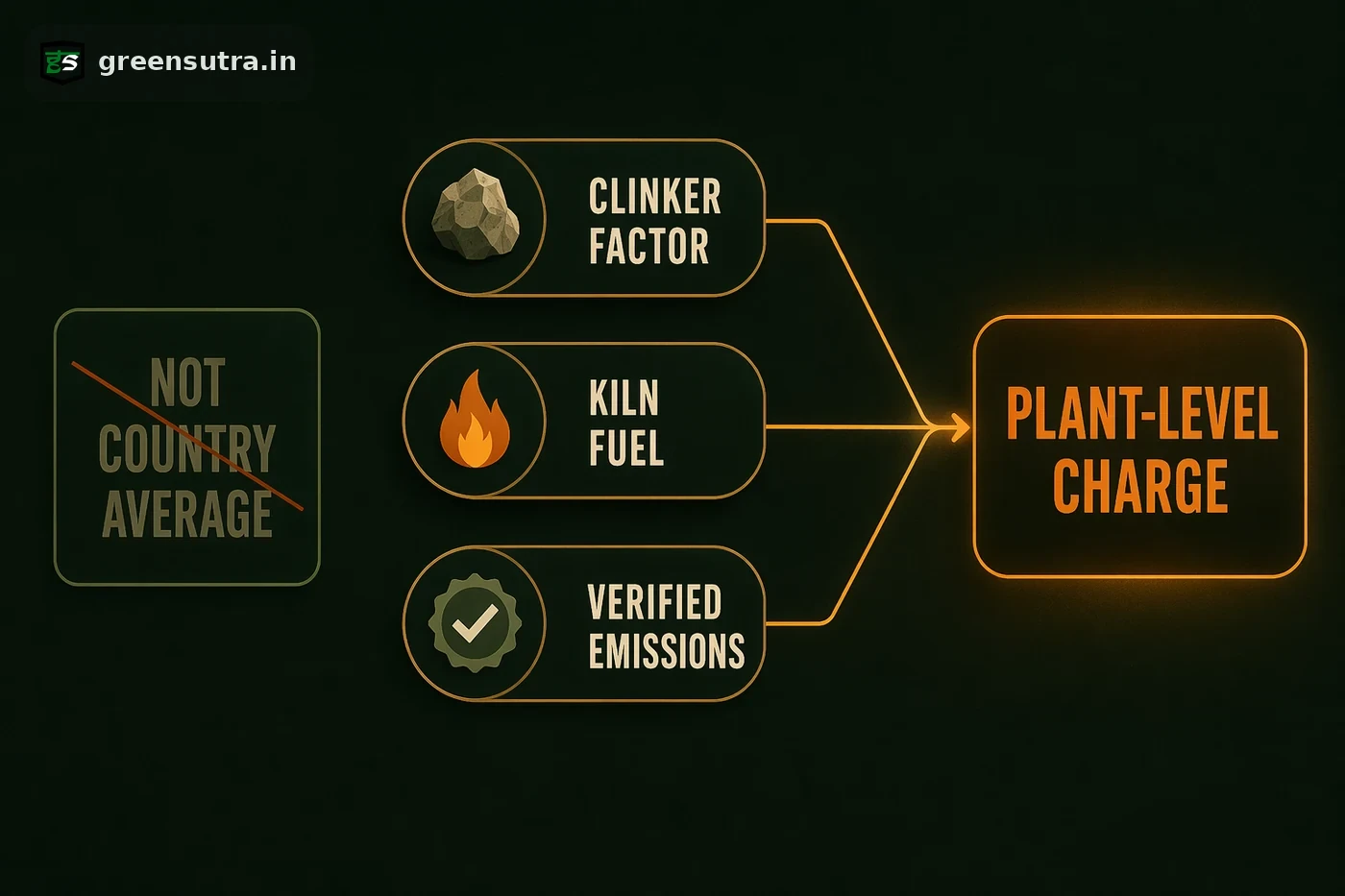
Egyptian and Algerian cement sits among the larger origins in the EU import mix, so both fall within CBAM by volume. The charge on any consignment is set at plant level by the clinker factor, kiln fuel and verified emissions, or by the applicable default value, not by a country average.
CBAM applies to cement under CN 2523 and 2507 00 80, so consignments from Egyptian and Algerian plants entering the EU carry an embedded-emissions charge once an importer passes the 50-tonne annual threshold. Cement is one of the groups where both direct emissions (kiln calcination of limestone plus fuel) and indirect emissions (grinding electricity) count towards the total, and clinker carries the bulk of that carbon. The charge per tonne therefore turns on each plant’s clinker factor and kiln fuel, not on the country of dispatch.
North Africa’s place in the EU cement mix
The EU imported about 11.3 million tonnes of cement and clinker in 2024, drawn from a handful of Mediterranean and Black Sea origins because cement is heavy and low in value and ships to nearby markets. Türkiye, the single largest origin, ships roughly as much as North Africa combined. Ukraine, Algeria, Egypt and Tunisia account for most of the rest.
| Origin | Share of EU cement and clinker imports, 2024 |
|---|---|
| Türkiye | about 38.9 percent |
| Ukraine | about 14.5 percent |
| Algeria | about 14.1 percent |
| Egypt | about 8.9 percent |
| Tunisia | about 7.9 percent |
What sets an Egyptian or Algerian plant’s charge
Volume share signals aggregate weight in the trade, but it does not set the per-tonne figure; the charge on a single consignment is decided at installation level, plant by plant.
- The embedded figure rests on verified actual installation data or the country-of-origin default value, which carries a mark-up on top of the base value.
- Verified installation data, confirmed by an accredited verifier, can sit below the default and lowers the charge accordingly.
- A lower clinker factor and cleaner kiln fuel reduce the embedded total, and because indirect emissions count, the grid behind the grinding stage feeds in too.
- The practical route is to collect plant-level clinker and kiln-fuel data, have it verified, and keep it with the consignment so the EU importer can declare actual emissions.
CBAM compliance support covers declarant status, embedded-emissions calculation and certificate exposure, while the CBAM cost calculator estimates the charge for a specific product, volume and import year.
Sources: Regulation (EU) 2023/956 · Implementing Regulation (EU) 2025/2621 · Eurostat