


Section B of the BRSR covers management and process disclosures. It asks whether the listed entity has policies covering each of the nine NGRBC principles, whether those policies are approved by the board, how they are governed and reviewed, and who holds accountability for responsible business conduct.
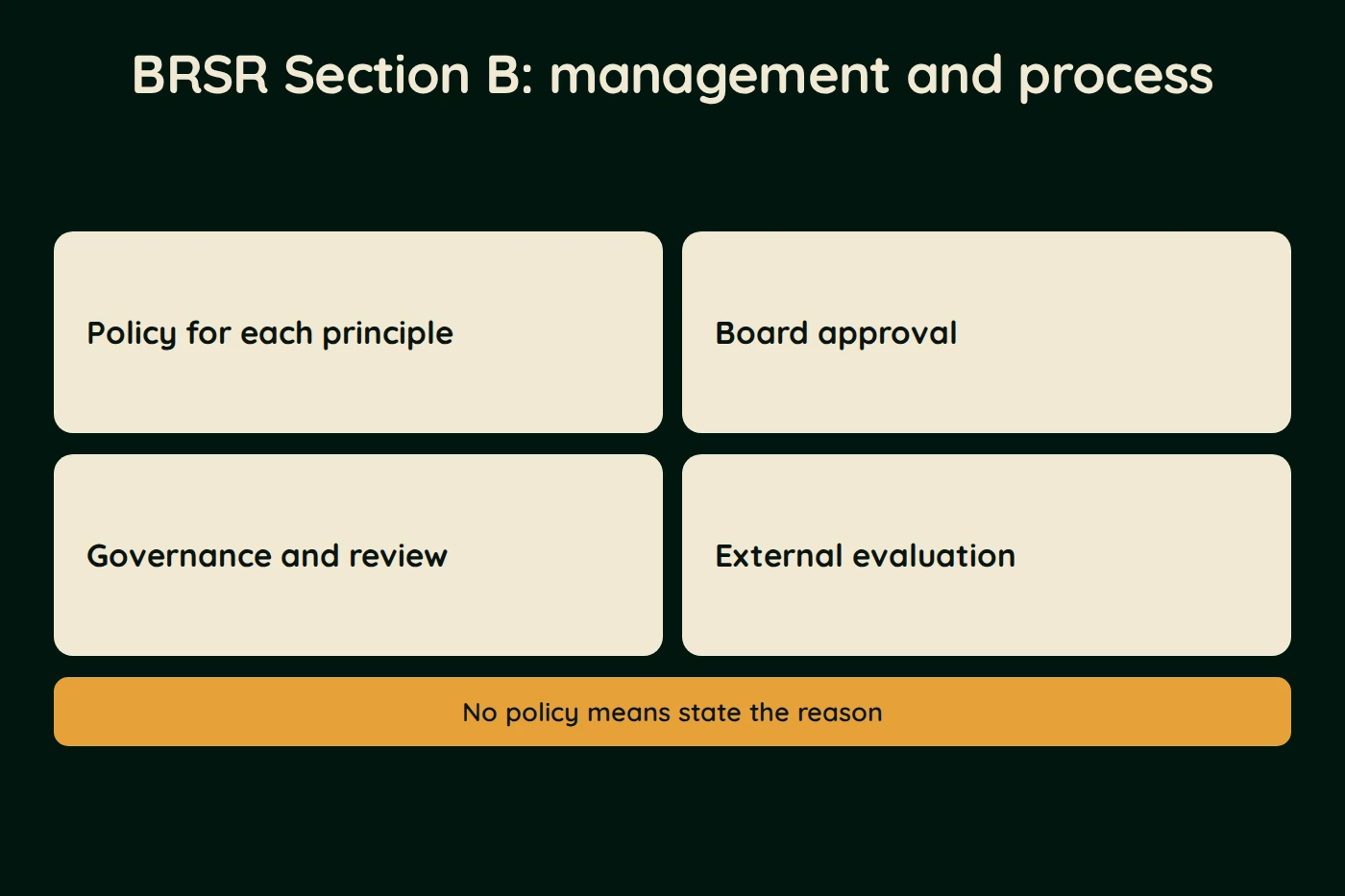
Section B sits between the descriptive Section A and the quantitative Section C. It is the governance section, and it asks about process rather than outcomes. The question it answers is whether the entity has the machinery to manage responsible business conduct, not how well it performed.
What Section B asks
- whether a policy exists for each of the nine principles, and whether it has been approved by the board
- whether the policies extend to value chain partners
- the specific commitments, goals and targets the entity has set
- the governance, review and compliance arrangements, including the highest authority responsible for the policies
- whether performance against the policies is reviewed, by whom, and how often
- whether the policies have been evaluated by an external agency
The comply-or-explain shape
Where a policy does not exist for a given principle, Section B does not simply allow a blank. The format asks the entity to state the reason, which turns an absence into a disclosed and explained position rather than a gap. That design makes Section B a useful early diagnostic: reading an entity Section B shows immediately which principles are managed and which are unmanaged.
Why it is completed alongside Section C
Section B claims and Section C numbers have to agree. An entity that reports a board-approved environmental policy under Principle 6 in Section B, but leaves the Principle 6 essential indicators thin in Section C, has created a visible inconsistency. Assurance providers read the two together, so drafting them together is more efficient than sequencing them.
Sources: SEBI BRSR format, Annexure I
The BRSR guide explains the nine principles Section B is organised around. BRSR reporting services covers policy gap analysis and board-level reporting.