

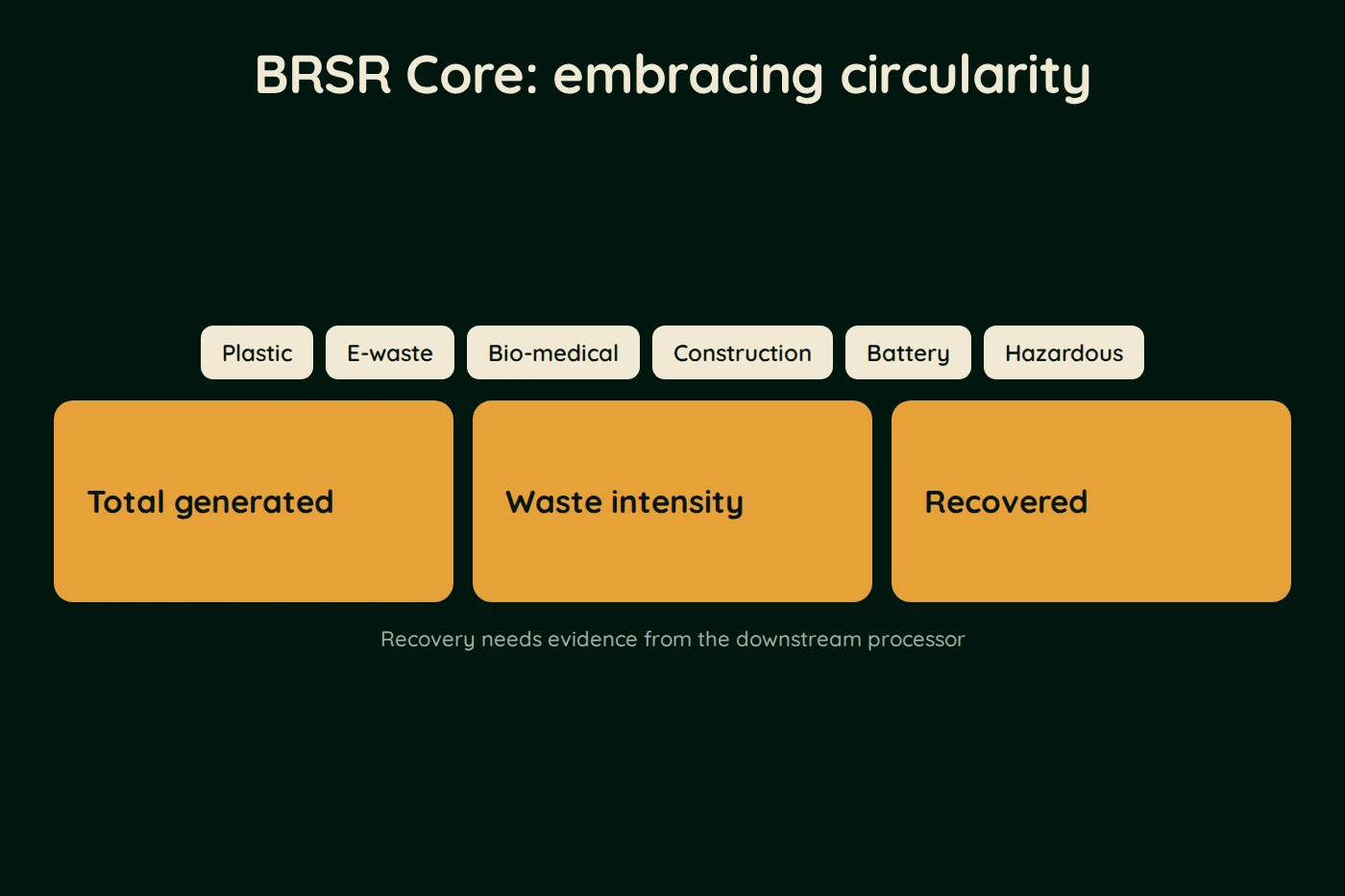
Embracing circularity is the waste management attribute of BRSR Core. It covers waste broken down by type, total waste generated, waste intensity, and waste recovered through recycling, reuse or other recovery operations. It cross-references to Principle 6 of the essential indicators.
Circularity is the fourth of the nine BRSR Core attributes, and the one with the longest disaggregation list.
The waste types reported
Waste is reported by type rather than as a single total. The categories cover plastic waste, e-waste, bio-medical waste, construction and demolition waste, battery waste, radioactive waste, other hazardous waste and other non-hazardous waste.
The three measures on top of the breakdown
- Total waste generated, across all types
- Waste intensity, as with the other environmental attributes
- Waste recovered, through recycling, reuse or other recovery operations
Why the recovery line is the difficult one
Generation can be measured at the gate. Recovery cannot, because it happens after the waste leaves the site. Substantiating a recovery figure means holding evidence from the downstream processor for the quantity actually recycled, reused or recovered, not simply the quantity handed over. Entities that record only dispatch quantities find they can report generation but cannot support recovery, which is exactly the line an assurance provider tests.
The overlap with other Indian obligations
Several of these waste streams carry separate statutory regimes in India, including plastic packaging, e-waste and battery waste under Extended Producer Responsibility. The data collected for those regimes is often the best available source for this attribute, though the boundaries differ, so the figures need reconciling rather than copying across.
Sources: SEBI Annexure I, Format of BRSR Core
The BRSR guide covers all nine Core attributes. BRSR reporting services covers waste data systems and assurance readiness.