


Enabling inclusive development covers two measures: input material sourced directly from micro, small and medium enterprises and small producers as a percentage of purchases by value, and job creation in smaller towns. It cross-references to Principle 8 of the essential indicators.
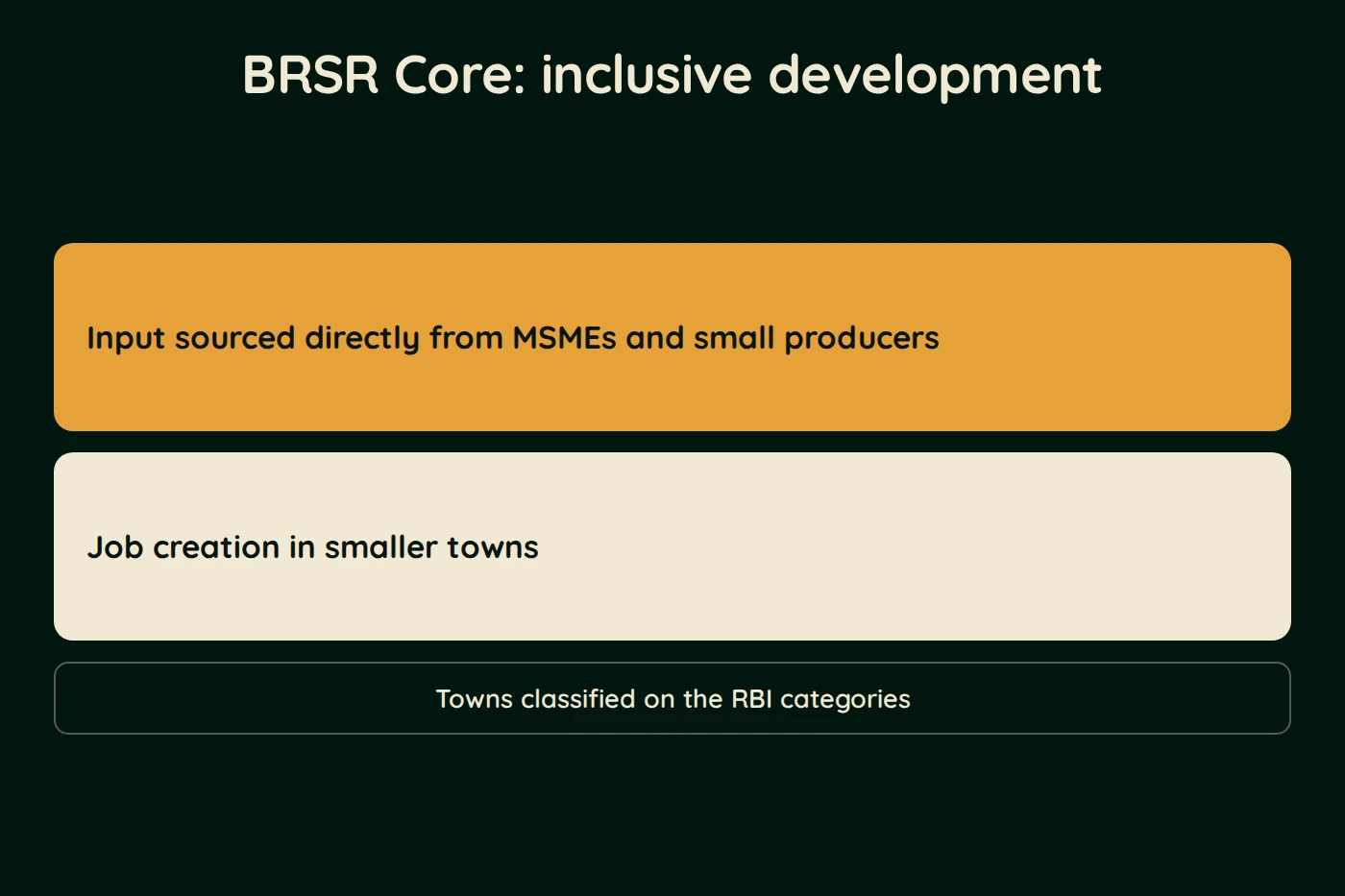
Inclusive development is the seventh of the nine BRSR Core attributes, and one of two that reflect an explicitly Indian and emerging-market framing rather than an international template.
The two measures
- Input material sourced directly from micro, small and medium enterprises and small producers, as a percentage of purchases by value
- Job creation in smaller towns, measured as wages paid to persons employed in smaller towns as a percentage of total wage cost
How smaller towns are defined
The location classification is not left to the entity. Job creation in smaller towns is categorised on the Reserve Bank of India classification of rural, semi-urban, urban and metropolitan centres. Using an internal definition of what counts as a smaller town produces a figure that cannot be compared with any other filing.
Why the word directly matters in the sourcing measure
The sourcing measure asks for input material sourced directly from micro, small and medium enterprises and small producers. Purchases routed through a trading intermediary that itself buys from small producers do not satisfy the direct test. Entities with layered procurement often find their reported figure is materially lower than their internal understanding of small-supplier engagement, and the difference is exactly this intermediation.
Where the data comes from
Both measures come from systems that already exist. The sourcing percentage comes from procurement records joined to supplier classification data. The smaller-towns figure comes from payroll joined to location. The work is usually not collection but classification, since neither system typically carries the flag the attribute needs.
Sources: SEBI Annexure I, Format of BRSR Core
The BRSR guide covers all nine attributes. BRSR reporting services covers procurement and payroll data mapping.