


The stated purpose is global comparability. Intensity ratios based on revenue adjusted for purchasing power parity stop an Indian entity environmental efficiency being distorted by exchange rates and price levels when a foreign investor or buyer benchmarks it against peers abroad. It applies to the four environmental attributes.
Purchasing power parity adjustment is one of the more distinctive features of BRSR Core, and the reasoning behind it is worth understanding before the calculation.
The problem it solves
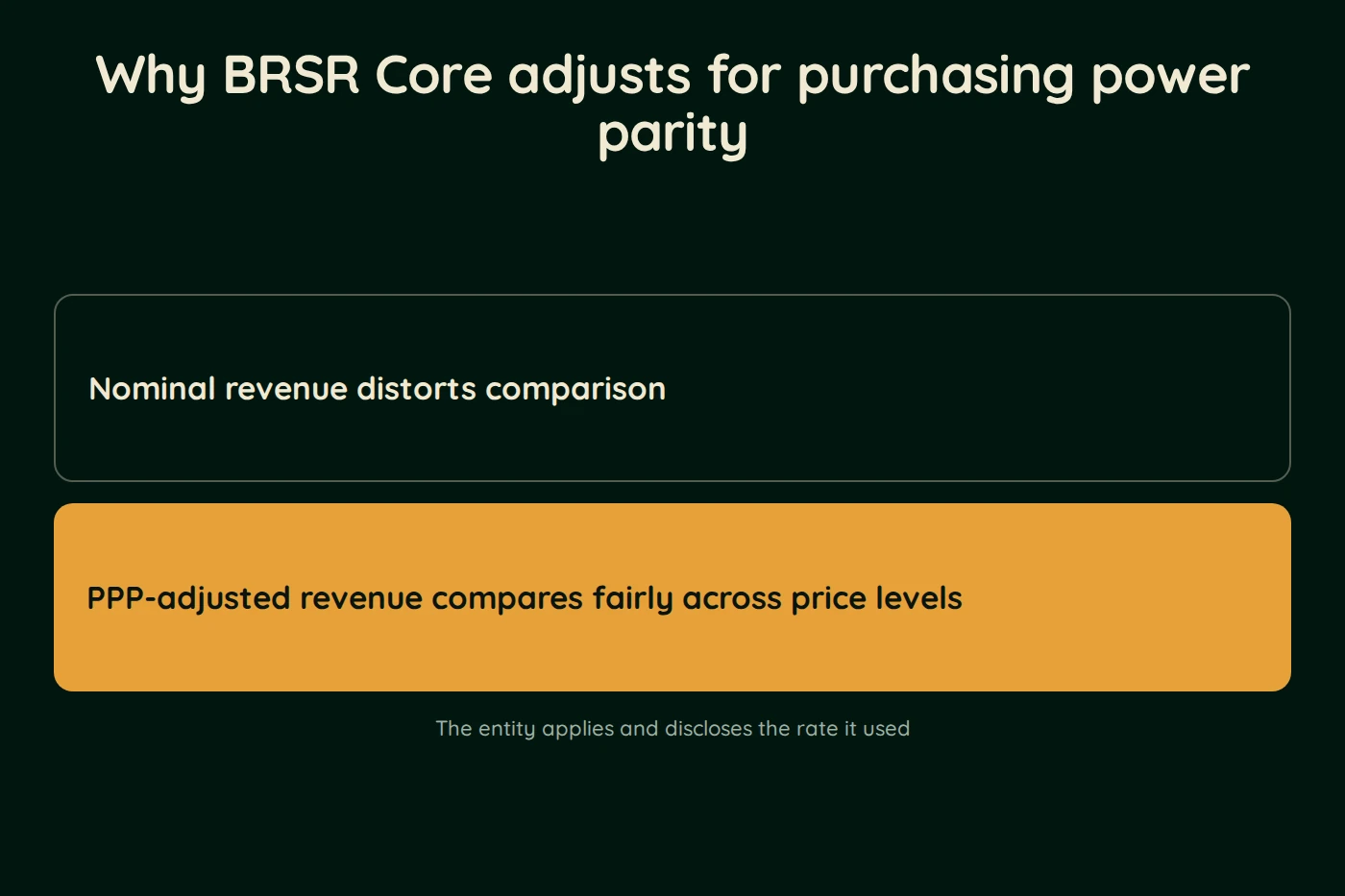
An intensity ratio divides a physical quantity by revenue. If revenue is measured in nominal converted currency, an entity operating in a lower-price economy shows artificially high intensity, because the same physical output converts into fewer dollars. The entity looks less efficient than an identical operation in a higher-price economy. Adjusting revenue for purchasing power parity removes that distortion, which makes cross-country comparison fairer to low-cost and developing economies.
How it is computed
The ratio is the total quantity, for example total Scope 1 and Scope 2 emissions in metric tonnes, divided by total revenue from operations adjusted for purchasing power parity, using the purchasing power parity conversion rate for the United States dollar against the Indian rupee.
Which attributes it applies to
Only the four environmental attributes carry intensity ratios: greenhouse gas emissions, water, energy and waste. The remaining five attributes use percentages, rates and counts rather than per-turnover intensity.
The rate is not published by SEBI
The conversion rate is an externally published figure rather than a number the regulator issues. The reporting entity applies the latest available rate for India and discloses the rate it used. This has a practical consequence for anyone comparing two filings: check which rate each entity applied before treating their ratios as directly comparable.
Sources: SEBI BRSR Core circular, 12 July 2023
The BRSR guide covers all three intensity denominators. BRSR reporting services covers intensity computation and disclosure.