


Output-based intensity, also called physical intensity, divides the total quantity by a company and sector specific output measure rather than by revenue. Examples given in the format include number of vehicles produced, metric tonnes of material produced, room-nights, and number of seats and travel class.
BRSR Core deliberately asks for two different intensity denominators. Understanding why both exist explains what each is for.
The three denominators in play
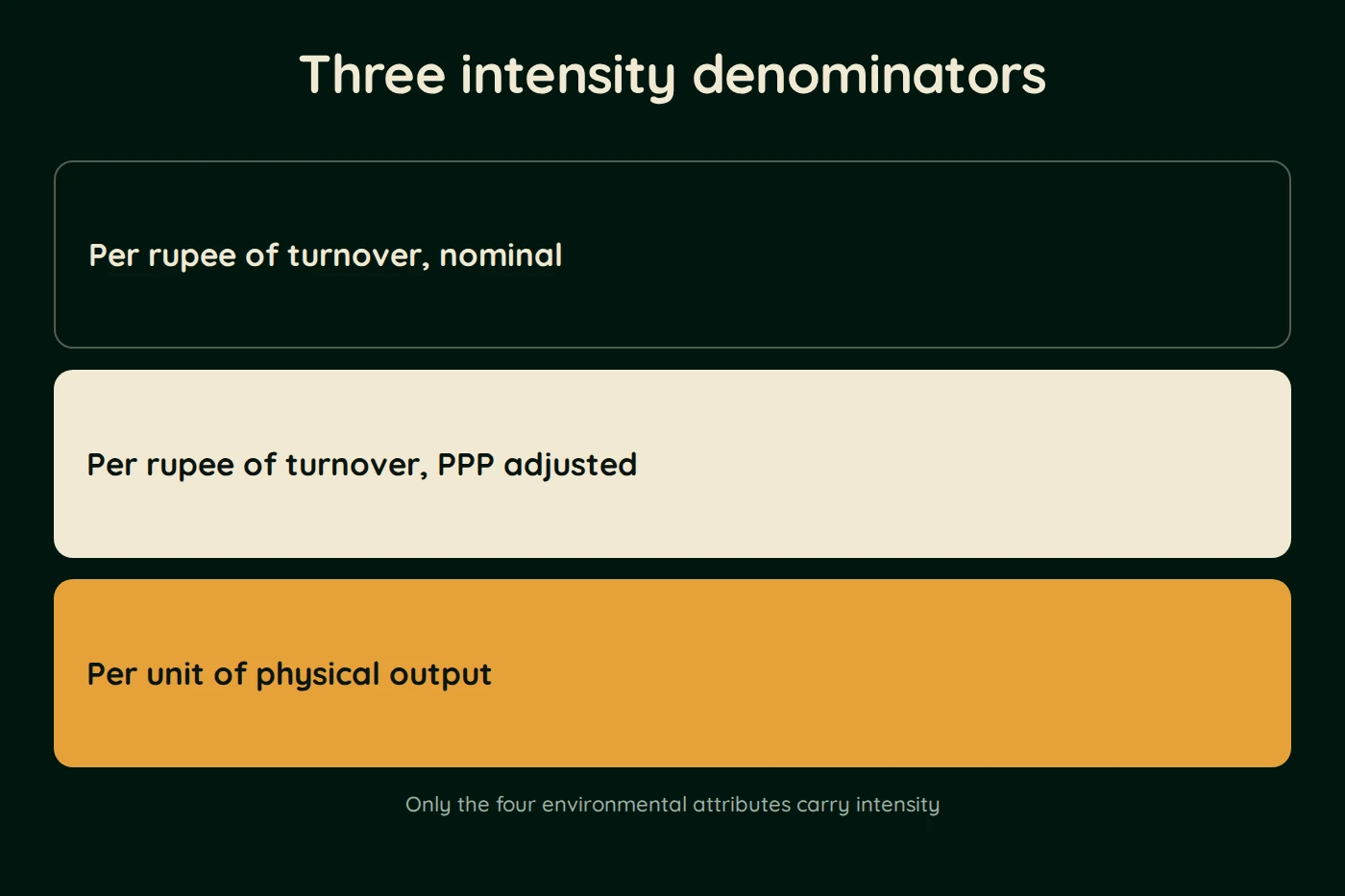
| Denominator | Where it is required | What it enables |
|---|---|---|
| Nominal per rupee of turnover | The wider BRSR, Principle 6 essential indicators | The familiar domestic intensity figure |
| Per rupee of turnover adjusted for purchasing power parity | BRSR Core | Comparison across countries and price levels |
| Output-based, or physical | BRSR Core | Comparison against physical peers making the same thing |
Why a physical denominator is needed at all
A monetary denominator moves when prices move. An entity that raises prices reduces its revenue-based intensity without changing a single physical process, and an entity in a downturn appears to worsen. A physical denominator is immune to that: emissions per tonne of material produced changes only when the process changes.
Why the measure is entity specific
The output measure is company and sector specific by design, because there is no universal unit. A vehicle manufacturer counts vehicles, a materials producer counts tonnes, a hotel counts room-nights, an airline counts seats and travel class. This makes the figure highly meaningful within a sector and largely meaningless across sectors.
How the pairing is meant to be read
The monetary ratio lets an investor compare across sectors and jurisdictions. The output ratio lets an operator compare against physical peers making the same product. Reporting both is what allows a single filing to serve a financial reader and a technical reader without either being misled.
Sources: SEBI Annexure I, Format of BRSR Core
The BRSR guide explains the intensity ratios in full. BRSR reporting services covers selecting a defensible output measure.