


A high risk supplier is identified without a rating by proxy screening, which ranks suppliers on observable attributes rather than on submitted data. The standard proxies are sector, geography, process, labour intensity and spend concentration. Screening produces a ranked shortlist, not a verdict. Full assessment follows only for the suppliers the screen puts at the top.
Rating coverage concentrates on listed companies and large private issuers, so a tier one supplier list routinely contains companies no rating provider has ever covered: the small fabricator, the labour contractor, the regional logistics operator. Risk-based due diligence anticipates this. The OECD guidance asks an enterprise that cannot examine every relationship at once to scope the areas where harm is most likely and most severe, then assess those in depth. The UN Guiding Principles frame the same duty as identifying the general areas of most significant risk first. Both are screening instructions, not rating instructions.
Five proxies that need no supplier input
Proxy screening scores what is already knowable from procurement records and public sources, without a single question being sent to the supplier.
- Sector. Certain activities carry recognised inherent exposure whoever operates them: mining, textiles, construction, electronics assembly, agriculture and waste handling.
- Geography. Country level indicators on labour rights enforcement, water stress, corruption and grid carbon intensity attach to a site address on their own.
- Process. Wet processing, electroplating, smelting, dyeing and solvent use lift effluent, emissions and occupational health exposure above the sector norm.
- Labour intensity. Seasonal, migrant, contract and piece rate models concentrate human rights exposure. High headcount against modest revenue is a usable signal.
- Spend concentration. Concentration changes both the exposure and the ability to act on it. A sole source supplier of a critical input carries continuity risk that a substitutable one does not.
Screening versus full assessment
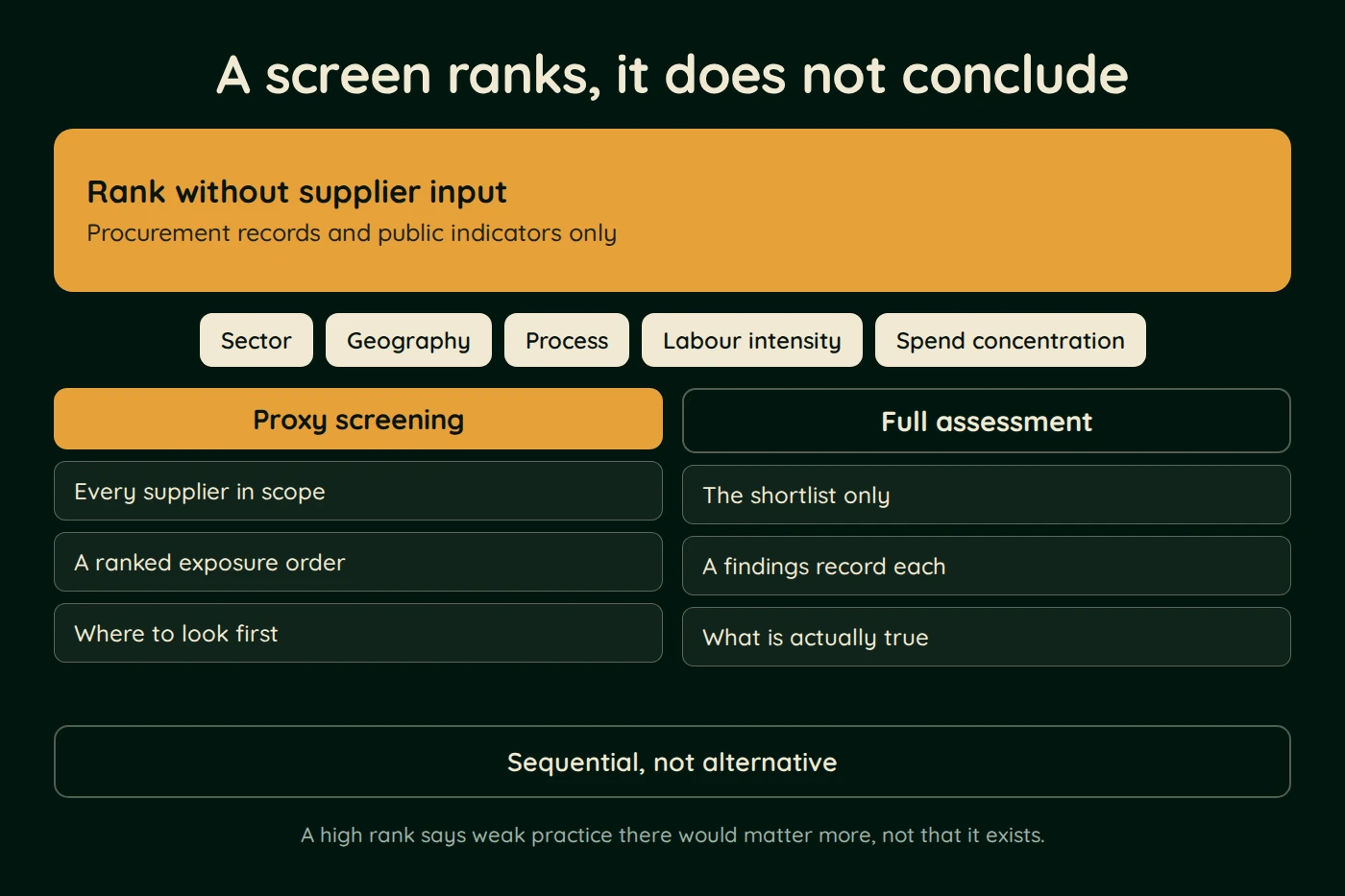
| Proxy screening | Full assessment | |
|---|---|---|
| Input | Procurement data, public country and sector indicators | Questionnaire replies, policies, audit reports, site evidence |
| Coverage | Every supplier in scope | The prioritised shortlist only |
| Output | A ranked exposure order | A findings record per supplier |
| Cost per supplier | Low once the model exists, and no supplier time is consumed | Substantial analyst and auditor time |
| What it concludes | Where to look first | What is actually true at that supplier |
The two are sequential, not alternative. A screen that places a supplier high has said nothing about that supplier’s actual management practice. It has said only that weak practice there would matter more. Confusing the two produces two failure modes: treating an unscreened supplier as safe, and reporting a screen result as though it were a finding.
Sources: OECD Due Diligence Guidance for Responsible Business Conduct, UN Guiding Principles on Business and Human Rights
ESG advisory services covers building the screening model and structuring the evidence file behind it. The screen sets an order of enquiry, not a score of supplier quality: assurance stays with independent accredited parties and rating stays with rating providers. The ESG guide sets out how supplier exposure feeds the wider risk register. Supply chain exposure sits alongside five other areas in the free six area exposure register, which names the specific gap inside each one.