


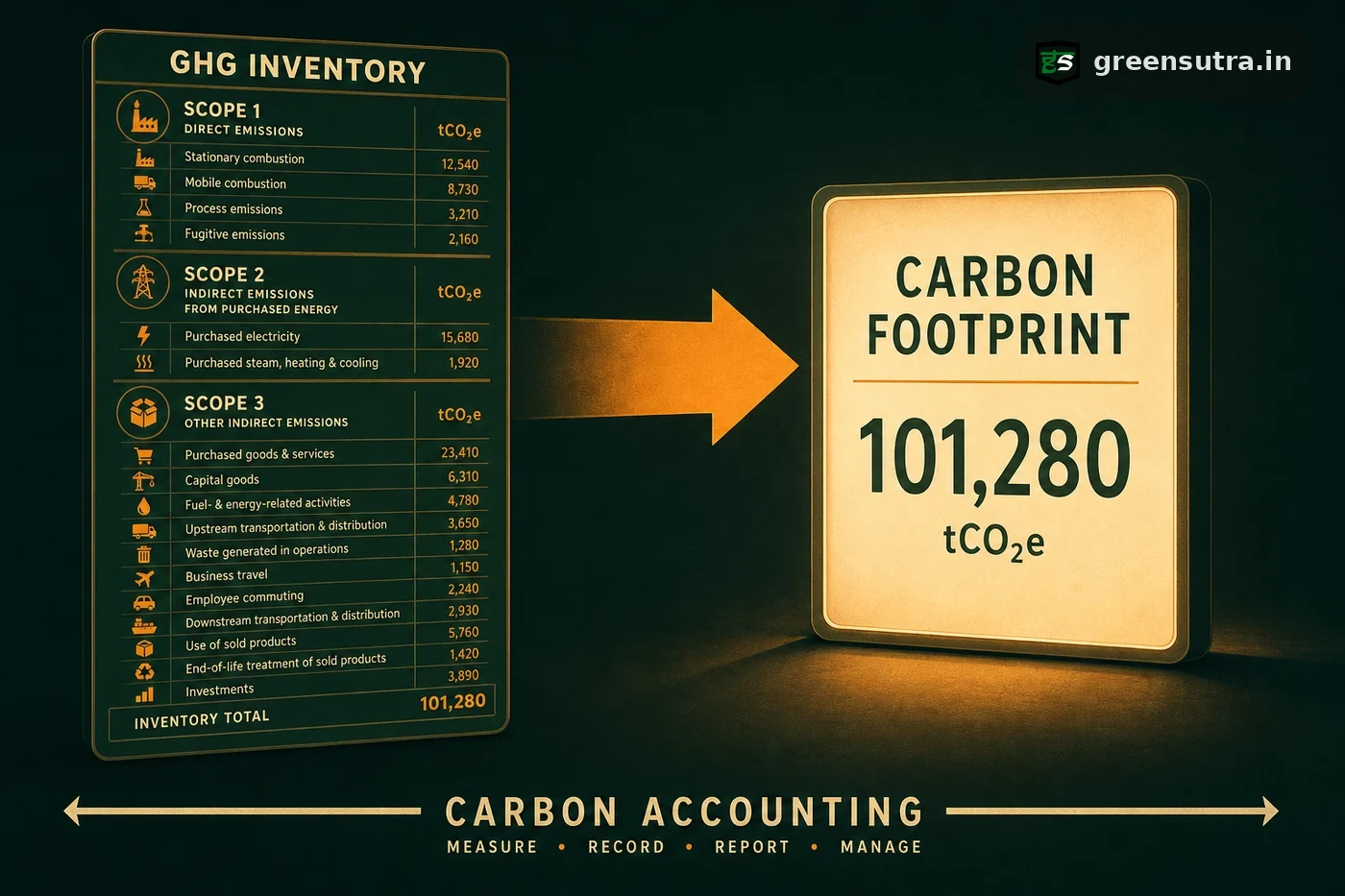
A GHG inventory and a carbon footprint measure the same emissions at different levels of detail. The greenhouse gas inventory is the itemised, source by source ledger across Scope 1, Scope 2 and Scope 3. The carbon footprint is the headline result built from it, the single total in tonnes of carbon dioxide equivalent. Carbon accounting is the discipline that produces both.
One discipline at three levels of detail
Carbon accounting, a carbon footprint and a greenhouse gas inventory are often used loosely, yet they describe one measurement discipline at increasing levels of detail. Carbon accounting is the ongoing practice of measuring, tracking and reporting greenhouse gas emissions to a recognised standard. The greenhouse gas inventory is the itemised ledger that practice produces. The carbon footprint is the headline number that ledger adds up to.
| Term | What it is | Level of detail |
|---|---|---|
| Carbon accounting | The ongoing practice of measuring, tracking and reporting greenhouse gas emissions to a recognised standard | The discipline |
| GHG inventory | The itemised, source by source ledger across Scope 1, Scope 2 and Scope 3 | The detailed ledger |
| Carbon footprint | The headline result in tonnes of carbon dioxide equivalent, built from the inventory | The single total |
What the inventory holds
A greenhouse gas inventory records every emission source across three scopes. Scope 1 covers direct emissions from owned and controlled sources, such as fuel burned on site and company vehicles. Scope 2 covers indirect emissions from purchased electricity, steam, heat and cooling. Scope 3 covers value chain emissions on the supplier and customer side, from purchased goods and inbound transport to the use and end of life of sold products. All scopes consolidate into one inventory, in tonnes of carbon dioxide equivalent, following the GHG Protocol, GRI and ISO 14064. The carbon footprint guide sets out how the inventory is built step by step.
Why the distinction matters
The footprint is the figure quoted to a board, a buyer or a report; the inventory is the evidence beneath it that makes the figure defensible and shows where reductions can be found. A single headline number cannot be reduced or verified without the source by source ledger behind it, which is why the two are prepared together. The carbon footprint consulting service identifies the emission sources and estimates the inventory to the GHG Protocol, GRI and ISO 14064, while independent verification to ISO 14064-3 is a separate step carried out by a qualified body that did not prepare the inventory. A carbon footprint discovery session sets the boundary before the work begins.
Sources: GHG Protocol Corporate Standard · ISO 14064-1 · GRI Standards