


In carbon offsetting vs reduction, reduction comes first: the mitigation hierarchy set by ISO 14068 and the SBTi Corporate Net-Zero Standard requires deep emission cuts across Scope 1, Scope 2 and Scope 3, leaving only residual emissions to be neutralised with quality carbon credits, never a substitute for reduction.
The mitigation hierarchy puts reduction first
Both ISO 14068 and the SBTi Corporate Net-Zero Standard place emission reduction above offsetting in a formal mitigation hierarchy, where reductions and removal enhancements within the value chain take priority and the need for offsetting decreases over time as the carbon footprint falls. A decarbonisation plan sequences the work as Measure, then Reduce, then Neutralise: build the baseline inventory across Scope 1, Scope 2 and Scope 3, cut emissions across the value chain as far as practicable, and neutralise only what remains. carbon footprint consulting treats offsetting as a residual step, not a substitute for reduction.
Reduction vs offsetting at a glance
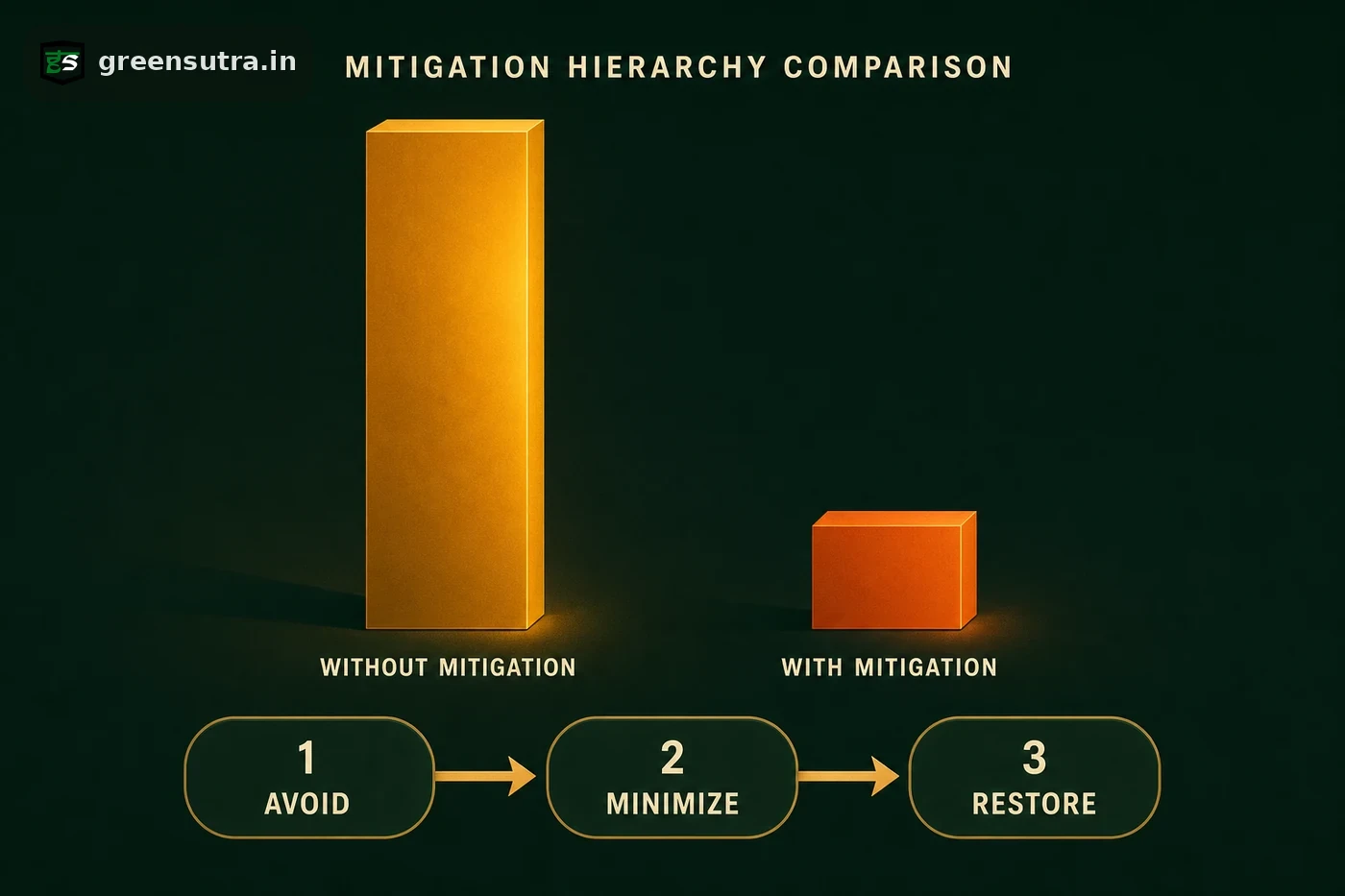
| Lever | Role in the hierarchy | Priority |
|---|---|---|
| Emission reduction | Cuts emissions at source across Scope 1, Scope 2 and Scope 3 | First and primary |
| Offsetting and neutralisation | Balances only the residual that cannot yet be eliminated | Last and residual only |
Under the SBTi Corporate Net-Zero Standard, corporate net zero means residual emissions are reduced to approximately ten per cent or less of the base year, with that remainder neutralised through carbon removals rather than avoided-emission credits. Carbon neutral, by contrast, can rely substantially on offsets, while net zero emphasises deep reduction first.
Quality credits for the residual only
When credits are used for the residual, ISO 14068 requires that offset credits be verified, additional, permanent and not double counted, and applied only to emissions that cannot currently be removed by direct action. One carbon credit usually permits emission of a mass equivalent to one metric tonne of CO2. The practical order is to reduce first, use only high quality credits for what remains, and treat removals as the instrument for the final residual:
- Reduce across all three scopes before buying any credit.
- Reserve credits for residual emissions only.
- Prefer verified removals for a net zero neutralisation claim.
Further detail sits in the carbon footprint guide. Independent validation of a target rests with the SBTi, and inventory verification with an accredited body under ISO 14064-3, not with the consultant.
Sources: ISO 14068 · SBTi Corporate Net-Zero Standard · ISO 14064-3:2019