

CBAM embedded emissions are the direct process emissions plus the indirect emissions from electricity used to make a good, calculated across an Annex IV system boundary from either actual monitored installation data or country-of-origin default values, with iron and steel, aluminium, hydrogen and electricity priced on direct emissions only.
Direct plus indirect emissions
Embedded emissions under CBAM combine two components. Direct emissions are released during production itself, such as the calcination of limestone and fuel combustion in a cement kiln. Indirect emissions come from the electricity consumed in production. Which components are priced depends on the good, so classifying the product correctly is the first task in any CBAM advisory engagement. For Annex II products, namely iron and steel, aluminium, hydrogen and electricity, only direct emissions are counted, whereas cement and fertilisers carry both direct and indirect emissions. Electricity is the power product itself, so its embedded emissions are those of generating it rather than an indirect addition from purchased power.
Scope by product group
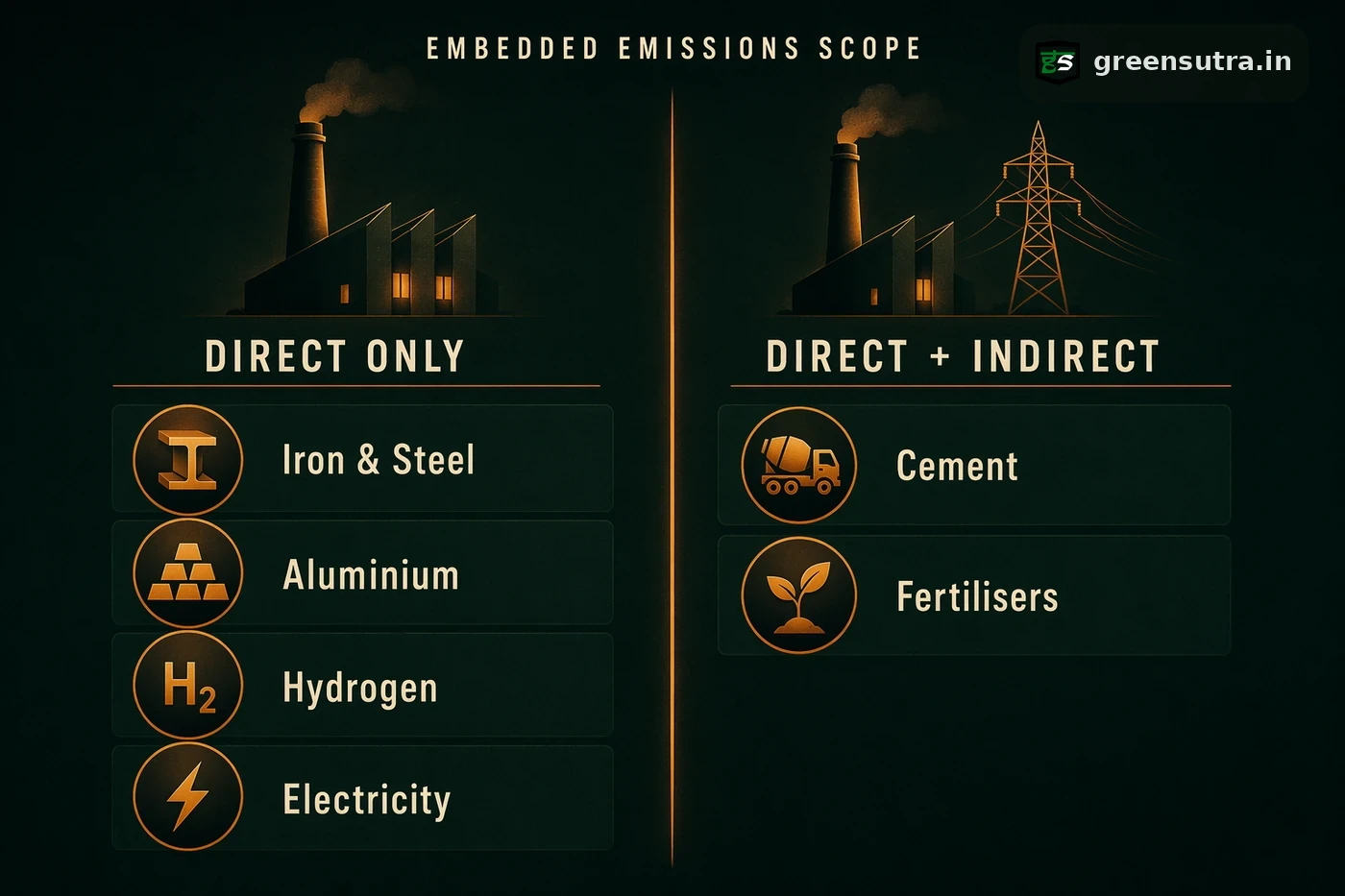
| Product group | Direct emissions | Indirect (electricity) |
|---|---|---|
| Iron and steel | Counted | Not priced |
| Aluminium | Counted | Not priced |
| Hydrogen | Counted | Not priced |
| Cement | Counted | Counted |
| Fertilisers | Counted | Counted |
| Electricity | Counted | Not priced |
System boundaries and monitoring
The methodology and system boundary sit in Annex IV of Regulation (EU) 2023/956 and in the operational rules of Implementing Regulation (EU) 2025/2547. The boundary aggregates the production process together with the embedded emissions of relevant precursors used to make the good. Direct emissions are monitored through either a calculation-based approach, which includes a mass-balance method, or a measurement-based approach relying on continuous emission monitoring. The installation keeps the supporting records for at least six years after the reporting period, under Implementing Regulation (EU) 2025/2547.
Specific values versus default values
The definitive regime, live since 1 January 2026, lets the declarant use the producing installation’s actual embedded emissions or country-of-origin default values, under Article 7(2) of Regulation (EU) 2023/956. The defaults come from Implementing Regulation (EU) 2025/2621. Their mark-up is 10 per cent in 2026, 20 per cent in 2027 and 30 per cent from 2028, with a flat 1 per cent for fertilisers. A complex good can combine actual emissions for the installation’s own processes with default values for one or more precursors, under Article 15 of Implementing Regulation (EU) 2025/2547. A declared actual figure is verified by an independent verifier accredited under Commission Delegated Regulation (EU) 2025/2551, never by a consultant. Accreditation to ISO 14065 or ISO/IEC 17029 alone does not make a body a CBAM verifier. It needs CBAM accreditation from an EU national accreditation body under that Delegated Regulation. GreenSutra’s consultants often see exporters treat electricity emissions as an afterthought rather than a monitored input. A step-by-step walk-through sits in the CBAM guide.
Sources: Regulation (EU) 2023/956 · IR (EU) 2025/2621 · European Commission CBAM