


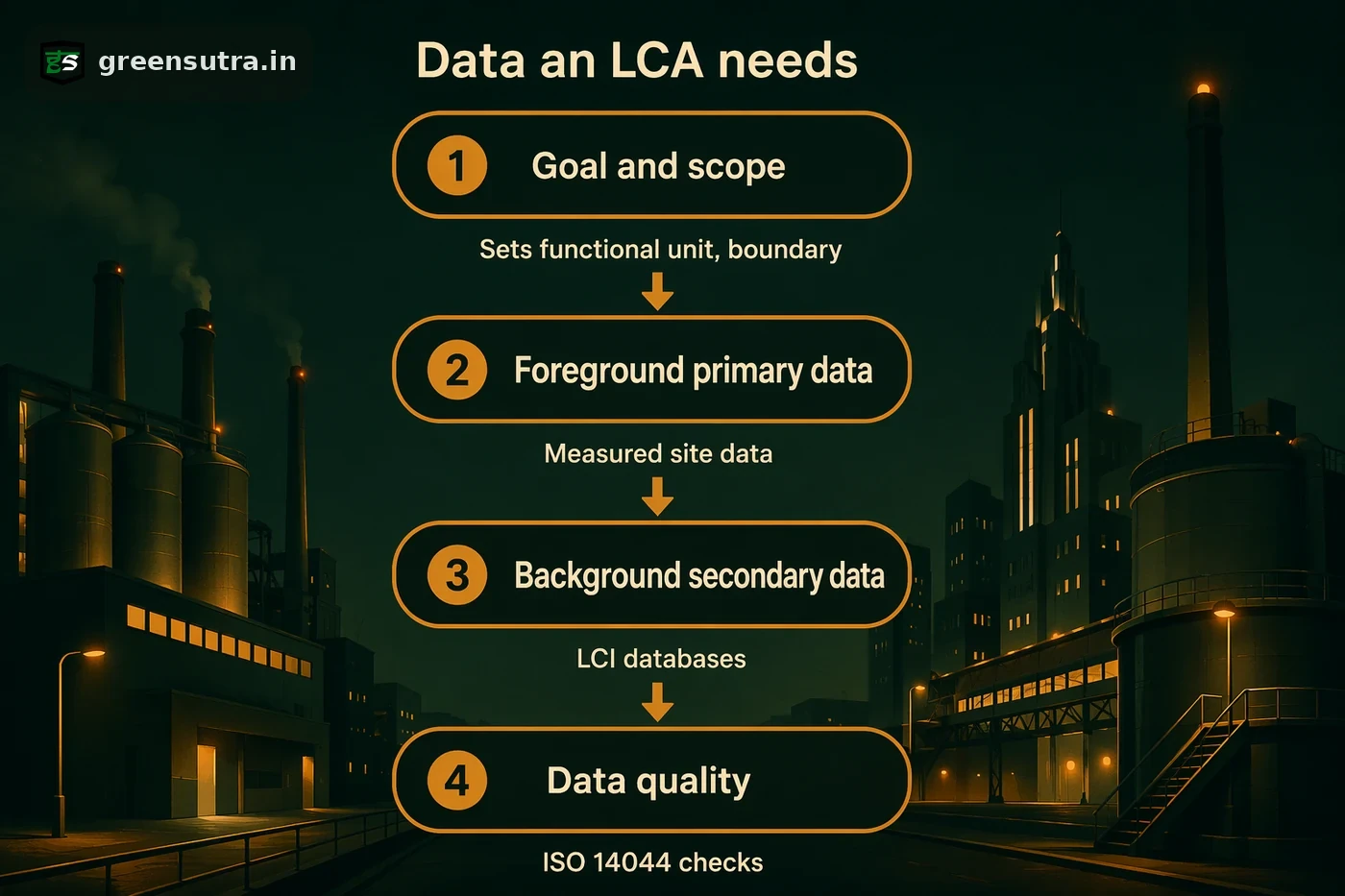
The data needed for an LCA is fixed first by goal and scope, which sets the functional unit and system boundary, then gathered as foreground primary plant measurements for controlled processes, background secondary datasets for upstream flows, and data-quality descriptors across time, geography, technology, precision and completeness under ISO 14044.
Goal and scope set the data brief
Before any measurement, the goal and scope phase of ISO 14040 fixes the functional unit, the quantified description of the product’s function against which every input, output and impact is normalised, and the system boundary, which decides whether the study runs cradle to gate or the wider cradle to grave. The goal statement records the intended application and audience, which shapes how much data rigour the study requires. Those two decisions define exactly what the inventory must cover, so collecting data before they are settled risks gathering the wrong flows. Life cycle assessment consulting begins here, because the functional unit holds the assessment together and keeps results comparable.
Foreground primary against background secondary data
Once the boundary is set, two data types build the inventory. Foreground primary data is site-specific measured data for the processes under the producer’s control, such as the bill of materials, energy consumption, process emissions and transport. Background secondary data comes from recognised life cycle inventory databases for upstream and generic processes that are not measured directly. The share of primary data against reliance on background datasets is itself a quality decision, because more measured primary data strengthens the study. Primary plant data combined with recognised background datasets builds a transparent inventory against the functional unit.
| Data layer | What it covers | Typical source |
|---|---|---|
| Foreground primary | Processes under producer control: bill of materials, energy use, process emissions, transport | Site-specific measurement |
| Background secondary | Upstream and generic processes not measured directly | Recognised life cycle inventory databases |
Data quality under ISO 14044
ISO 14044 requires the data quality of the inventory to be specified rather than assumed. Ten characteristics apply, listed below.
- time-related coverage
- geographical coverage
- technological coverage
- precision
- completeness
- representativeness
- consistency
- reproducibility
- sources of the data
- uncertainty
Documenting these characteristics makes the inventory defensible before impact assessment and any independent third-party verification, which is performed by an accredited independent party rather than the consultant preparing the study. The LCA guide sets out how the four ISO phases fit together and how the inventory feeds the result.