


EU CBAM and UK CBAM are separate regimes: the EU uses tradable certificates surrendered against a 50 tonne cumulative mass threshold (never for electricity or hydrogen), while the UK levies a self-assessed tax administered by HMRC on a £50,000 value threshold. The EU definitive period began 1 January 2026. UK CBAM applies from 1 January 2027 and excludes electricity.
An exporter shipping into both markets faces two mechanisms that share a name and very little else. The differences are structural, not cosmetic, and they change what has to be measured, when it is reported and who pays.
Side by side
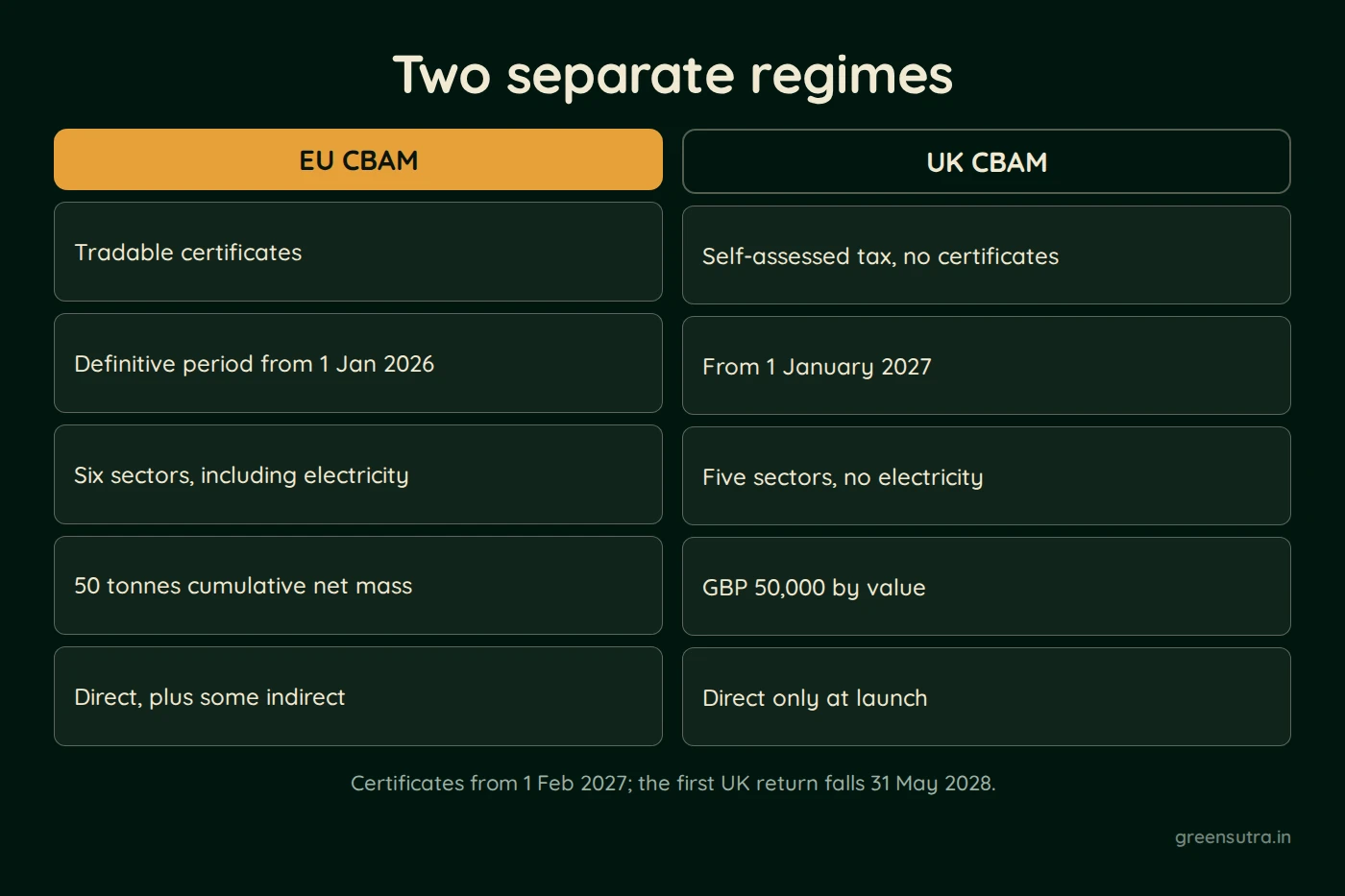
| EU CBAM | UK CBAM | |
|---|---|---|
| Instrument | Tradable CBAM certificates, purchased and surrendered | Self-assessed tax administered by HMRC, no certificates |
| Starts | Definitive period from 1 January 2026 | 1 January 2027 |
| Sectors | Six, including electricity | Five: aluminium, cement, fertilisers, hydrogen, iron and steel |
| Threshold | 50 tonnes cumulative annual net mass per importer, never for electricity or hydrogen | £50,000 by value, forward 30 days or backward 12 months |
| Emissions in scope | Direct, plus indirect for cement and fertilisers | Direct only at launch; indirect emissions delayed, as announced at Budget 2025 |
| Price basis | Volume-weighted average of EU ETS auction clearing prices, quarterly for 2026 imports and weekly from 2027 | Sector rate published quarterly by HMRC |
| First obligation | Certificate purchase from 1 February 2027 | Registration with HMRC opens on 1 January 2028; return and payment dates are set by HMRC |
| Records | Installation: at least six years after the reporting period. Importer: until the end of the fourth year after the year the declaration is due | Six years from the later of record creation or the end of the accounting period, for imports from 1 January 2027 |
The three differences that matter most operationally
The instrument is the first. An EU authorised declarant buys and surrenders certificates and, from 2027, must hold certificates for at least 50 percent of the embedded emissions imported so far that year at each quarter end. A UK importer calculates a liability and pays it with a return. There is nothing to trade under the UK scheme.
The threshold is the second. Mass and value do not convert, so the same shipment can fall inside one regime and outside the other.
The third is the emissions boundary. UK CBAM covers Scope 1 direct emissions only at launch, and the UK has delayed the inclusion of indirect emissions, as announced at Budget 2025. EU CBAM already prices indirect emissions for cement and fertilisers. An installation dataset built for one regime is therefore not automatically sufficient for the other.
Sources: Regulation (EU) 2023/956, GOV.UK CBAM collection
Running both regimes off one installation dataset is possible but requires the boundaries to be built deliberately. CBAM solutions covers dual-regime exposure mapping, and the CBAM guide sets out the EU calculation methodology the UK figures are derived alongside.