


EU Taxonomy alignment means an economic activity is not merely eligible under Regulation (EU) 2020/852 but passes four tests: a substantial contribution to at least one of six environmental objectives, no significant harm to the other five, compliance with minimum safeguards, and the relevant technical screening criteria.
Eligible versus aligned
The EU Taxonomy, Regulation (EU) 2020/852 of 18 June 2020, is a classification framework for environmentally sustainable economic activities. For a supplier the working distinction is eligible versus aligned. A taxonomy eligible activity is one described in the Taxonomy delegated acts, so technical screening criteria attach to it, whether or not the activity actually meets them. A taxonomy aligned activity clears a higher bar and is the status an EU customer usually means when it requests taxonomy data. Structured ESG advisory treats eligibility as the starting shortlist and alignment as the evidenced result.
The four part test
An eligible activity becomes aligned only where it passes the four tests set out in Article 3 of Regulation (EU) 2020/852.
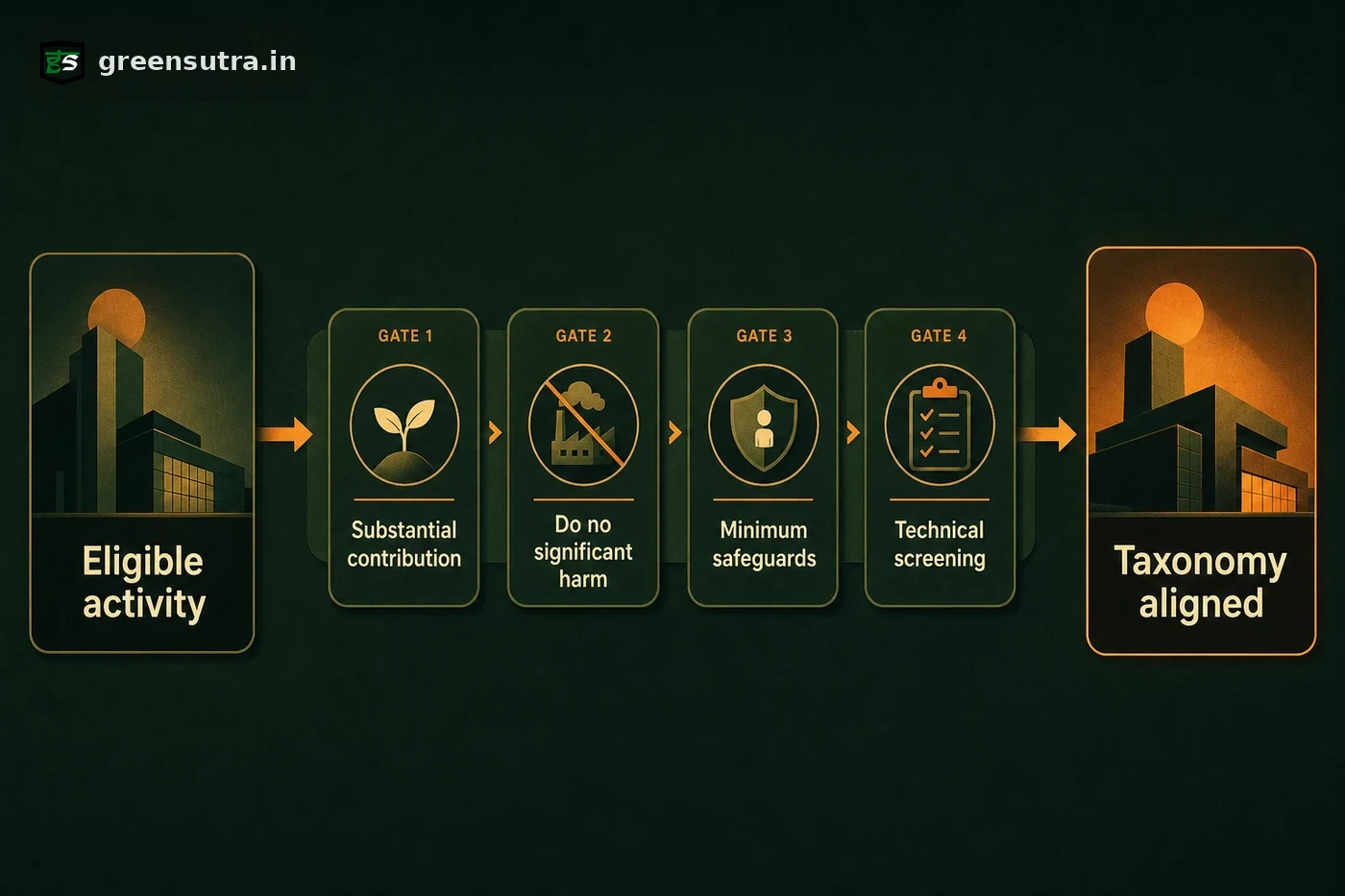
| Test | What it requires |
|---|---|
| Substantial contribution | Makes a substantial contribution to at least one of the six environmental objectives |
| Do No Significant Harm (DNSH) | Does no significant harm to any of the other five objectives |
| Minimum safeguards | Complies with the OECD Guidelines for Multinational Enterprises and the UN Guiding Principles on Business and Human Rights, including the International Labour Organization core conventions |
| Technical screening criteria | Meets the technical screening criteria in the Commission delegated acts |
The substantial contribution test asks whether the activity meaningfully advances an objective, while the Do No Significant Harm test checks that the same activity does not undermine the remaining five. The minimum safeguards test points outward to international norms rather than to environmental metrics, so labour and human rights records sit inside a taxonomy alignment claim, not beside it.
The six environmental objectives
Alignment is measured against six environmental objectives set by Article 9:
- climate change mitigation
- climate change adaptation
- the sustainable use and protection of water and marine resources
- the transition to a circular economy
- pollution prevention and control
- the protection and restoration of biodiversity and ecosystems
An EU customer asking for taxonomy aligned turnover, capital expenditure or operating expenditure is asking for the full four part test to be evidenced, not merely for the activity to appear on the eligible list. GreenSutra’s consultants often see suppliers assume that appearing on the eligible list already amounts to alignment, when the substantial contribution and Do No Significant Harm evidence is what an EU customer actually reviews. The ESG reporting guide sets out how one evidence base is assembled and structured; GreenSutra readies the data file for independent verification, while independent accredited third parties assure it.
Sources: EUR-Lex, Regulation (EU) 2020/852 · European Commission, EU Taxonomy