

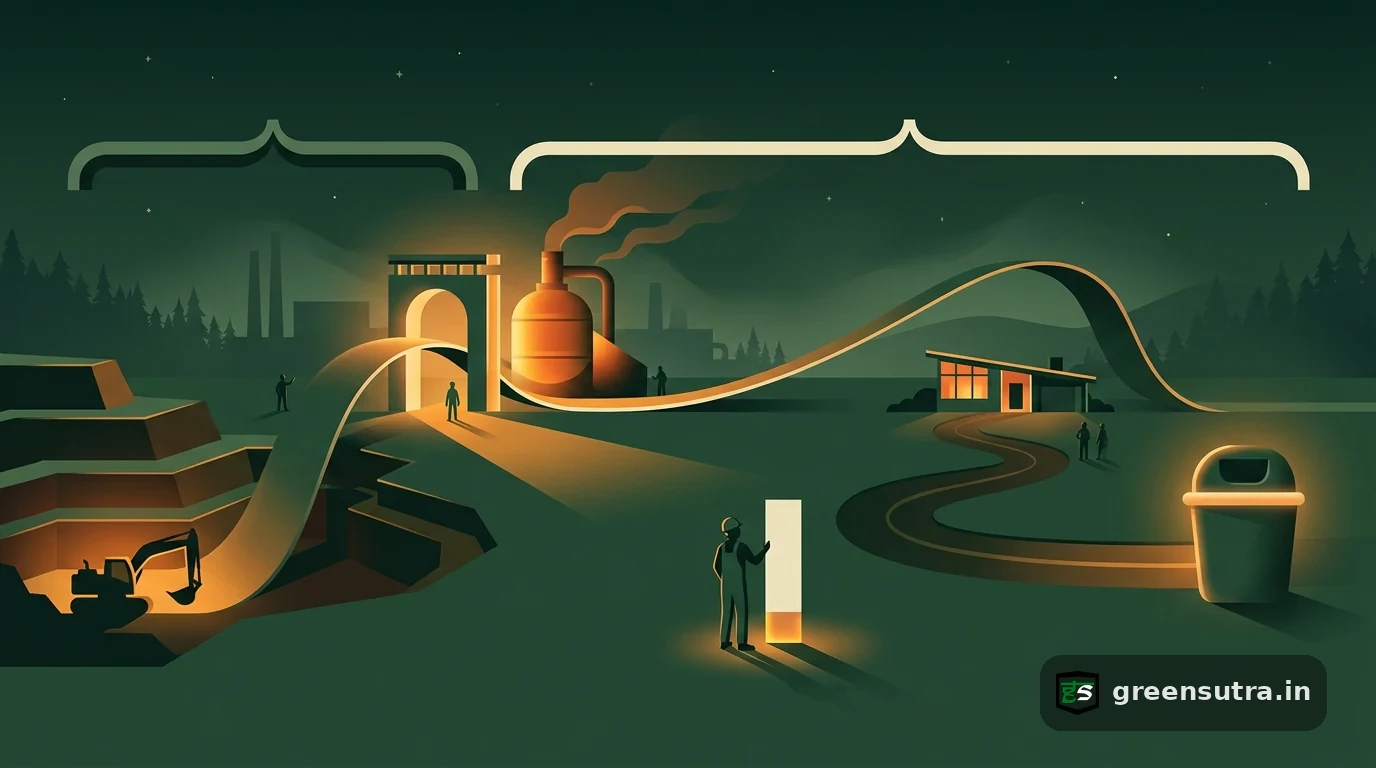
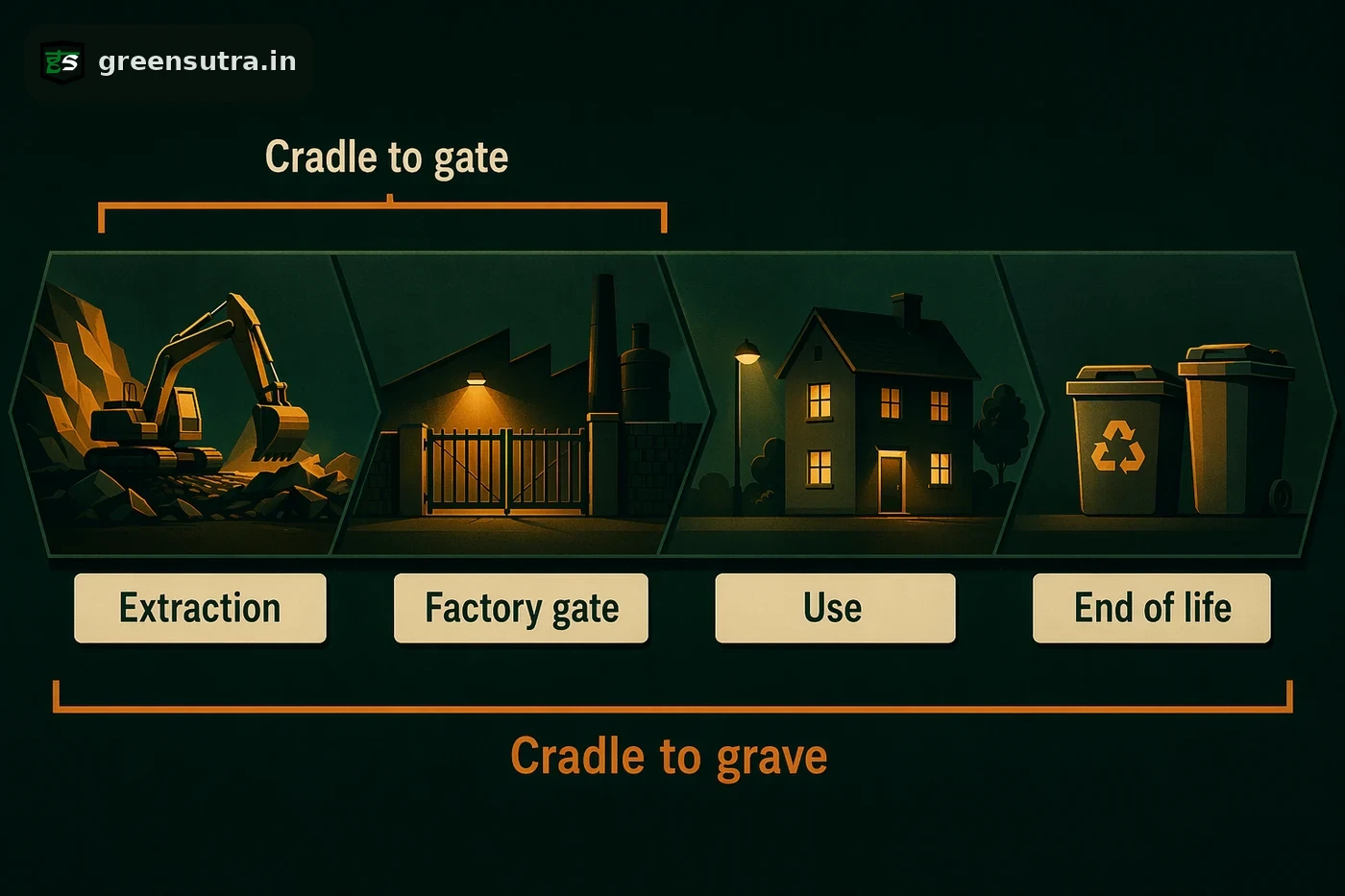
In a life cycle assessment the difference is the system boundary. Cradle to gate measures a product from raw material extraction to the factory gate, capturing the upfront embodied impact before distribution and use. Cradle to grave extends the same study through distribution, use and end of life disposal, giving the full life cycle.
The boundary is the difference
A life cycle assessment measures the environmental impact of a product across its life, and the system boundary decides how much of that life the study covers. The boundary is set at the start, during goal and scope definition, and fixed against the functional unit so results compare on a common basis. Cradle to gate and cradle to grave are two boundary choices within the same method.
| Boundary | What it covers | What it captures |
|---|---|---|
| Cradle to gate | Raw material extraction to the factory gate, before distribution and use | The upfront, embodied impact of making the product |
| Cradle to grave | Extraction through manufacture, distribution and use to end of life disposal | The full life cycle, the default scope for a complete picture |
When each boundary applies
Cradle to gate is the basis for many construction product Environmental Product Declarations, where the declared results stop at the factory gate and later stages are added separately. Cradle to grave is the default where a complete picture is needed, because it follows the product through the distribution, use and disposal stages a buyer or regulator sees. Two related variants sit on the same axis: cradle to cradle, a circular version where end of life material feeds new production, and gate to gate, a single process step inside the life cycle. The LCA guide sets out the four phase method behind every boundary.
Why the boundary is set first
The system boundary is one of the variables fixed in goal and scope definition, the first of the four ISO 14040 phases, alongside the functional unit. That choice decides what the life cycle inventory collects and the basis on which impacts are reported, which is why it is settled before any data is gathered. It also shapes the effort a study takes, since a cradle to gate assessment of one product is narrower than a multi stage cradle to grave study. The life cycle assessment service builds the study to ISO 14040 and ISO 14044, and a short LCA discovery session sets the functional unit and boundary before the work begins.