


The CBAM de minimis threshold introduced by the 2025 Omnibus I package replaces the old EUR 150 per consignment rule with a single mass-based limit of 50 tonnes of CBAM goods per importer each year, exempting around 90 per cent of importers while roughly 99 per cent of embedded emissions stay in scope.
What the 2025 Omnibus changed
The 2025 CBAM simplification arrived through Omnibus I, Regulation (EU) 2025/2083, published in the Official Journal on 17 October 2025 and in force from 20 October 2025. Its central change for small importers replaced the transitional EUR 150 per consignment de minimis with a single mass-based threshold of 50 tonnes of CBAM goods per importer per calendar year, covering cement, iron and steel, aluminium and fertilisers, while electricity and hydrogen remain in scope at any volume. Scoping and reporting support for organisations near this line sits within CBAM advisory.
The new de minimis threshold at a glance
The Commission estimates that around 90 per cent of importers fall below the threshold and are exempt, yet close to 99 per cent of embedded emissions in covered imports stay within scope, so the relief cuts administrative burden without weakening climate coverage. The change targets the many firms importing occasional small quantities, who previously faced full declarant duties despite minimal exposure.
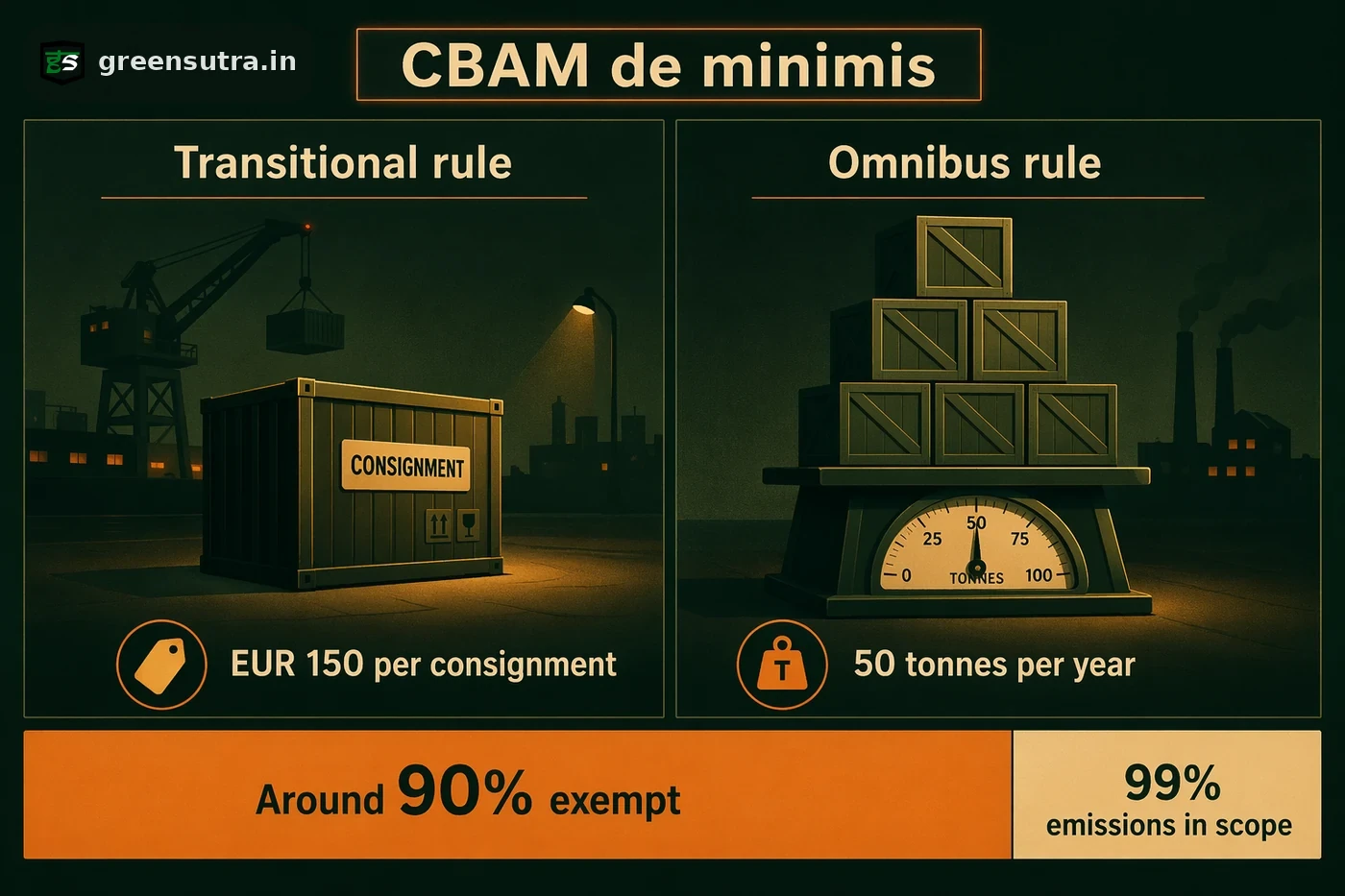
| Feature | Transitional rule | Omnibus rule (definitive period) |
|---|---|---|
| De minimis basis | EUR 150 per consignment | 50 tonnes per importer per calendar year |
| Threshold goods | value based, all covered goods | cement, iron and steel, aluminium, fertilisers |
| Always in scope | not applicable | electricity and hydrogen |
| Importers exempted | few | around 90 per cent |
| Emissions covered | high | close to 99 per cent |
Single-declarant simplifications
For importers that stay above the threshold, the Omnibus streamlined the definitive regime without lowering the underlying obligation. Key measures include:
- One authorised CBAM declarant files a single annual declaration rather than quarterly reports.
- The annual declaration deadline moved from 31 May to 30 September of the following year.
- Certificate purchase and surrender were deferred to 1 February 2027, covering 2026 emissions.
- The quarterly minimum certificate holding fell from 80 per cent to 50 per cent of cumulative embedded emissions.
- The sell-back limit rose from one third to 50 per cent of certificates bought that year.
Exempt status turns on tonnage alone. Above the threshold, the importer declares actual installation data, verified by an independent accredited verifier rather than GreenSutra, or default values with a mark-up. A short scoping pass against the CBAM guide confirms whether annual volumes cross 50 tonnes. Across GreenSutra’s CBAM work, small importers often assume a single large order keeps them exempt, then overlook how repeat consignments accumulate across the calendar year.
Sources: Regulation (EU) 2025/2083 (Omnibus I) · European Commission CBAM