


An ESG materiality assessment ranks the environmental, social and governance issues that matter most for a specific organisation, working through understanding context, identifying impacts, risks and opportunities, engaging stakeholders, scoring significance, setting thresholds and validating through governance sign off, so disclosure focuses on what genuinely moves value and risk.
What an ESG materiality assessment sets out to do
An ESG materiality assessment ranks the environmental, social and governance issues that matter most for a specific organisation, so effort and disclosure focus on what moves value and risk. It converts a long list of possible topics into a defensible shortlist, and it underpins the weighted, evidence first approach used in GreenSutra’s ESG solutions. The reference process is the EFRAG implementation guidance for the ESRS, which frames the exercise as a double materiality assessment combining financial materiality, meaning how an issue affects the organisation, and impact materiality, meaning how the organisation affects people and the environment; a topic is material where it is significant on either dimension.
The steps, from context to matrix
EFRAG IG 1 sets out an ordered sequence:
- Understand the context: the activities, business relationships, value chain and stakeholders.
- Identify the actual and potential impacts, risks and opportunities across environmental, social and governance topics, drawing on frameworks such as GRI, the ESRS topical standards, SASB and sector risk.
- Engage stakeholders such as employees, customers, suppliers, communities, investors and regulators to inform and corroborate.
- Assess significance and score each topic.
- Set thresholds and determine the material topics.
- Validate through governance sign off, often re engaging stakeholders, then disclose the material topics and the method.
Scoring, prioritising and the matrix
Significance is scored on two axes, which is what a materiality matrix plots.
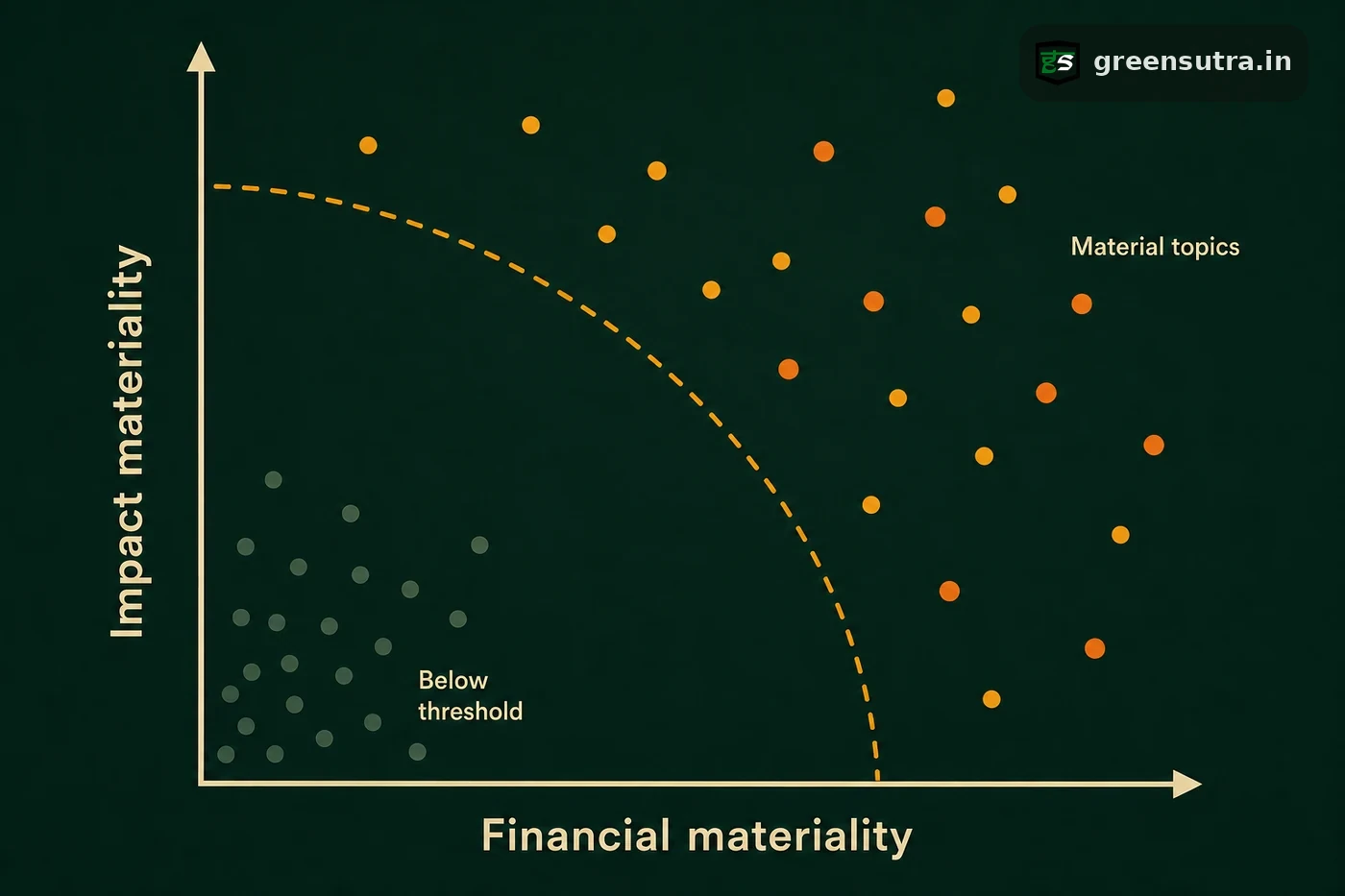
| Dimension | What it measures | How it is scored |
|---|---|---|
| Impact materiality | How the organisation affects people and the environment | Severity (scale, scope and irremediability) and likelihood |
| Financial materiality | How an issue affects the organisation | Magnitude and likelihood |
Topics that cross the threshold on either axis become material and move to disclosure. An assessment under the GRI Standards addresses impact materiality only and is not built on double materiality, whereas the ESRS are, so the framework chosen decides how many axes are scored. Across GreenSutra’s ESG work, organisations often name the obvious topics quickly but overlook value chain impacts that only surface once stakeholders are engaged. A structured walk through, set out in the ESG reporting guide, keeps the shortlist auditable.
Sources: EFRAG (ESRS implementation guidance) · GRI Standards