


CBAM certificates are tradable units, each equal to one tonne of embedded CO2e, that an authorised declarant buys from the common central platform and surrenders annually against verified import emissions, priced on the EU ETS auction average and reduced by any carbon price already paid in the country of production.
What one CBAM certificate represents
CBAM certificates are the settlement instrument of the definitive regime, live since 1 January 2026 after a transitional reporting phase that ran from October 2023 to December 2025. Each certificate corresponds to one tonne of CO2e of embedded emissions in a covered import, and only an authorised CBAM declarant may buy and surrender them. The embedded emissions calculated in GreenSutra’s CBAM advisory set how many certificates a shipment requires.
How the price and quantity are fixed
The price is not fixed by the importer. It tracks the EU ETS, calculated on the weighted average of the auction clearing prices of EU ETS allowances, published as a quarterly average in 2026 and a weekly average from 2027. The first published figures were EUR 75.36 per certificate for Q1 2026 and EUR 75.28 for Q2 2026, so the mechanism, not any single price, is what matters. The quantity owed is the declared embedded emissions multiplied by the payable share for the import year, which begins at 2.5 per cent in 2026. Any carbon price already paid in the country of production that the EU recognises is deducted. Actual emissions, as opposed to default values, must be verified by an accredited verifier before they are declared.
| Obligation | Definitive-period rule |
|---|---|
| Purchase venue | Common central platform, open from 1 February 2027 |
| Annual surrender | By 30 September, matching the declared embedded emissions |
| Minimum holding | At each quarter end, at least 50 per cent of cumulative emissions since 1 January |
| Sell-back | Up to 50 per cent of certificates purchased that year, one request per year |
| Cancellation | Unused certificates cancelled without compensation by 1 November |
Buying, surrendering and selling back
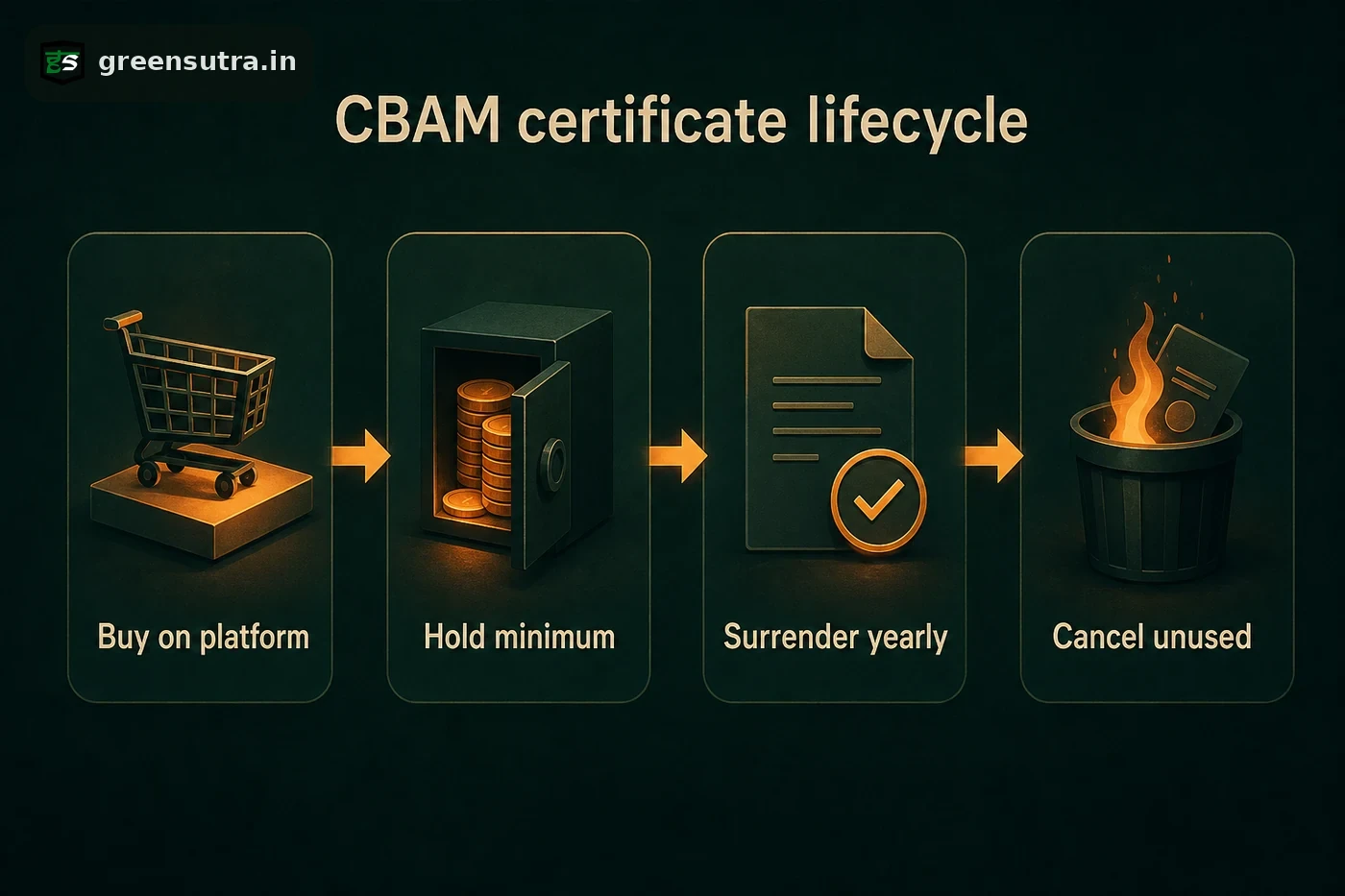
The certificate lifecycle follows fixed steps across the compliance year:
- Certificates are bought from a common central platform, open from 1 February 2027.
- By 30 September each year the declarant surrenders certificates matching the embedded emissions in the annual declaration; the first declaration, covering 2026 imports, is due 30 September 2027.
- A missing certificate carries a penalty of EUR 100 per tonne of CO2e, and the shortfall must still be covered.
- Unused certificates are cancelled without compensation by 1 November.
GreenSutra’s consultants often see exporters treat the certificate count as fixed, when moving from marked-up default values to verified installation data usually lowers the emissions those certificates must cover. The CBAM cost calculator estimates the certificate cost for a specific product, volume and import year.
Sources: Regulation (EU) 2023/956 · Regulation (EU) 2025/2083 · European Commission CBAM