End-of-life vehicles
Vehicles placed on the Indian market by producers and importers, scrapped through Registered Vehicle Scrapping Facilities that generate the EPR certificates discharging the obligation.


End to end Extended Producer Responsibility under the Indian rules for plastic packaging, e-waste, batteries, waste tyres, used oil and end-of-life vehicles, and the non-ferrous metal regime. EPR registration across the six operational CPCB portals, stream-wise target computation, EPR certificate sourcing, packaging labelling and the returns each portal requires, delivered as one accountable engagement from Mumbai across India, so a mandated obligation becomes a clean, evidenced compliance record.
Reviewed by Team GreenSutra · Updated 24 July 2026
From a mandated obligation to a clean compliance record across the six operational streams and the non-ferrous metal regime.
Extended Producer Responsibility in India is a statutory obligation. A business that places plastic packaging, electrical and electronic equipment or batteries on the Indian market carries responsibility for the waste those products become. The Central Pollution Control Board now operates six EPR portals, covering plastic packaging, e-waste, batteries, waste tyres, used oil and end-of-life vehicles, each with centralised registration and EPR certificate trading, and each administered through its own rules under the Environment (Protection) Act, 1986. A seventh regime, for non-ferrous metal, has been in force since 1 April 2026.
Plastic packaging EPR runs under the Guidelines notified as Schedule II of the Plastic Waste Management Rules, 2016 as amended, under which Producers, Importers and Brand Owners register on the CPCB Centralized EPR Portal for Plastic Packaging. E-waste runs under the E-Waste (Management) Rules, 2022, effective since 1 April 2023, covering 106 items of equipment in Schedule I. Batteries run under the Battery Waste Management Rules, 2022, covering portable, automotive, industrial and electric-vehicle batteries of every chemistry. EPR Solutions by GreenSutra carry each regime end to end.
| Stream | Governing rule | Who registers |
|---|---|---|
| Plastic packaging | Schedule II, Plastic Waste Management Rules 2016 (as amended) | Producers, importers, brand owners (PIBOs) |
| E-waste | E-Waste (Management) Rules, 2022 | Manufacturers, producers, refurbishers, recyclers |
| Batteries | Battery Waste Management Rules, 2022 | Producers, registered in Form 1(A) |
| Waste tyres | Hazardous and Other Wastes Rules, 2022 amendment | Producers and importers; recyclers and retreaders certify |
| Used oil | Hazardous and Other Wastes Rules, 2023 second amendment | Base and lubricating oil producers, importers of used oil |
| End-of-life vehicles | Environment Protection (End-of-Life Vehicles) Rules, 2025 | Vehicle producers and importers; RVSFs generate certificates |
| Non-ferrous metal | In force since 1 April 2026 | Aluminium, copper and zinc producers and importers |
The obligation is concrete. A registered entity must meet stream-wise and year-wise targets, discharge them by sourcing EPR certificates generated by registered recyclers, apply the plastic packaging labelling rule in force since 1 July 2025, and file the returns each portal requires. The targets differ by stream and by category, so a blended figure never tells the truth, and getting each one right is the work.
Based in Mumbai and delivering across India, GreenSutra registers producers, importers and brand owners on the CPCB portals, computes the obligation for each category, sources the certificates that discharge it and files the returns, alongside the waste management services that move the material itself. The same discipline runs across all six operational streams: waste tyre and used oil EPR under amendments to the Hazardous and Other Wastes Rules, and end-of-life vehicle EPR under the Environment Protection (End-of-Life Vehicles) Rules, 2025, carry the identical register, certify and report mechanic on their own portals. Non-ferrous metal EPR, covering aluminium, copper and zinc products, has been in force since 1 April 2026, and a non-ferrous EPR readiness engagement scopes it ahead of the deadline through a free non-ferrous EPR discovery. The EPR compliance guide sets out the rules for each covered stream in depth.
What an EPR consultant carries end to end, and where a consultant fits against in-house filing and compliance software.
EPR compliance services carry a producer, importer or brand owner through the whole Extended Producer Responsibility obligation: registration on the relevant CPCB portal, computation of the stream-wise and category-wise targets, sourcing of the EPR certificates that discharge them, plastic packaging labelling, and the returns each portal requires. An EPR consultant owns that sequence, so the obligation is discharged on a documented record and every return is filed before its deadline.
A single EPR compliance engagement across the six operational CPCB portals delivers:
Businesses that start with a compliance tool often ask whether EPR software replaces a consultant. Software records the data; a consultant carries the obligation. That difference decides who is accountable when a target falls short or a return is questioned.
| Task | EPR compliance software | EPR consultant |
|---|---|---|
| CPCB portal registration | Stores the application data | Prepares the dossier, files stream-wise and carries it to grant |
| Target computation | Calculates from the numbers entered | Confirms the category, stream and year behind every number |
| EPR certificates | Logs certificate purchases | Sources certificates from registered recyclers to meet the target |
| Returns and audit | Drafts the return | Files the return and answers a CPCB or state board audit |
| Accountability | Stays with the business | Shared, with a specialist on the record |
GreenSutra registers producers, importers and brand owners on the CPCB portals from a Mumbai base and delivers across India, so a business seeking an EPR compliance company in Chennai, Delhi, Hyderabad, Bengaluru or another city works with one accountable team wherever it is based. The engagement runs the same way whether a business places one covered stream on the market or all six.
GreenSutra has advised on environmental compliance since 2016, computes every EPR target by stream, category and year against the current CPCB notification, and publishes its working openly. More than thirty EPR and waste questions are answered at the Experts Corner, and the Expert Desk sets out how the team works. A free EPR discovery scopes a registration in a few structured questions.
The category-wise obligation each covered stream carries. Every regime runs the same register, certify and report mechanic; the numbers differ by stream, category and year.
EPR targets are the share of the obligation a producer must recycle, recover or fill with recycled content, set by stream, category and financial year. Plastic packaging runs two tracks at once: a recycling target on the output side, and, under the EPR Guidelines, a minimum recycled-content mandate on the input side. E-waste runs a rising recycling target against waste generation. Batteries carry a collection target for each battery type and, from FY 2027-28, a minimum share of recycled material in new batteries.
| Category | 2024-25 | 2025-26 | 2026-27 | 2027-28 on |
|---|---|---|---|---|
| I · Rigid | 50 | 60 | 70 | 80 |
| II · Flexible | 30 | 40 | 50 | 60 |
| III · Multi-layer | 30 | 40 | 50 | 60 |
| IV · Compostable | 50 | 60 | 70 | 80 |
| Category | 2025-26 | 2026-27 | 2027-28 | 2028-29 on |
|---|---|---|---|---|
| I · Rigid | 30 | 40 | 50 | 60 |
| II · Flexible | 10 | 10 | 20 | 20 |
| III · Multi-layer | 5 | 5 | 10 | 10 |
| Stream | Obligation | Trajectory |
|---|---|---|
| E-waste | Recycling, share of waste generation | 60 · 70 · 80 percent by FY 2027-28 |
| Batteries · by type | Collection, share of batteries sold in an earlier year | Automotive 30 · 50 · 70 · 90 and industrial 40 · 50 · 60 · 70 percent by FY 2025-26; portable 50 · 60 · 70 percent by FY 2027-28; electric vehicles 70 percent |
The three newer portals anchor on their statutes: waste tyres under the Hazardous and Other Wastes Amendment Rules 2022, used oil under the 2023 second amendment operational since 1 April 2024, and end-of-life vehicles under the EP (ELV) Rules 2025 applicable since 1 April 2025. A seventh regime, non-ferrous metal EPR, has been in force since 1 April 2026. Year-wise percentages for these regimes are confirmed against the portal and the current notification during the compliance review.
On the horizon: draft rules proposing EPR for packaging made from paper, glass and metal, and for sanitary products, were published for comment on 6 December 2024 and remain draft. No obligation arises from a draft, so the position is one to watch until the rules are finalised.
The six operational CPCB regimes and the non-ferrous metal regime, with the products each covers and how the obligation is measured.
Each of the six operational regimes carries its own rules, its own CPCB portal and its own way of measuring the obligation, and non-ferrous metal EPR has been in force since 1 April 2026 as the seventh. Plastic runs two distinct tracks at once: a recycling target on the output side and, under the EPR Guidelines, a minimum recycled-content mandate on the input side. A business places one or more of these streams on the market and registers stream-wise for each. The categories below act as the guide rather than every covered product.
Rigid packaging, flexible packaging, multi-layered packaging combining plastic with paper or foil, and compostable or biodegradable plastic packaging.
The 106 items of electrical and electronic equipment in Schedule I under seven categories, including solar photo-voltaic modules, which carry a storage obligation rather than a recycling target.
Portable, automotive, industrial and electric-vehicle batteries of every chemistry, shape and use placed on the Indian market.
New tyres placed on the Indian market by manufacturers and importers, with EPR certificates generated by registered recyclers and retreaders against the recycling achieved.
Base oil and lubricating oil placed on the market by producers, and used oil brought in by importers, recycled through registered recyclers, co-processors and collection agents.
Vehicles placed on the Indian market by producers and importers, scrapped through Registered Vehicle Scrapping Facilities that generate the EPR certificates discharging the obligation.
Aluminium, copper and zinc and their alloys placed on the Indian market across eighteen product forms, with the producer recycling target ramping from FY 2026-27 and importers of used metal or scrap carrying a full obligation.
A precise check of which streams a business places on the market, and in what role, is the first step of every EPR compliance review.
From stream scoping and portal registration to computed targets, sourced certificates and a filed return.
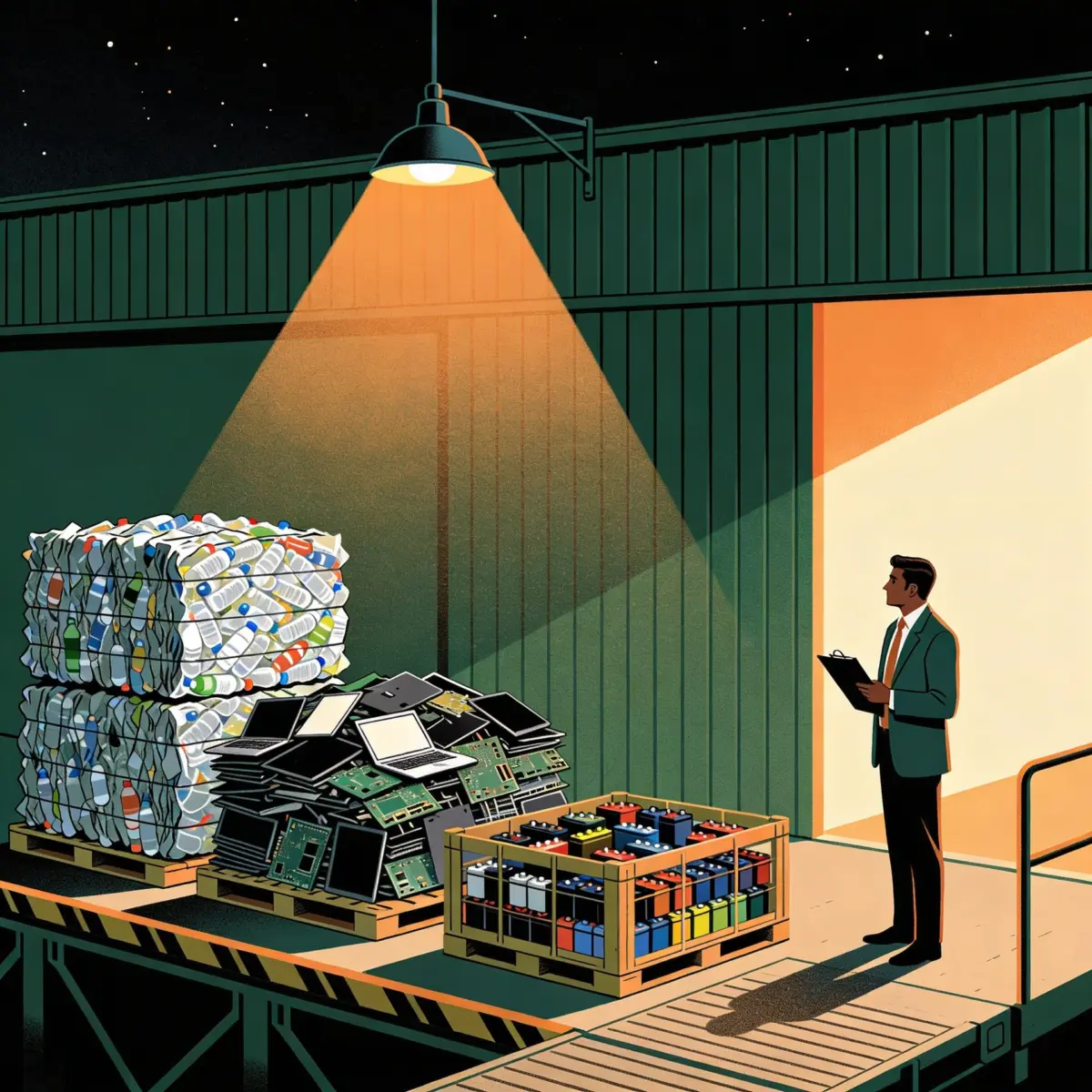
The covered streams and the role in each confirmed, with company documents and prior-year placement quantities gathered across plastic packaging, e-waste, batteries, tyres, oil and vehicles.

Registration completed stream-wise on the relevant centralised portal, from the plastic packaging portal for PIBOs and the e-waste portal for Schedule I equipment to the battery portal in Form 1(A), the waste-tyre and used-oil portals, and the ELV portal for vehicle producers.

The year-wise and category-wise obligation calculated for each stream, from the four plastic categories and their recycled-content track to the e-waste recycling target and the battery collection and recovery figures, so every number is the right one for the stream and the year.
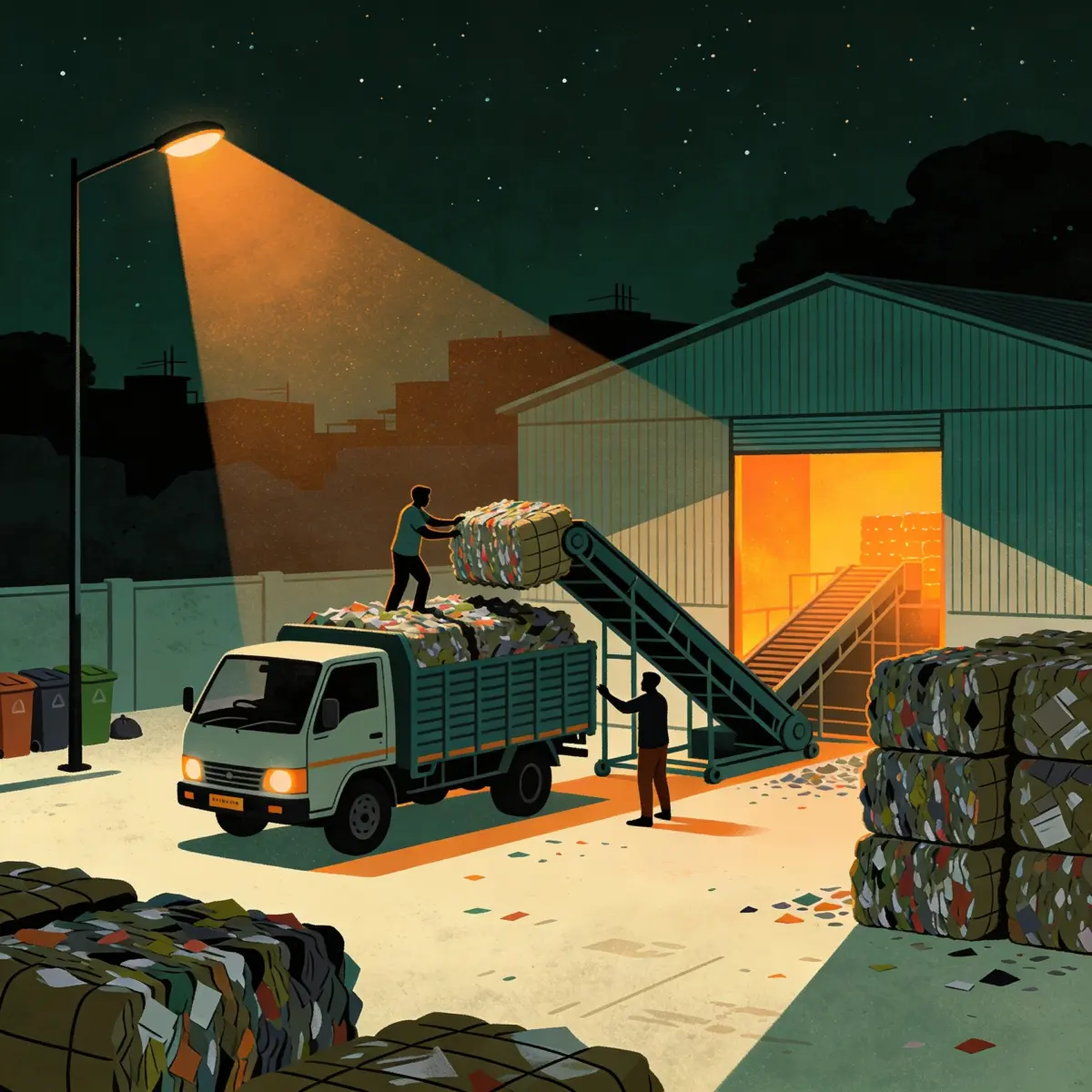
Post-consumer waste channelised through registered recyclers and producer responsibility organisations, and EPR certificates sourced and transferred on the portal to discharge each stream-wise target.

The plastic packaging labelling rule applied through a barcode, QR code or unique number, the returns each portal requires filed on the CPCB portal, and the records retained so a CPCB or state board audit meets evidence rather than gaps.
An obligated producer registers stream-wise on the CPCB portal, collected waste is channelised, and EPR certificates close the annual return.
A producer, importer or brand owner that places plastic packaging, electrical and electronic equipment or batteries on the Indian market carries the EPR obligation for that stream.
The entity registers stream-wise on the relevant centralised CPCB portal, one registration per applicable stream, and no entity may operate without registration or deal with an unregistered one.
Post-consumer plastic packaging, e-waste and batteries are collected and channelised through registered recyclers and producer responsibility organisations.
Registered recyclers generate tradable EPR certificates on the portal against the recycling achieved, which the obligated entity buys to discharge its target.
Returns are filed on the CPCB portal on the cadence each stream sets, and records retained, with environmental compensation due where the obligation goes unmet.
An obligated producer, importer or brand owner registers stream-wise on the CPCB portal for plastic packaging, e-waste and batteries, channelises post-consumer waste through registered recyclers, and discharges its target by buying the EPR certificates those recyclers generate against the recycling achieved. Returns are filed on the portal on the cadence the stream sets. Non-compliance attracts environmental compensation, payment of which does not absolve the EPR obligation.
Two answers map a business onto the CPCB EPR portals.
Two questions place a business against the Indian EPR rules: the waste streams it puts on the market and the role it plays in them. The result states which CPCB registrations apply and what to confirm next.
Two questions decide EPR exposure: which covered streams the business places on the Indian market, from plastic packaging, electrical and electronic equipment and batteries to tyres, used oil and vehicles, and the role it plays in them. An EPR compliance review works through both with the figures on the table.
Scope an EPR registration →None of the covered streams are placed on the Indian market, so the six CPCB Extended Producer Responsibility portals, covering plastic packaging, e-waste, batteries, waste tyres, used oil and end-of-life vehicles, place no obligation on the business today. The non-ferrous metal regime, in force since 1 April 2026, is the one to confirm if the business places aluminium, copper or zinc on the market. The product mix is the point to watch, since placing any covered stream on the market brings the obligation into force.
Plastic packaging is placed on the Indian market, so the business is a Producer, Importer or Brand Owner that must register on the CPCB Centralized EPR Portal for Plastic Packaging. The obligation is computed by category, from rigid Category I to biodegradable Category V, and is discharged by sourcing EPR certificates from registered recyclers. Recycled-content obligations under the EPR Guidelines and the barcode, QR code, brochure or unique-number labelling in force since 1 July 2025 apply on top of the recycling target.
Electrical and electronic equipment is placed on the Indian market, so the business must register on the CPCB e-waste EPR portal as a Manufacturer, Producer, Refurbisher or Recycler of the 106 Schedule I items. The producer recycling target rises from 60 percent of waste generation to 70 percent and then 80 percent across the financial years. Solar photo-voltaic modules carry a storage obligation until FY 2034-35 rather than a recycling target, and the obligation is discharged through EPR certificates generated by registered recyclers.
Batteries are placed on the Indian market, so the business is a Producer under the Battery Waste Management Rules 2022 and must obtain CPCB EPR registration in Form 1(A). The registration is granted once and does not need renewing. The obligation is a collection target for each battery type, rising in steps, and it is met with EPR certificates from registered recyclers or refurbishers.
The business places more than one covered stream on the Indian market, so it registers separately on each relevant CPCB portal, one registration per applicable stream across the six operational portals for plastic packaging, e-waste, batteries, waste tyres, used oil and end-of-life vehicles. Each regime carries its own targets: category-wise recycling and recycled-content for plastic, the rising 60 to 80 percent recycling target for e-waste, and a collection target for each battery type. Every stream is discharged through EPR certificates from registered recyclers and reported through its own returns.
New tyres are placed on the Indian market, so the business registers on the CPCB waste-tyre EPR portal under the 2022 amendment to the Hazardous and Other Wastes Rules, in force since July 2022. Registered recyclers and retreaders generate the EPR certificates against the recycling achieved, the obligated producer or importer sources those certificates to discharge the year-wise obligation, and the annual return closes the year on the portal. Non-compliance attracts environmental compensation.
Base oil or lubricating oil is placed on the Indian market, or used oil is imported, so the business registers on the CPCB used-oil EPR portal under the 2023 second amendment to the Hazardous and Other Wastes Rules, operational since 1 April 2024. The recycling obligation is discharged by purchasing EPR certificates from registered recyclers, with collection agents and co-processors registered on the same portal, and the annual return filed there. Non-compliance attracts environmental compensation.
Vehicles are placed on the Indian market, so the business registers on the centralised CPCB ELV portal under the Environment Protection (End-of-Life Vehicles) Rules 2025, applicable since 1 April 2025. The producer declares the EPR obligation and files the annual return on the portal, and the obligation is discharged through EPR certificates generated by Registered Vehicle Scrapping Facilities against the vehicles scrapped.
A recycler, refurbisher, retreader or vehicle scrapping facility registers in that capacity on the relevant CPCB portal and is the entity that generates the tradable EPR certificates that producers, importers and brand owners buy to meet their obligations. Registration is mandatory before any recycling or certificate generation, and no registered entity may deal with an unregistered one. The certificates are generated against the recycling, refurbishment or scrapping achieved and transferred on the portal.
The streams placed on the market or the role across them is still being mapped, so the exact CPCB registrations cannot be fixed from the answers alone. Each regime applies to every covered producer, importer or brand owner regardless of size, with no turnover or tonnage threshold. Confirming which streams the business places on the market, and in what role, is the first step of an EPR compliance review.
A manufacturer or brand owner registers as a Producer or Brand Owner and carries the stream-wise targets directly.
An importer registers on the same portal; for plastic, the importer definition has covered importers of plastic raw material such as resin and pellets since 14 March 2024.
A recycler or refurbisher registers in that capacity and is the entity that generates the EPR certificates producers buy.
Confirming the role across each stream is part of the EPR compliance review.
Answers stay in this browser. Nothing is sent until a contact channel is opened.
The obligation runs from the producer through the CPCB portal to the recycler and back as certificates, and a compliance review turns that path into a registered, target-met, filed position.
WhatsAppScope an EPR registration →What clean registration, target achievement and reporting earns an obligated business.
Registration, target achievement and returns aligned to the CPCB rules across every covered stream, so the obligation is met cleanly and environmental compensation is avoided.
Post-consumer waste channelised through registered recyclers and discharged with EPR certificates, so the obligation translates into recycling that actually happens.
A clean EPR record keeps covered products on the market, since no obligated business may trade, or deal with another, without a valid registration.
Targets, certificates, labelling and returns documented in one place, so a CPCB or state board audit finds a complete record.

The reasons behind the reputation.
Engagements led by specialists fluent in the plastic packaging, e-waste and battery rules, with registration and returns carried across the six operational CPCB EPR portals, and readiness for the non-ferrous metal regime.
Targets computed by stream, category and year rather than as a blended figure, so each obligation is the right one.
A working relationship with registered recyclers and producer responsibility organisations, so certificates are sourced and waste channelised reliably.
Scoping, registration, target computation, certificate sourcing, labelling and returns handled as one accountable engagement, or any stage standalone.
EPR compliance delivered for producers, importers and brand owners across India from a Mumbai base.
The same registration and reporting discipline, tuned to the stream and the role.
Producers, importers and brand owners guided through portal registration, category-wise targets, recycled-content and the labelling rule.
Producers of the 106 electrical and electronic items in Schedule I and of batteries of every chemistry, registered with CPCB and held to recycling targets for e-waste and collection targets for batteries.
Manufacturers and importers of tyres, base and lubricating oil and vehicles registered on the waste-tyre, used-oil and ELV portals, and non-ferrous metal producers readied for the FY 2026-27 regime.
Registered recyclers, retreaders, refurbishers, vehicle scrapping facilities and producer responsibility organisations coordinated to channelise waste and generate EPR certificates.
Every covered stream carries the same registration and reporting discipline, tuned to the producer, importer or brand owner placing it on the market.
WhatsAppScope an EPR registration →Real EPR and waste compliance questions from the community, answered by the GreenSutra team.
Which category of entities are exempted from fulfilling Plastic EPR compliances?
Extended Producer Responsibility or EPR compliances are mandatory in India as an Environmental Protection Stratgey. Since the applicability of EPR Compliances in India, various…
Answered by the GreenSutra team→Q · 02Recycling7,921 viewsAre used beer bottles recycled or reused ?
Used beer bottles are a significant part of the glass waste that gets accumulated everywhere. As a part of solid waste management, these used…
Answered by the GreenSutra team→Q · 03Composting7,025 viewsHow to compost PLA Plastics?
PLA Plastic is a type of biodegradable plastic that can be composted upon fulfilling its purpose. PLA plastic can also be referred to as…
Answered by the GreenSutra team→Q · 04EPR5,961 viewsWhat are the categories of plastic as per EPR Compliance?
According to the Plastic Waste Management Rules 2016, introduced by Ministry of Environment, Forest and Climate Change, plastic packaging waste is divided into 5…
Answered by the GreenSutra team→Q · 05Recycling5,880 viewsWhat are the regulations in India for disposal of Carbon Zinc Batteries?
Carbon Zinc batteries are general purpose batteries that are available for reasonable prices. On an average a single person uses anywhere between 8 to…
Answered by the GreenSutra team→Q · 06Recycling5,677 viewsCan soap be recycled?
Yes, soap can be recycled. Every establishment generates used, old and waste soap and soap based articles that can be reused and recycled. By…
Answered by the GreenSutra team→Q · 07EPR5,620 viewsWhat are PIBO Compliances?
PIBO Compliances refer to the Extended Producer Responsibility regulations regarding Plastic Packaging Waste that enters the supply chain due to various socio-economic activities. They…
Answered by the GreenSutra team→Q · 08EPR5,183 viewsIs it necessary for the entity to register as PWPs if their organization only collects plastic waste?
No. Entities that are only engaged in the collection and trading of plastic waste are not eligible for registering as a PWP (Plastic Waste…
Answered by the GreenSutra team→Solution deck · 20 slides · PDF by email
Open to correctionsA 20 slide deck for recyclers and end-of-life processors of plastic waste. It covers what the rules ask of every kind of processor after the March 2026 changes, and the filings, records and certificates that follow.
 Get the deck by email
The PDF is attached to a confirmation email. There is no public download link.
A short conversation about the covered streams, the role on the market and the targets due turns into a tailored EPR plan. Schedule a call directly or send a written brief.
Pick the service and a slot; a practitioner takes the call.
Reading on waste, recycling and the circular economy from the GreenSutra journal.
Maintained by GreenSutra · Last reviewed July 2026
Aluminium, copper or zinc articles on the market — answer a few questions and our team maps your obligations under the 2025 Rules and returns a tailored Scope of Work.