


Clinker carries most of cement’s embedded carbon, because making it calcines limestone and burns kiln fuel, so a cement with a lower clinker factor carries a lower embedded total per tonne and a smaller CBAM charge. Blended cements sit lower. The grey-clinker free-allocation benchmark is not a per-tonne cost.
Where cement’s carbon sits
Clinker is the fired intermediate that gives cement its binding strength, and its production accounts for almost all of the embedded carbon. Two processes drive it: calcination, which releases CO2 as limestone converts to lime, and the combustion of kiln fuel. Because CBAM charges on embedded emissions, a cement with a lower clinker factor carries a lower embedded total per tonne, and a smaller charge. Blended cements replace part of the clinker with materials such as slag or fly ash, lowering both the clinker factor and the emissions per tonne.
Clinker factor against the embedded total
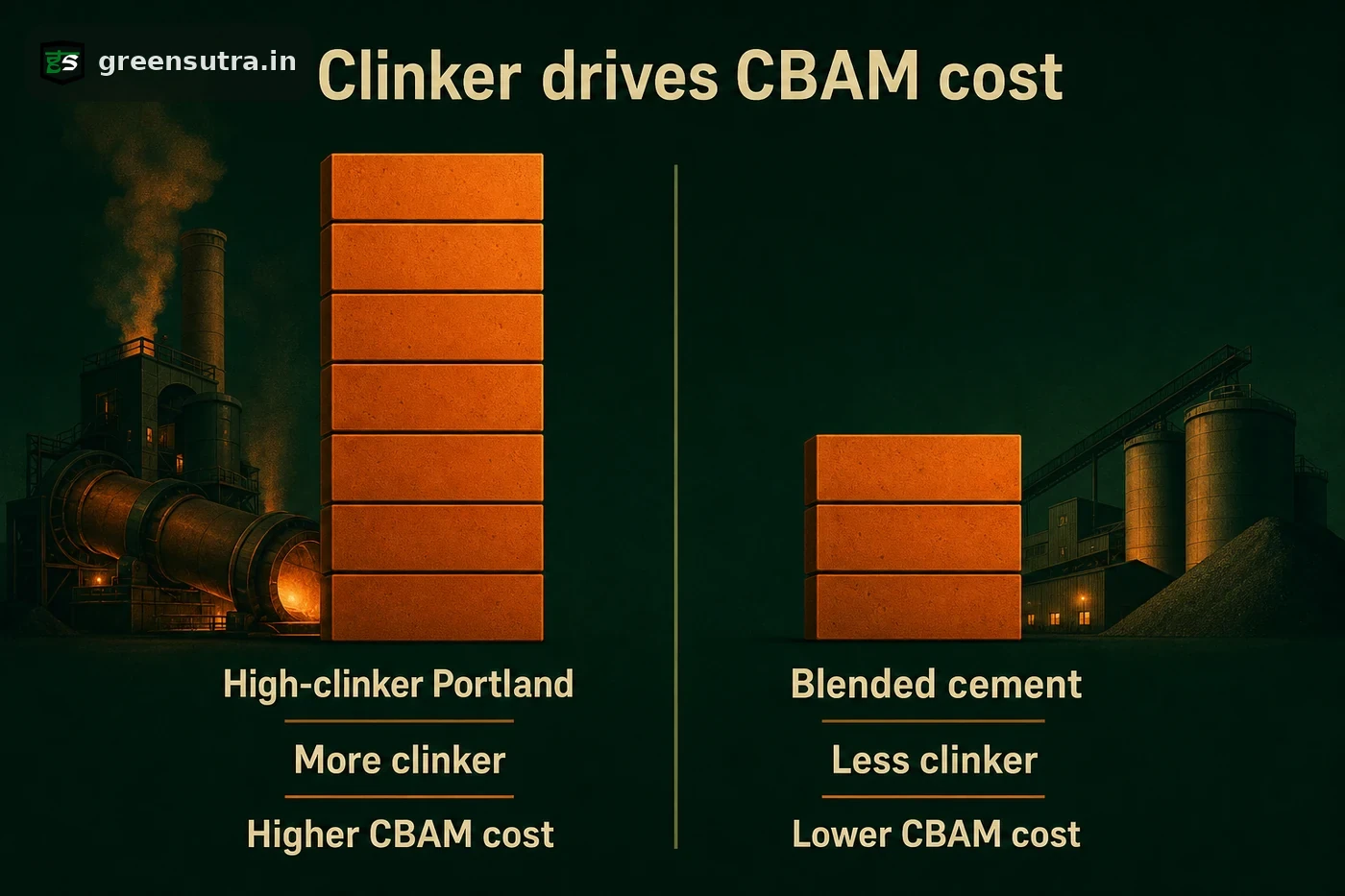
| Cement type | Clinker factor | Embedded emissions per tonne |
|---|---|---|
| High-clinker Portland | Higher | Higher, near 1.45 tCO2e on the India schedule |
| Blended, lower clinker | Lower | Lower |
Two further points shape the declared number:
- Verified actual data can capture an efficient kiln or an alternative fuel mix, often below the default.
- Indirect emissions from grinding electricity count as well, since cement is a direct-plus-indirect group.
The 0.666 benchmark is not a cost
A recurring confusion is the grey-clinker figure of 0.666 tCO2 per tonne. It is the EU free-allocation benchmark used inside the emissions-trading system, not a CBAM cost and not an emissions default. It sometimes gets cited by cement exporters as if it were a bill, which it is not. CBAM advisory covers declarant status, embedded-emissions calculation from clinker factor to declared value, and certificate obligations. The CBAM cost calculator estimates a real charge from product, volume and year.
Sources: Regulation (EU) 2023/956 · Implementing Regulation (EU) 2025/2621 · European Commission CBAM