

Product Carbon Footprint (PCF) Consulting
A product carbon footprint (PCF) is the total of the greenhouse gases one product gives off over its life, less any it takes out of the air. It is counted per item or per kilogram. GreenSutra is a product carbon footprint consultant. It calculates footprints to ISO 14067, the international standard for them, for manufacturers and brands in any country. The report is written for the customer who asked for it, and for an independent verifier where one is needed.
Reviewed by Team GreenSutra · Updated 17 November 2026
Who asks for a product carbon footprint
Three kinds of business ask for one most often.
Suppliers answering a customer. A customer that is counting the emissions of everything it buys asks each supplier for the footprint of the part or material it supplies. A footprint up to the factory gate answers that request, often in the format of PACT, an industry method for sharing footprints between companies.
Manufacturers preparing a declaration. A product carbon footprint and an Environmental Product Declaration, the checked public summary of a full study, can come from the same work. For construction products, the declaration follows EN 15804 in Europe and ISO 21930 internationally.
Brands and exporters facing product rules. The EU's Digital Product Passport, a digital record of a product's details, is being brought in for more product groups over time.
How a PCF engagement runs
The work runs in five steps, from a first conversation to a finished report. The client's team supplies the data, and GreenSutra does the rest.

Scoping
The work starts with a short conversation about the product and what the footprint is needed for. GreenSutra then writes down two things. One is the unit the result will be stated in, such as one item or one kilogram. The other is the boundary, meaning which stages of the product's life are counted.
Data collection
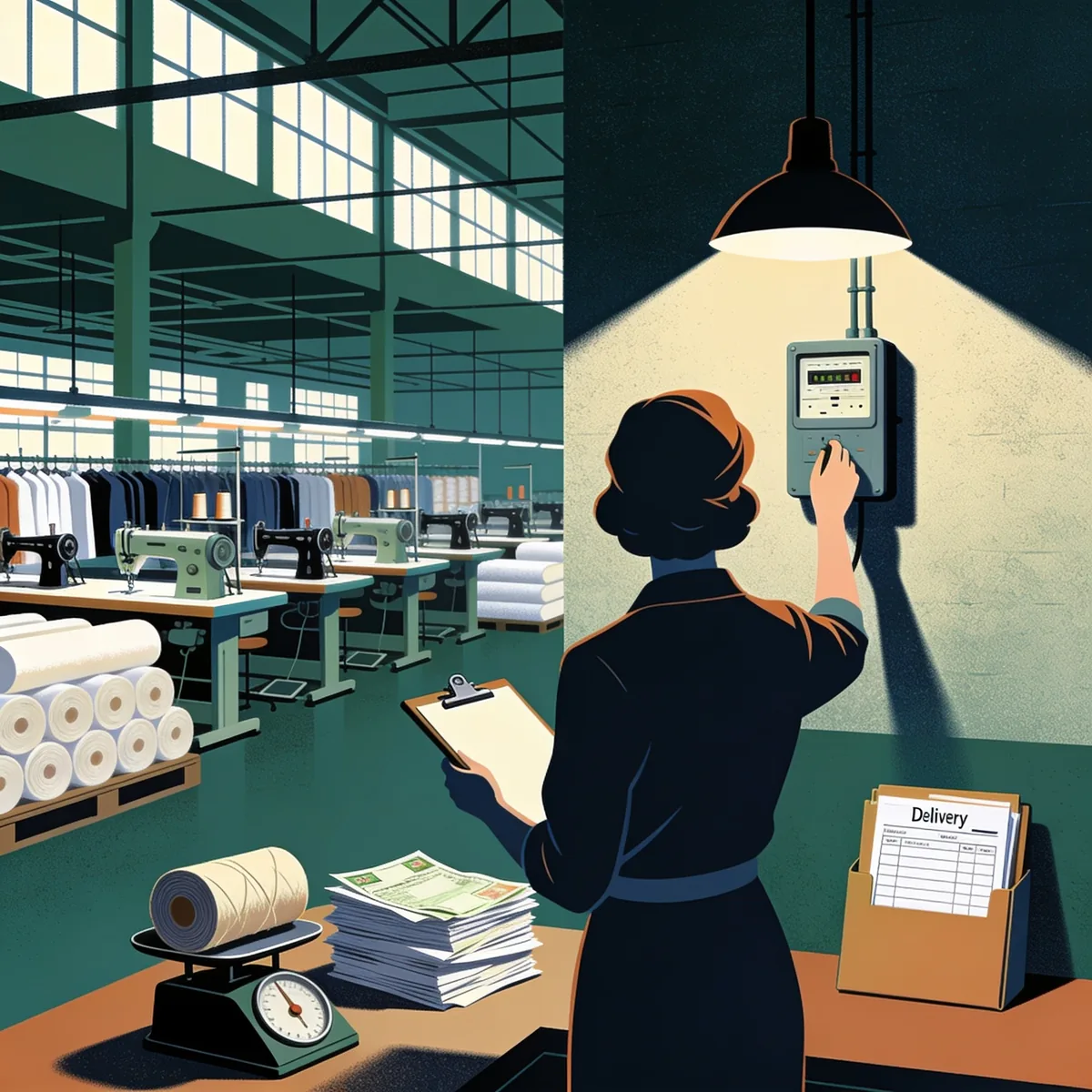
The client's team supplies the list of materials in the product, the energy and water used to make it and transport distances. For a footprint to end of life, it also supplies how the product is used and disposed of. GreenSutra checks the data and fills gaps from recognised published datasets.

Calculation
Each greenhouse gas is converted to the amount of carbon dioxide that would cause the same warming, called carbon dioxide equivalent, and added up. Carbon from plants and other living sources, called biogenic carbon, is counted and also shown on its own. Carbon offsets, the credits bought to cancel out emissions, are left out, as ISO 14067 requires.
Interpretation
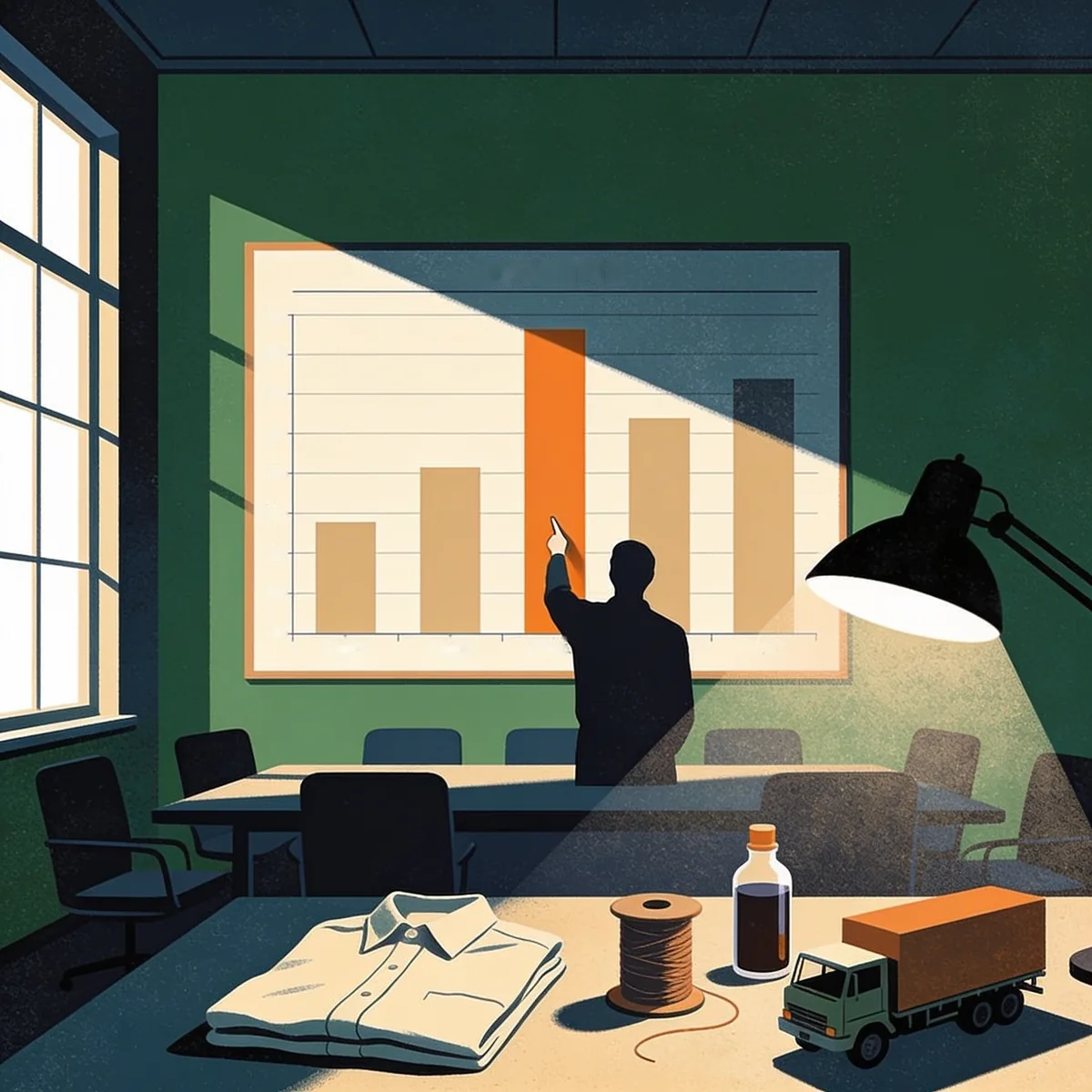
The stages and materials that cause the most emissions are ranked. The result is then tested to see how much it moves when a main assumption changes.

Report and handover
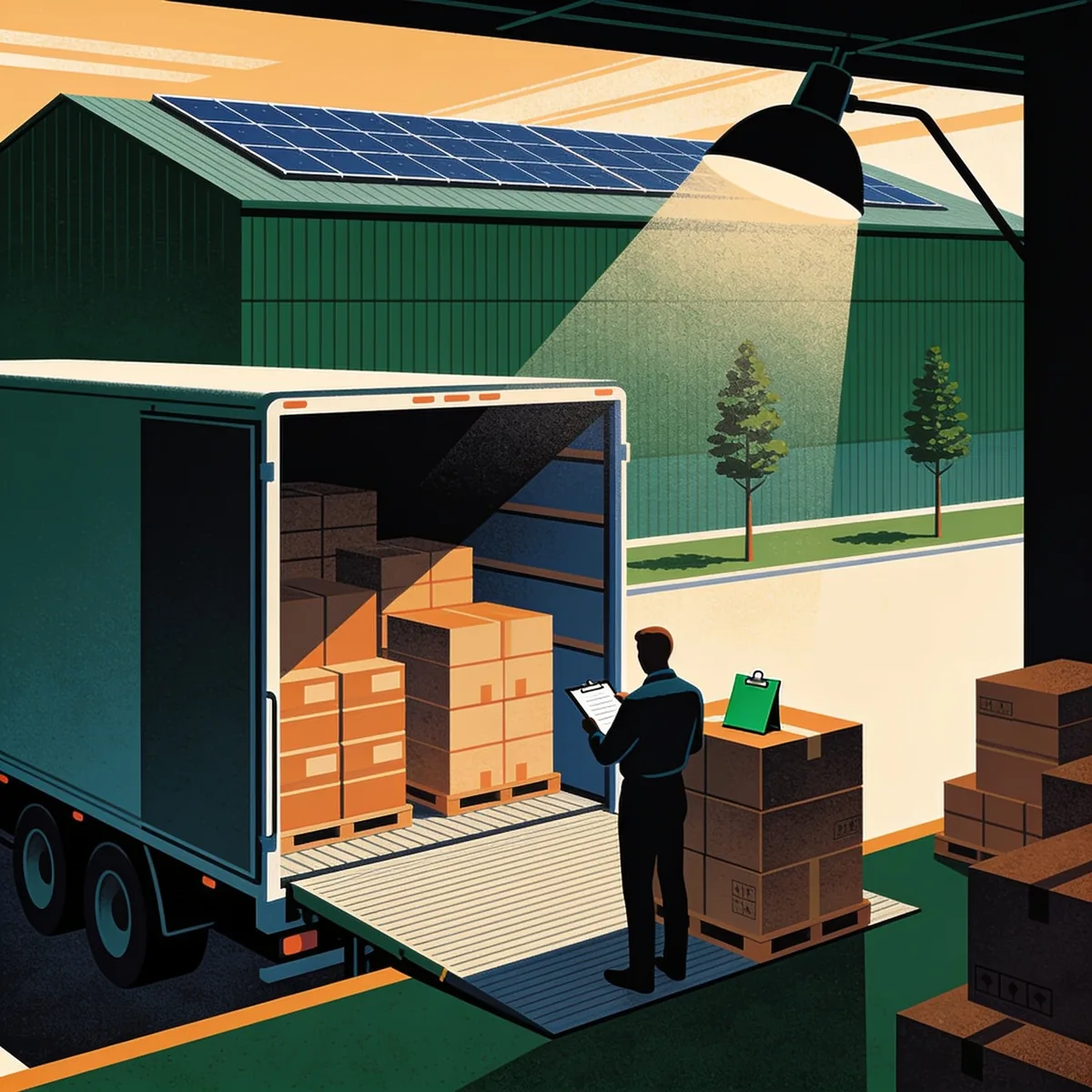
GreenSutra delivers the footprint report to ISO 14067. It states the unit, the boundary, the data used and its sources, the result and the ranking from step 04. Where the customer asks for verification, an independent verifier checks the report, and GreenSutra prepares the file for that check.
The five steps, on one bench
What the footprint covers
The footprint counts the greenhouse gases from every stage of a product's life that falls inside the agreed boundary. Two boundaries are common. Cradle to gate runs from the raw material, the cradle, to the moment the product leaves the factory, the gate. Cradle to grave carries on through delivery, use and disposal.
Example. For a cotton shirt, cradle to gate counts growing the cotton, spinning, dyeing and sewing. Cradle to grave adds the trip to the shop, years of washing and drying at home, and what happens to the shirt at the end.
Two footprints can be compared only when they use the same unit, the same boundary and the same calculation rules, so both are fixed at the start. The figure shows the four records the client's team hands over. The fourth, disposal, is needed only for cradle to grave.
PCF, CBAM emissions and EPD: three different documents
A footprint is often confused with two other documents. The table sets the three side by side. CBAM is the EU's Carbon Border Adjustment Mechanism, which puts a carbon price on certain imported goods.
| Product carbon footprint | CBAM embedded emissions | Environmental Product Declaration | |
|---|---|---|---|
| Rule or standard | ISO 14067 | The EU's CBAM regulation, with its own method | ISO 14025, with EN 15804 in Europe and ISO 21930 internationally for construction products |
| What it covers | One product, to the factory gate or to end of life | The emissions from making certain goods, such as steel and cement, imported into the EU | Several environmental effects across the product's life |
| Who uses it | Customers, in counting the emissions of what they buy | The EU importer registered for CBAM, in its yearly CBAM declaration | Business buyers and tenders, most often for construction products |
Benefits of a product carbon footprint
A footprint gives a business four things.
Customer requests answered
A footprint answers customer questionnaires, tenders and disclosure requests with a figure built to a published standard.
The biggest sources found
The ranking shows which stage or material to work on first.
Ready for what comes next
The same study can be extended to a full life cycle assessment or an Environmental Product Declaration.
Traceable numbers
Every figure links back to its source document and to the factor used.
Why GreenSutra for product carbon footprinting
GreenSutra has worked as a sustainability practice from Mumbai since 2016, for organisations in India and abroad.
ISO 14067 method
The footprint follows the standard, with the unit, boundary and data rules stated in the report.
Reports a customer can follow
The report states the unit, the boundary, the data and its sources in plain terms, so the customer's team can read it without a specialist.
Run on shastra.earth
GreenSutra runs the work on its own platform, which keeps the trail behind every figure and records the version of each factor used.
Consultant, never the verifier
GreenSutra prepares the footprint. Verification stays with an independent body.
FAQs about product carbon footprints
Q·01What data does a product carbon footprint need?
Q·02How long does a product carbon footprint take?
Q·03What does a product carbon footprint cost?
Q·04Is verification of a product carbon footprint required?
Q·05Is a product carbon footprint the same as CBAM reporting?
Q·06How is a PCF different from an LCA?
Primary sources
Solution deck · 25 slides · PDF by email
Product Carbon Footprint and LCA
A 25 slide deck on measuring one product across its whole life. It covers what a product footprint is and what it is not, the four ISO phases, the functional unit and the system boundary. It also shows how greenhouse gases become one figure per unit, and the three deliverables one modelled life cycle produces.
- Six things a footprint can be drawn around, and why the product one travels with the goods
- Goal and scope, inventory, impact assessment, interpretation, to ISO 14040 and ISO 14044
- The functional unit, the five boundary approaches, and primary data against background datasets
- Which standard governs which output: ISO 14067, ISO 14025, EN 15804 and ISO 21930
- The route to a registered, third party verified Environmental Product Declaration
Get the deck by emailThe PDF is attached to a confirmation email. There is no public download link.
Request a product carbon footprint
The scoping call is the first step, and it ends with a written plan.
Pick the service and a slot; a practitioner takes the call.
Maintained by GreenSutra · Last reviewed November 2026