

Published 17 November 2026 · 10 min read · Reviewed by Team GreenSutra
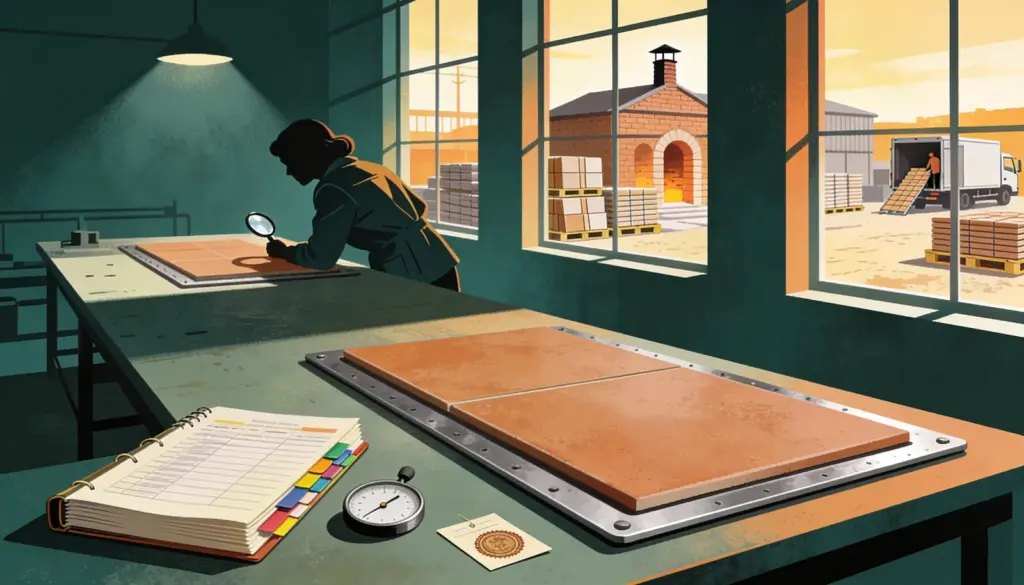
One study of a product can produce all three: an LCA report, a product carbon footprint and an Environmental Product Declaration.
A life cycle assessment (LCA) is a study of everything a product does to the environment, from the raw material to the bin. A product carbon footprint (PCF) is one result of that kind of study: the product’s effect on the climate, as a single number. An Environmental Product Declaration (EPD) is a short public summary of an LCA, checked before it is published by an independent expert who took no part in the study.
PCF vs LCA vs EPD at a glance
| PCF (product carbon footprint) | LCA (life cycle assessment) | EPD (Environmental Product Declaration) | |
|---|---|---|---|
| What it is | One result of a product study: its effect on the climate | The full study of a product’s effects on the environment | A short public summary of an LCA, in a set format |
| What it counts | Greenhouse gases only | Many effects: climate, water, land, raw materials and pollution | The effects its product rules list, always more than carbon |
| What the result looks like | One number, in kilograms of carbon dioxide equivalent per unit | A full report, stage by stage | A short document laid out the same way for every product of its kind |
| For a floor tile | The greenhouse gases of one square metre of tile | Every effect of the tile, from the clay pit to demolition | The tile’s checked results, which builders can compare with other tiles |
| Who usually asks for it | A customer adding up the emissions of what it buys | The company’s own design or sustainability team | Builders, architects and tenders |
| Independently checked? | Not required by ISO 14067. A customer may ask for it | Only before a public claim that the product beats a rival’s | Always, before it is published |
| Made public? | Shared with the customer, or published if the company chooses | Kept by the company, or published if it chooses | Always, in the scheme’s open register |
| Standard behind it | ISO 14067 | ISO 14040 and ISO 14044 | ISO 14025. For building products, EN 15804 in Europe and ISO 21930 internationally |
How do a PCF, an LCA and an EPD fit together?
A food label is an easy way to picture how the three fit together. Before the label on a packet of biscuits is printed, someone analyses the recipe for fat, sugar, salt, protein and energy. That analysis is like the LCA. The calorie figure on its own is like the PCF: one line of the analysis, and the one most people look at. The printed label is like the EPD. It shows the same items in the same order on every packet, so two packets can be compared.
Like a label, an EPD cannot exist without the analysis behind it. The one difference is the check. An independent expert checks an EPD before it is published, and a biscuit label is not checked that way.
What is the difference between a life cycle assessment and a carbon footprint?
A life cycle assessment, also called a life cycle analysis, counts many kinds of environmental effect. A carbon footprint counts one, climate change.
Take a ceramic floor tile. The assessment follows it from the clay pit to the kiln, the lorry, the floor and, years later, the demolition waste. Along the way it counts the greenhouse gases released, the water used, the raw materials consumed and the pollution to air and water. The footprint follows the same journey and keeps one result: the greenhouse gases, added up per square metre of tile.
The wider view matters when a change cuts carbon and raises something else. A lower carbon fuel can need more land or water to grow, and only the full study shows it.
What is a product carbon footprint (PCF)?
A product carbon footprint is the total of the greenhouse gases a product causes, stated per unit of that product: per tile, per kilogram or per square metre. Some gases warm the planet more than others. Each one is converted to the amount of carbon dioxide that would cause the same warming, called carbon dioxide equivalent, and then they are added up. Gases taken out of the air count as well, such as the carbon dioxide absorbed by the trees that became a wooden chair.
A footprint made for a customer often stops at the factory gate. This is called cradle to gate: from the raw material, the cradle, to the moment the product leaves the factory, the gate. A footprint that carries on through use and disposal is cradle to grave. Carbon offsets, the credits a company buys to cancel out emissions, are never subtracted. A product’s footprint is also different from a company’s footprint, which covers the whole business.
What is a life cycle assessment (LCA)?
ISO 14040 and ISO 14044, the international standards for a life cycle assessment, set four steps. First, decide what is studied and why. Second, list everything that goes into the product and everything that comes out, such as fuel in and smoke out. Third, turn that list into effects on the environment. Fourth, read the results and check what they mean. The LCA guide walks through each step.
The result is a report for the people who design, buy or regulate the product. It shows which stage of the product’s life does the most harm, which is where a design change pays back most. Sometimes a company wants to tell the public that its product is better for the environment than a rival’s. ISO 14044 then requires a panel of at least three reviewers, led by an independent expert, to check the study first. This check is called a critical review.
What is an Environmental Product Declaration (EPD)?
An Environmental Product Declaration is a short document that reports a product’s environmental results in a set format. Three things set it apart from a company’s own report.
- A rulebook for each kind of product, called product category rules, fixes what is counted and how. Every tile manufacturer that uses the same rulebook counts the same way.
- An independent verifier, someone who took no part in the study, checks the study and the declaration before it is published.
- The organisation that runs the scheme, called a programme operator, publishes every declaration in an open register, where anyone can look it up.
Two declarations can be compared only when they follow the same rulebook, for the same kind of product and the same unit. That shared method is why builders ask for EPDs, and why a tender, the formal request for bids on a building project, often does. A separate answer explains how an EPD is verified and published.
When is none of the three the right document?
Two requests from the EU are often mistaken for a request for a PCF or an EPD.
The first is CBAM, the EU’s carbon border mechanism. It puts a carbon price on imports of iron and steel, aluminium, cement, fertilisers, electricity and hydrogen. CBAM has its own way of calculating emissions, so none of the three documents answers a CBAM request on its own.
The second applies to building products sold in the EU. The revised Construction Products Regulation of 2024 is bringing in, over several years, a duty to state environmental results in the declaration of performance and conformity. That is the legal document a manufacturer signs for a building product, and it is not an EPD. No single EU rule requires an LCA or an EPD for every product.
One product, three documents
Example. A tile manufacturer studies one square metre of its floor tile, from clay to the end of the tile’s life. That study is the LCA, and its report shows every effect and the stage that causes it. The climate result of the same study, per square metre, is the product carbon footprint. The manufacturer sends the part of it up to the factory gate to a retailer that is adding up supplier emissions. For a public building tender, a verifier checks the study and a draft declaration against the rules for construction products, and the programme operator then publishes the EPD. One study, done once, answers three requests.
PCF, LCA and EPD: short answers
What do PCF, LCA and EPD stand for?
Product carbon footprint, life cycle assessment and Environmental Product Declaration.
Is a PCF part of an LCA?
In method, yes. A PCF follows the same four steps and keeps one result where an LCA keeps several. A company can order a PCF alone. Where a full LCA already exists, its climate result can serve as the PCF, as long as the study followed the footprint rules the customer asks for.
Can a PCF be turned into an EPD?
Not alone. An EPD needs a full LCA with every result the product group’s rules ask for, and an independent check. If the PCF came from a full LCA, that study can serve the EPD.
Does a PCF need to be checked by a third party?
The carbon footprint standard, ISO 14067, does not require it. The GHG Protocol’s product standard does require assurance, a check of the result. People inside the company who did not prepare the footprint can do it, or an outside body can. A customer may also ask for an independent check.
How long is an EPD valid?
Usually five years. The rules of the scheme and of the product group set the period and its start date. Renewal needs a fresh check by a verifier.
Product Carbon Footprint and LCA deck
Solution deck · 25 slides · PDF by email
A 25 slide deck on measuring one product across its whole life. It covers what a product footprint is and what it is not, the four ISO phases, the functional unit and the system boundary. It also shows how greenhouse gases become one figure per unit, and the three deliverables one modelled life cycle produces.
- Six things a footprint can be drawn around, and why the product one travels with the goods
- Goal and scope, inventory, impact assessment, interpretation, to ISO 14040 and ISO 14044
- The functional unit, the five boundary approaches, and primary data against background datasets
- Which standard governs which output: ISO 14067, ISO 14025, EN 15804 and ISO 21930
- The route to a registered, third party verified Environmental Product Declaration
 Get the deck by email
The PDF is attached to a confirmation email. There is no public download link.
GreenSutra’s product carbon footprint and life cycle assessment service pages set out how the work runs.
Primary sources
- ISO 14040 and ISO 14044, life cycle assessment
- ISO 14067, carbon footprint of products
- ISO 14025, environmental product declarations
- EN 15804 and ISO 21930, core rules for construction product declarations
- GHG Protocol Product Life Cycle Accounting and Reporting Standard
- Regulation (EU) 2024/3110, the Construction Products Regulation
- Regulation (EU) 2023/956, the Carbon Border Adjustment Mechanism
Reviewed by Team GreenSutra on 16 November 2026.