


The BRSR is submitted in PDF and in XBRL alongside the annual report. The PDF carries the human-readable disclosure and the XBRL filing makes the same data machine-readable for the stock exchanges and for downstream users of the information. Both are lodged for the same reporting year.
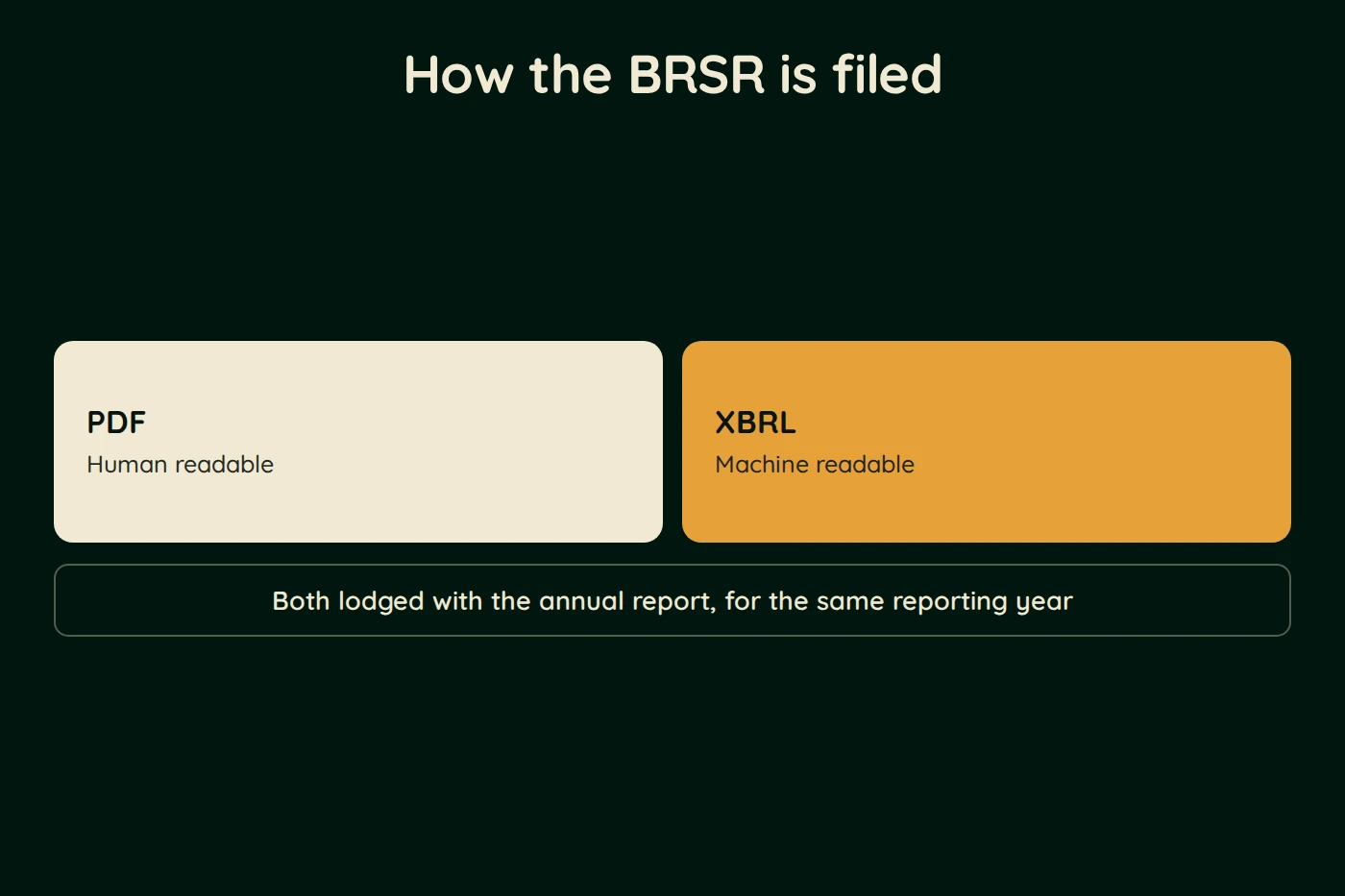
Filing the Business Responsibility and Sustainability Report is not a single act. The same disclosure is lodged twice, in two formats that serve different readers.
The two formats
- PDF. The narrative and tabular report as it appears in, or alongside, the annual report. This is what a human reader opens.
- XBRL. A structured, tagged version of the same disclosure. Extensible Business Reporting Language attaches a defined tag to each reported value, so software can read the filing without interpreting layout.
Why the XBRL filing changes the preparation work
A PDF tolerates ambiguity. A tagged filing does not. Every reported value has to map to a defined element, which forces decisions that a narrative report can leave implicit: which entities are inside the boundary, which units apply, and how a figure reconciles to the audited financial statements. Data that was assembled in spreadsheets and lightly reviewed tends to surface its inconsistencies at the tagging stage.
Why it matters more once assurance applies
Structured data is also what makes an entity disclosure comparable across a whole market. Once an entity enters the BRSR Core assurance tiers, its tagged figures are exposed to systematic comparison by investors, lenders and rating providers. Internal consistency between the PDF, the XBRL filing and the financial statements therefore becomes a reporting control rather than a formatting nicety.
Sources: SEBI BRSR framework circular
The BRSR guide covers the format and the filing route. BRSR reporting services covers data systems, XBRL readiness and assurance preparation.