


The EU ESPR working plan names six priority product groups to regulate first: iron and steel, textiles and apparel, tyres, aluminium, furniture, and mattresses. Two horizontal measures (repairability scoring and recycled content for electrical equipment) sit alongside them, with delegated acts phased from 2026 through 2029.
ESPR is Regulation (EU) 2024/1781, in force since 18 July 2024, extending ecodesign rules from energy-related products to nearly all physical goods. The first ESPR and Energy Labelling Working Plan 2025-2030 (COM(2025) 187 final, adopted 16 April 2025) sets which products the delegated acts target first. The working plan is a planning document; requirements become binding only when each product-specific delegated act is adopted, usually after an 18-month transition.
The six priority product groups
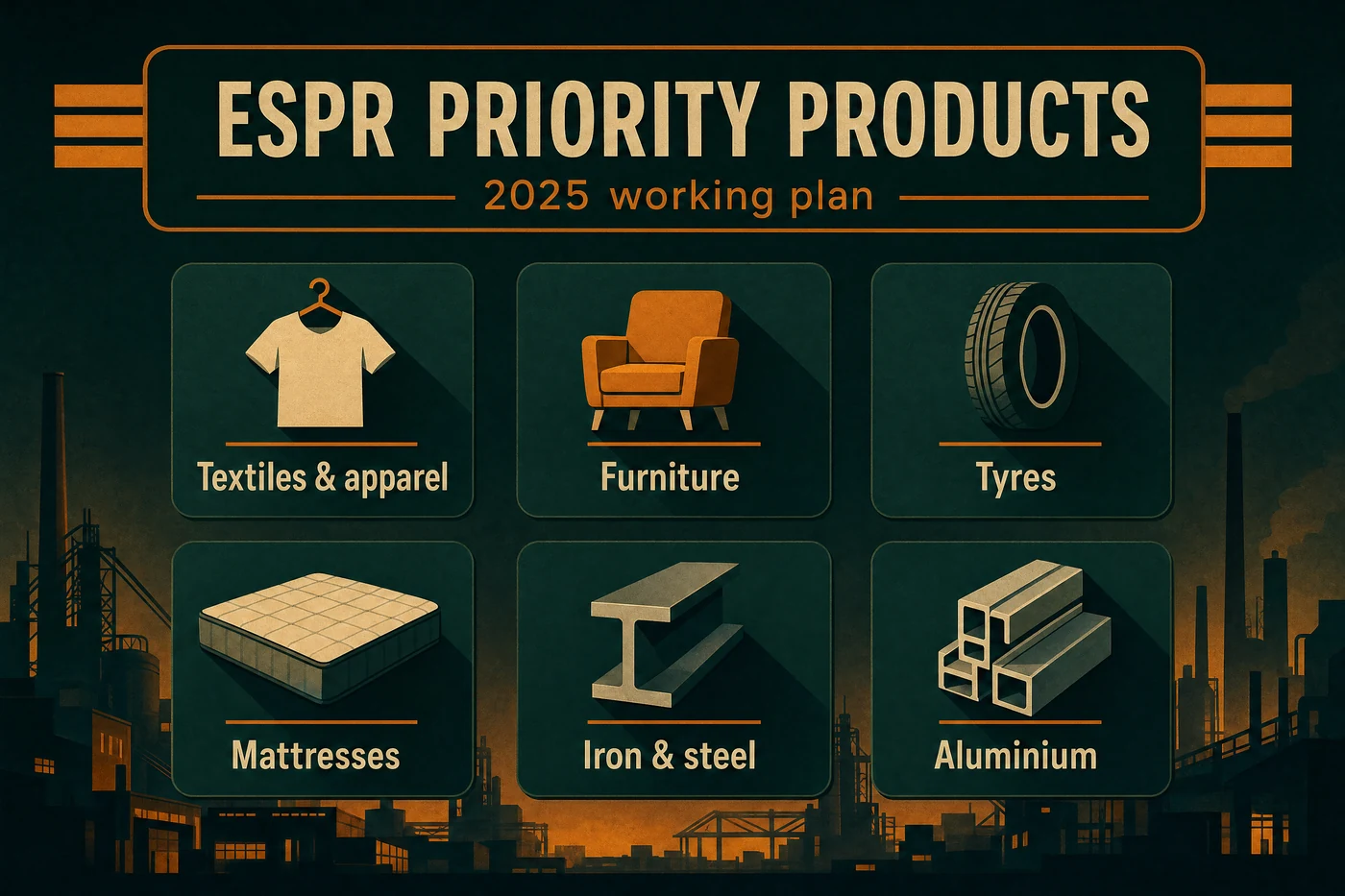
| Product group | Type | Indicative act |
|---|---|---|
| Iron and steel | Intermediate | 2026 (first in line) |
| Textiles and apparel | Final | 2027 |
| Tyres | Final | 2027 |
| Aluminium | Intermediate | 2027 |
| Furniture | Final | 2028 |
| Mattresses | Final | 2029 |
Footwear is excluded from the textiles group pending a separate study, yet the unsold-goods ban still covers it. Alongside the six new groups, the plan carries forward around 16 energy-related products, such as dishwashers and smartphones, under ESPR and energy labelling.
Requirement types and the live ban
Delegated acts under Article 5 can impose durability, reparability, recycled content, recyclability, and a Digital Product Passport. Two horizontal measures cross product lines: a repair score (indicatively 2027) and recycled content plus recyclability for electrical and electronic equipment (2029). Under ESPR Article 2(28), the Digital Product Passport is the set of data about a product. A data carrier, such as a QR code, is only the link a reader scans to reach that data. Passports arrive group by group, with no single EU-wide start date.
One ESPR duty is already live: from 19 July 2026 large companies cannot destroy unsold apparel, clothing accessories and footwear; medium companies follow in 2030, and micro and small firms stay exempt. Companies mapping these passport duties can review GreenSutra’s digital product passport solutions or start with the DPP guide.
Sources: ESPR Working Plan 2025-2030 (EUR-Lex) · ESPR Regulation (EU) 2024/1781 (EUR-Lex) · Ban on destroying unsold clothes and shoes (European Commission)