


Batteries come first. From 18 February 2027, the EU Batteries Regulation requires a passport for electric vehicle, light means of transport and industrial batteries above 2 kWh. ESPR product groups follow, led by iron and steel, and each group’s passport applies at least 18 months after its delegated act enters into force. Detergents, toys, and cars and vans have fixed dates from 2029, and construction products follow 18 months after their own delegated act.
Which groups the ESPR names first
The Digital Product Passport is established by the Ecodesign for Sustainable Products Regulation (ESPR), Regulation (EU) 2024/1781, in force since 18 July 2024. The framework itself sets no product-specific obligation; the data, carrier, access rights and dates are fixed group by group through delegated acts. Which DPP product groups come first is set by the first ESPR and Energy Labelling Working Plan 2025 to 2030, Communication COM(2025) 187 final, adopted 16 April 2025. Digital Product Passport readiness work begins by placing a product against that plan. The Working Plan names six priority groups plus two horizontal measures:
- Textiles, with a focus on apparel (final product)
- Furniture (final product)
- Tyres (final product)
- Mattresses (final product)
- Iron and steel (intermediate product)
- Aluminium (intermediate product)
- Horizontal measures on repairability and on the recyclability and recycled content of electrical and electronic equipment
Indicative years, not legal deadlines
The adoption years attached to each group are indicative planning years, not binding deadlines. As of September 2026, no ESPR delegated act for a product group has been adopted, so no ESPR group carries a binding passport duty yet. Under ESPR Article 4(4), each act applies no earlier than 18 months after it enters into force, except in justified cases. For example, a steel act adopted in December 2026 would enter into force around March 2027, after the two-month objection period and publication. It would then apply from around September 2028 at the earliest.
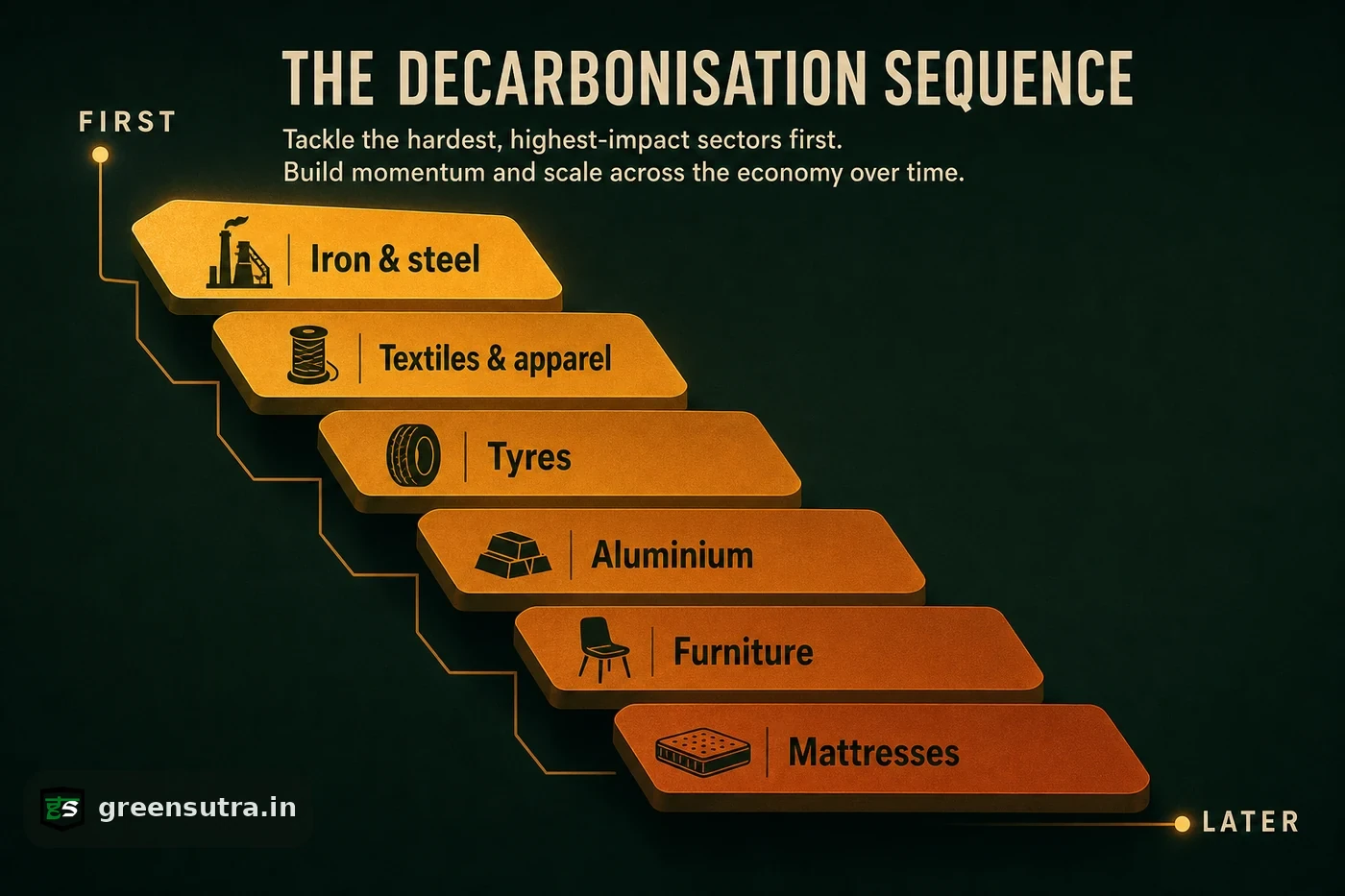
| Product group | Indicative year |
|---|---|
| Iron and steel | 2026 |
| Textiles, tyres, aluminium | 2027 |
| Furniture | 2028 |
| Mattresses | 2029 |
| Mid-term review | 2028 |
Across GreenSutra’s DPP work, exporters most often assume one fixed start date applies to every product group, when the timing is staggered and delegated-act dependent.
A separate, dated battery rule
Batteries have the first firm Digital Product Passport date. Under the EU Batteries Regulation, Regulation (EU) 2023/1542, Article 77(1), from 18 February 2027 each light means of transport battery, each industrial battery above 2 kWh and each electric vehicle battery must carry a battery passport; portable and consumer batteries below those thresholds are not covered. Three more laws set fixed dates. Detergents need a passport from 23 September 2029 under Regulation (EU) 2026/405, and toys from 1 August 2030 under Regulation (EU) 2025/2509. Article 36 of the Detergents Regulation lets products that meet only the old rules stay on sale. Those placed on the market before 23 September 2029 can stay indefinitely, and those placed in the following year until 23 September 2030. Cars and vans need a Digital Circularity Vehicle Passport from 1 September 2032 under Regulation (EU) 2026/1738. Construction products follow 18 months after a delegated act under Regulation (EU) 2024/3110 that the Commission has not yet adopted. Article 95(9) of that Regulation adds a second gate. The duty reaches a product family only one year after an implementing act covering that family is adopted under Article 5(8) or 6(1). The DPP guide sets out how these dates map to an export-readiness plan. Once a delegated act covers a product group, its duties sit with the economic operators placing the product on the EU market, such as the manufacturer or importer.
Sources: Regulation (EU) 2024/1781 (ESPR) · Regulation (EU) 2023/1542 (EU Batteries) · COM(2025) 187 final Working Plan