


A food product carbon footprint quantifies the greenhouse gas emissions of one unit of product across its life cycle to ISO 14067:2018, capturing agricultural nitrous oxide, methane and land-use change, treating biogenic carbon by the chosen standard, and reporting the result against a defined functional or declared unit.
The standards behind a food footprint
A food product carbon footprint follows ISO 14067:2018, the standard for quantifying the carbon footprint of products, which sits on the life cycle assessment framework of ISO 14040:2006 and ISO 14044:2006. The calculation runs in four steps: define goal and scope, fixing the functional or declared unit and the system boundary; compile the life cycle inventory of activity data and emissions; convert that inventory to carbon dioxide equivalent using global warming potential; and interpret the result. GreenSutra provides product footprinting under this framework as a consultant, with independent verification left to accredited third parties.
Where food emissions concentrate
Unlike a factory footprint, a food footprint is dominated by on-farm sources rather than fossil combustion. The main contributors are:
- nitrous oxide from soils and nitrogen fertiliser;
- methane from enteric fermentation and manure management;
- energy used in cultivation and processing.
Direct land-use change is included and reported transparently; PAS 2050:2011 amortises land-use-change emissions over a 20-year period. Biogenic carbon is where the standards diverge:
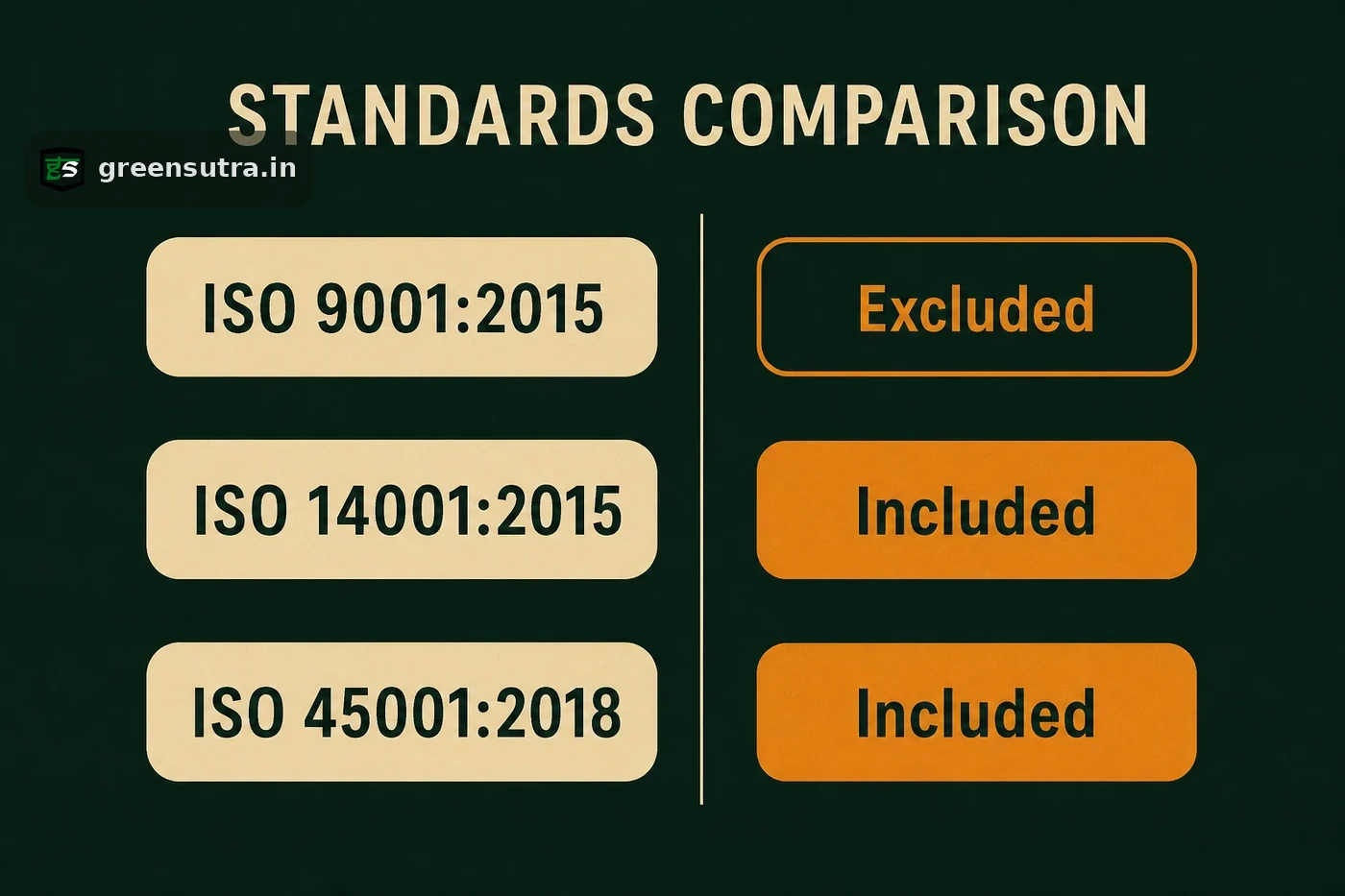
| Standard | Biogenic carbon in food |
|---|---|
| PAS 2050:2011 | Excluded for food and feed (short-cycle uptake and release broadly cancel) |
| ISO 14067:2018 | Included and reported separately |
| GHG Protocol Product Standard | Included and reported separately |
For land accounting in more detail, the GHG Protocol Land Sector and Removals Standard v1.0 was published 30 January 2026, covering land-use change, biogenic products and removals for agriculture.
Boundaries and export relevance
A food product carbon footprint is commonly drawn cradle to farm gate or cradle to gate, covering upstream and production stages before distribution, retail and use; a full cradle to grave footprint extends to consumer use and end of life. Offsetting stays outside the footprint under ISO 14067. For exporters, a product level figure aligns with life cycle assessment under ISO 14067 and supplies supplier-specific input to a buyer’s Scope 3 accounting and CBAM embedded emissions reporting, so one exercise serves several requests. The carbon footprint guide sets out the wider inventory method. GreenSutra’s consultants often see food exporters underestimate how much of the result sits on-farm rather than in the factory.
Sources: ISO 14067:2018 · PAS 2050:2011 · GHG Protocol Product Standard