

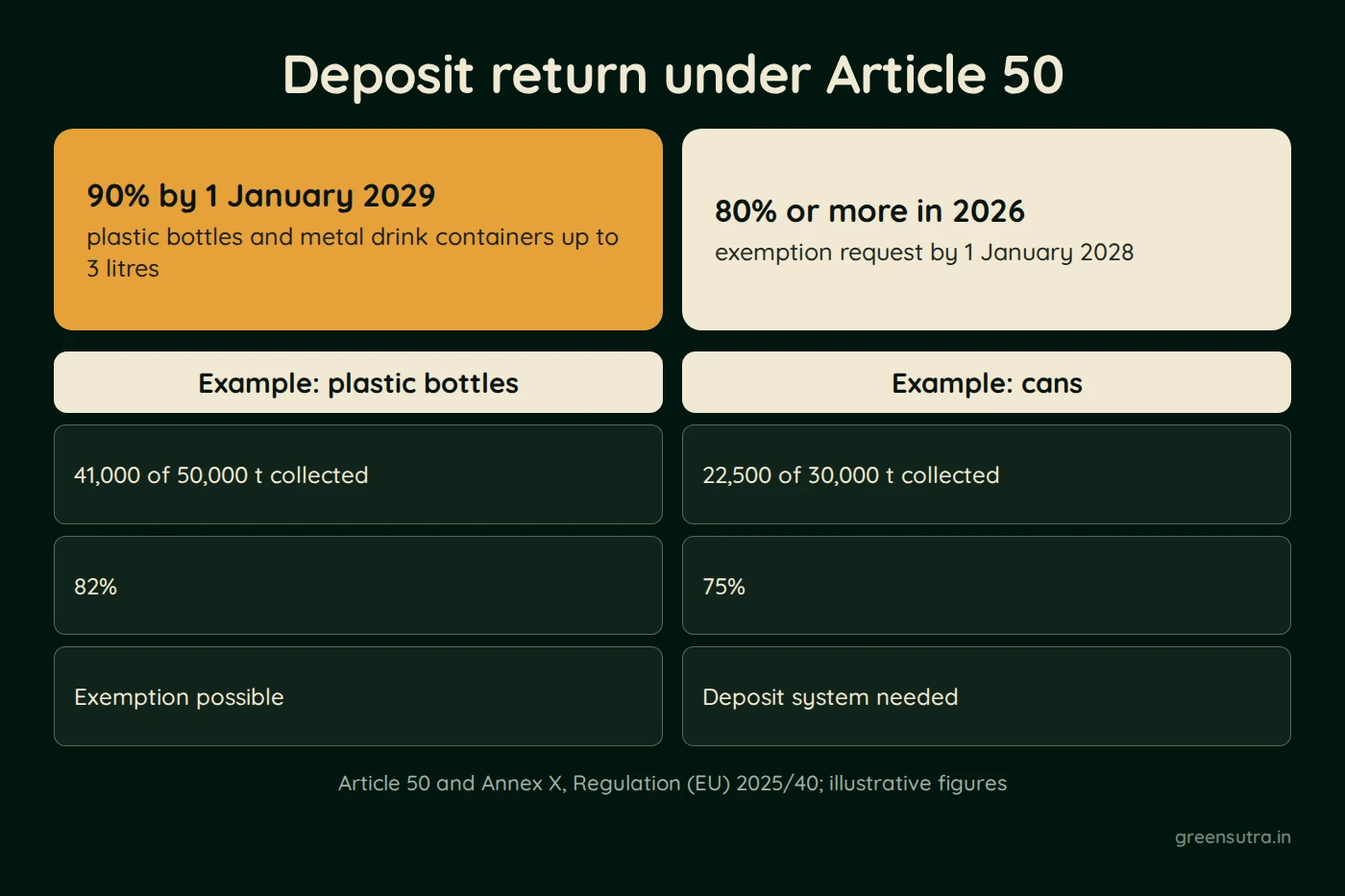
Deposit return systems under the Packaging and Packaging Waste Regulation (PPWR) must cover single-use plastic beverage bottles and metal beverage containers up to three litres by 1 January 2029. The target is at least 90% separate collection by weight, under Article 50. Only a Member State that collected 80% or more in 2026 can seek an exemption.
Which containers are covered?
The 90% target covers single-use plastic beverage bottles and single-use metal beverage containers, each with a capacity of up to three litres. Four groups are exempt from the deposit duty under Article 50(4):
- wine and aromatised wine
- fermented drinks under Combined Nomenclature (CN) code 2206 00
- spirits under CN heading 2208
- milk and milk products
The Commission’s FAQ says those containers still count when the 90% rate is calculated.
Member States may also exempt containers under 0.1 litres where taking part is not technically feasible. They may also spare hotels, restaurants and cafés the deposit where the container is opened, consumed and returned on the premises. Glass bottles and drinks cartons appear only as an “endeavour” in Article 50(8), not a duty.
Who can skip a deposit system?
A Member State can skip the deposit system for a format if two conditions in Article 50(5) hold. Its separate collection rate for that format in 2026 was “80 % or more”, and it asked the Commission by 1 January 2028 with a plan to reach 90%. The FAQ says each format needs its own exemption. If the rate later stays below 90% for three consecutive years, the exemption ends and a system must follow.
How does the 80% test play out?
Example, with illustrative figures: a Member State places 50,000 tonnes of plastic drink bottles on its market in 2026. It collects 41,000 tonnes separately: 41,000 / 50,000 = 82%, enough to request the exemption. It places 30,000 tonnes of cans and collects 22,500: 22,500 / 30,000 = 75%, so cans need a deposit system by 1 January 2029 even if bottles are exempt.
Minimum rules for the systems
Systems set up under Article 50(2) after the Regulation entered into force must meet the Annex X minimum by 1 January 2029. Older systems that miss 90% have until 1 January 2035. Annex X sets these minimums:
- a single system operator, or coordinated operators, that is non-profit and independent
- equal access and fair conditions for every economic operator that wants to join and sells packaging the system covers
- a minimum deposit level set high enough to reach the collection rates
- return without buying anything, with the deposit refunded
- final distributors taking back the deposit packaging they sell
- clear labels and transparent fees
The PPWR places these duties on Member States. A brand’s membership, fees and the deposit amount come from national law. The Commission’s FAQ says the container must carry the deposit label of each Member State where it is sold, as the labelling answer sets out.
Sources: Regulation (EU) 2025/40 (PPWR), PPWR Frequently Asked Questions, 2nd edition, Commission guidance document, C/2026/3084
For drinks brands, GreenSutra’s PPWR consulting maps which containers fall into each national deposit system. How Article 50 fits the producer duties is in the EU PPWR guide.