


Under the PPWR, all packaging placed on the EU market, apart from the exceptions in Article 6(10) and (11), must be designed for recycling and reach recyclability grade A, B or C. This applies from 1 January 2030, or 24 months after the Commission’s design-for-recycling acts if that is later. Grade C is no longer allowed from 1 January 2038, and a recycled-at-scale test is added from 2035 at the earliest.
What design for recycling means
Article 3 of the PPWR defines design for recycling as packaging design that makes the packaging recyclable with collection, sorting and recycling processes proven in an operational environment. From 1 January 2030, or 24 months after the relevant delegated acts enter into force if later, all packaging on the EU market, apart from the Article 6(10) and (11) exceptions, must be designed for recycling. It must also meet the design-for-recycling criteria the Commission will set under Article 6(4), based on Annex II. GreenSutra’s recyclability work starts by mapping each packaging format to its likely grade, before the Commission sets the assessment criteria, and then plans any redesign. The criteria will cover, for each packaging format:
- collection, sorting and recycling proven at operational scale
- a weighted recyclability score per packaging unit
- and, from 2035, a separate recycled-at-scale rate
Recyclability performance grades A, B and C
Annex II, Table 3, of the PPWR sets the recyclability grades and their thresholds, shown below. The Commission’s delegated acts, due by 1 January 2028, will set the design criteria used to score packaging against them.
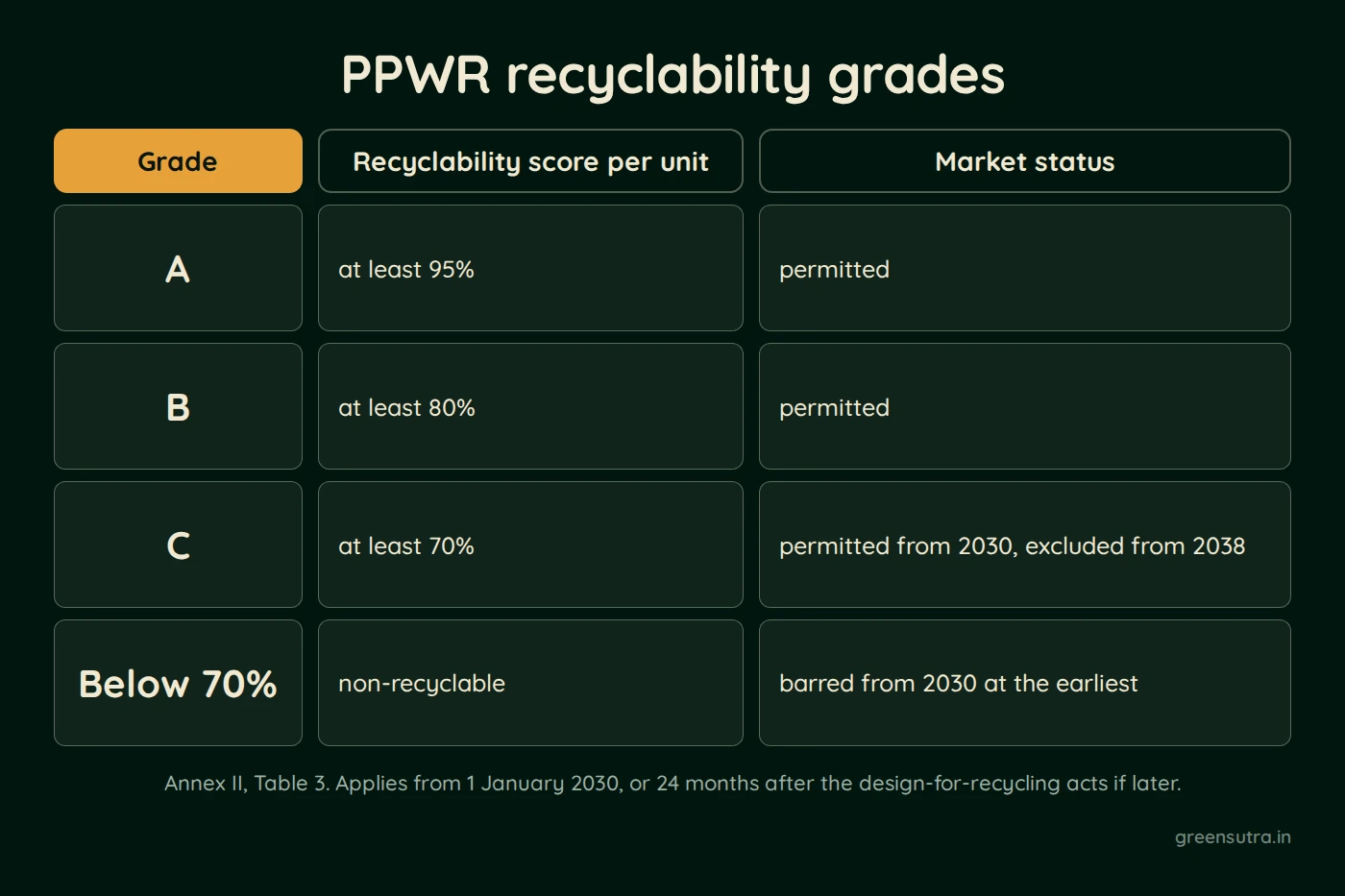
| Grade | Weighted recyclability score per packaging unit | Market status |
|---|---|---|
| A | at least 95 percent | permitted |
| B | at least 80 percent | permitted |
| C | at least 70 percent | permitted from 2030, excluded from 2038 |
| Below 70 percent | non-recyclable | barred from the market from 2030 at the earliest |
From 1 January 2038 only grades A and B may be placed on the market, so grade C packaging needs a redesign plan well before that date.
Recycled at scale from 2035 and recycled content
From 1 January 2035, or five years after the Commission’s method acts if that is later, packaging must also be recycled at scale. Article 3(1), point (39), of the PPWR sets the bar: at least 55 percent of each packaging category recycled each year across the EU, or 30 percent for wood. The implementing acts will set how that is measured. Recycled content follows its own timetable under Article 7, with figures that differ by category from 2030. For example, contact-sensitive PET other than single-use beverage bottles needs 30 percent, other contact-sensitive plastic 10 percent and single-use plastic beverage bottles 30 percent. All remaining plastic packaging needs 35 percent, with higher figures from 2040. Recyclability is settled early, when the material and format are chosen, so the grade should be checked before the label is designed. The EU PPWR guide sets out how these dates connect.
Sources: Regulation (EU) 2025/40 (EUR-Lex) · European Commission, Packaging waste