


The gender diversity attribute covers two measures: gross wages paid to females as a percentage of total wages paid, and complaints on sexual harassment reported. It cross-references to Principle 5 of the essential indicators. Note that it measures wage share, not headcount share.
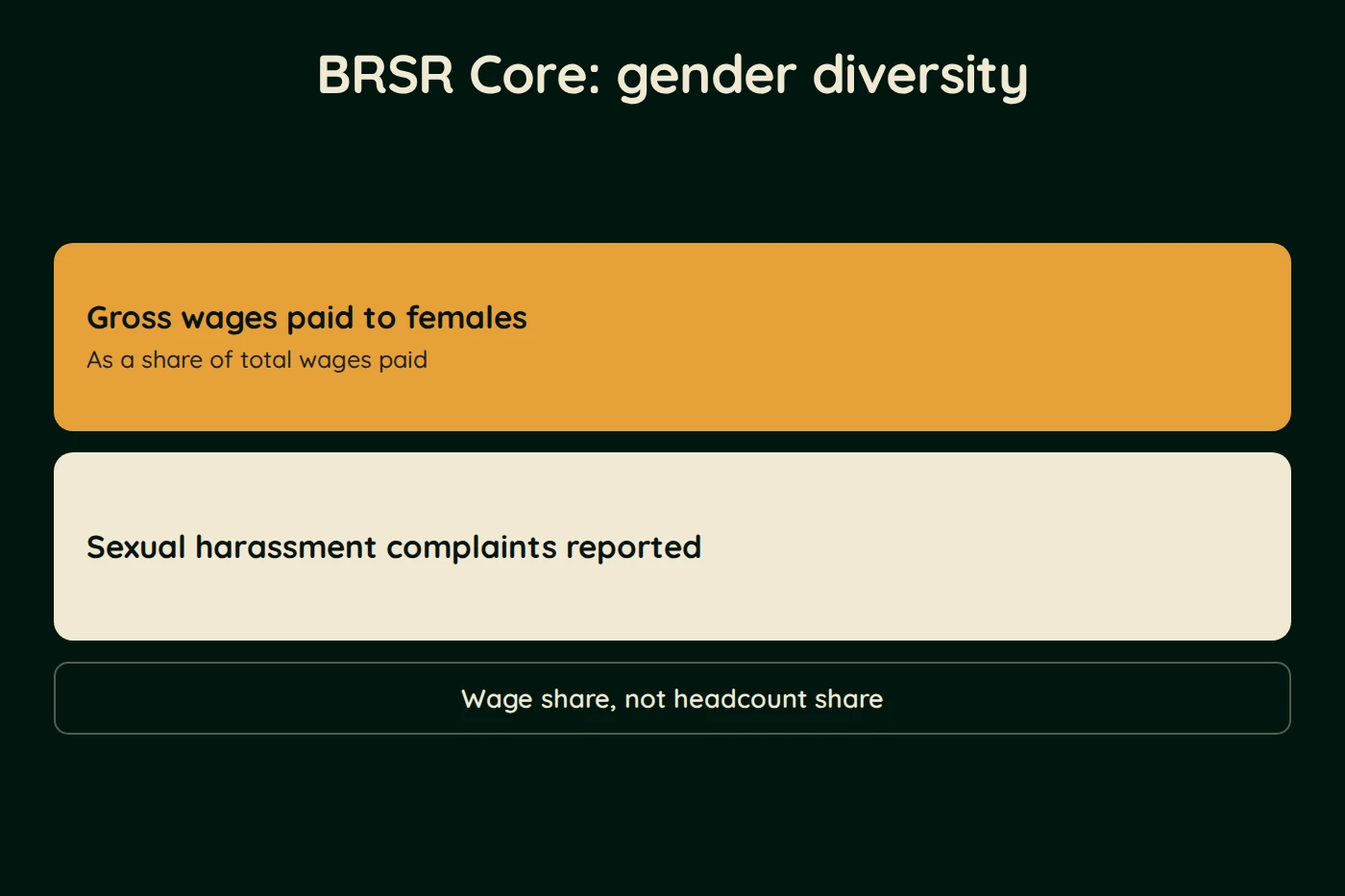
Gender diversity is the sixth of the nine BRSR Core attributes, and its design differs from how diversity is usually reported.
The two measures
- Gross wages paid to females as a percentage of total wages paid
- Complaints on sexual harassment reported, under the Indian prevention of sexual harassment framework
Why wage share, not headcount
Most diversity reporting counts people. This attribute measures money. Gross wages paid to females as a share of total wages captures seniority and pay level as well as representation, because a workforce with many women in junior roles and few in senior ones produces a wage share well below its headcount share. Reporting a headcount percentage in this field answers a different question from the one asked.
What the wage figure has to cover
The measure is gross wages across the reported population, which means the entity needs payroll data disaggregated by gender on a consistent basis, including any contract or temporary population inside the reporting boundary. Payroll systems generally hold this, but they frequently hold it in a structure that does not match the boundary used elsewhere in the report.
The complaints measure
Complaints on sexual harassment reported is a count of complaints raised, and it sits alongside the wider Principle 5 human-rights disclosures in Section C. A low or nil figure is not self-evidently a good outcome, since it can indicate either a safe workplace or an ineffective reporting channel, which is why the surrounding Section C disclosures on grievance mechanisms are read with it.
Sources: SEBI Annexure I, Format of BRSR Core
The BRSR guide covers all nine Core attributes. BRSR reporting services covers social data preparation for listed entities.