

Extended Bulk Waste Generator Responsibility (EBWGR) puts the duty on the site that generates the waste, and only that site’s local body can generate its certificates. Producer EPR under India’s plastic, e-waste and battery rules puts the duty on the producer, and registered processors or recyclers generate the certificates producers buy. EBWGR has applied since 1 April 2026.
Side by side
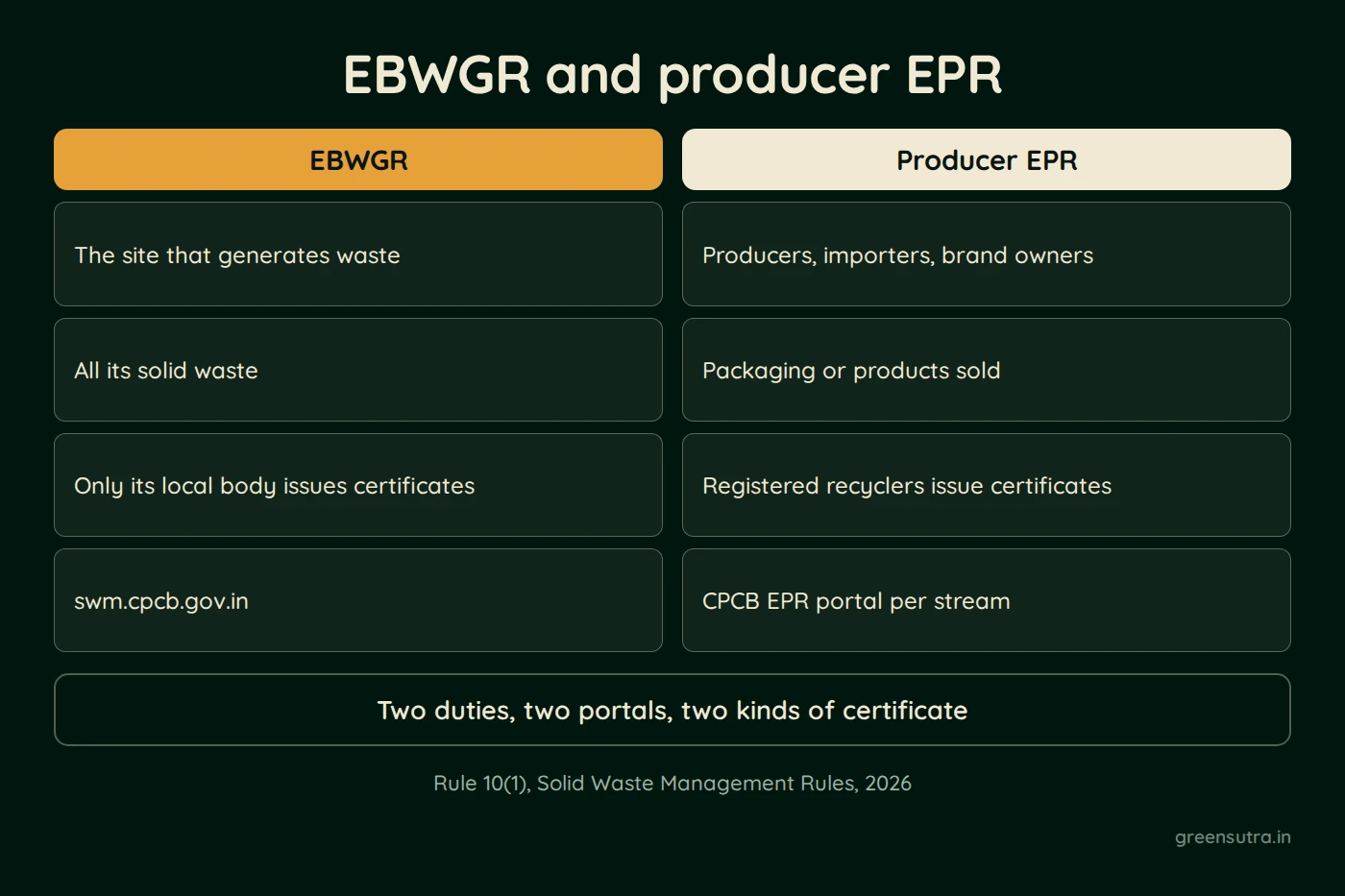
| Point | EBWGR | Producer EPR |
|---|---|---|
| Who is obligated | Bulk waste generators: sites past one of three tests | Producers, importers and brand owners |
| What it covers | All the solid waste the site generates | The packaging or products placed on the market |
| Who generates certificates | Only the site’s own local body, under rule 10(1) | Registered processors and recyclers |
| Where certificates come from | Waste that local body collected and sent to registered facilities | Registered facilities across India |
| Portal | swm.cpcb.gov.in | CPCB’s EPR portal for each stream |
| Rules | Solid Waste Management Rules, 2026 | Plastic Waste Management, E-Waste (Management) and Battery Waste Management Rules |
Why the difference matters
Under EBWGR the local body, or an agency it authorises, collects the waste. Only the local body generates the certificate and charges for it. Each urban local body notifies the cost in its bye-laws, with State approval, based on CPCB norms and the cost of running its waste services. As the rules stand, a site buys certificates only from its own local body.
Rule 38(8) requires CPCB, after Central Government approval, to issue guidelines for authorising agencies to run an electronic platform for trading certificates between obligated entities. No guidelines or platform had been announced by 11 October 2026.
The text also leaves a gap. It does not say how a site meets its certificate duty when it hands dry waste straight to an authorised private recycler. Certificates come only from waste the local body collects.
One company, both duties
Example. A food company’s factory crosses the 100 kg test with its canteen and office waste, so the factory is a bulk waste generator. The same company sells snacks in plastic packets under its own brand, which makes it a brand owner under plastic packaging EPR. The two duties run separately, under different rules, on separate portals and with separate certificates.
Sources: Solid Waste Management Rules, 2026, S.O. 388(E), CPCB centralised portal
The EBWGR side is explained in Bulk Waste Generators in 2026, and the producer side in Plastic Packaging EPR in 2026. GreenSutra’s waste management service covers EBWGR, and its EPR service covers producer obligations.