


A readiness assessment answers two questions for each product: will it need a Digital Product Passport (DPP), and by when? The gap analysis then compares the data the business already holds with what that passport will ask for, and lists what is missing. Done early, it turns a vague future duty into a short list of work.
Why do it before the rules are final?
Because the slowest part is usually the data, and much of it sits with suppliers. The EU sets passport contents one product group at a time, so the exact list for most products is not yet known. What is known is the menu the rules will choose from: materials, recycled content, substances of concern, durability, repair and end-of-life information. That is enough to start collecting.
How is the gap analysis done?
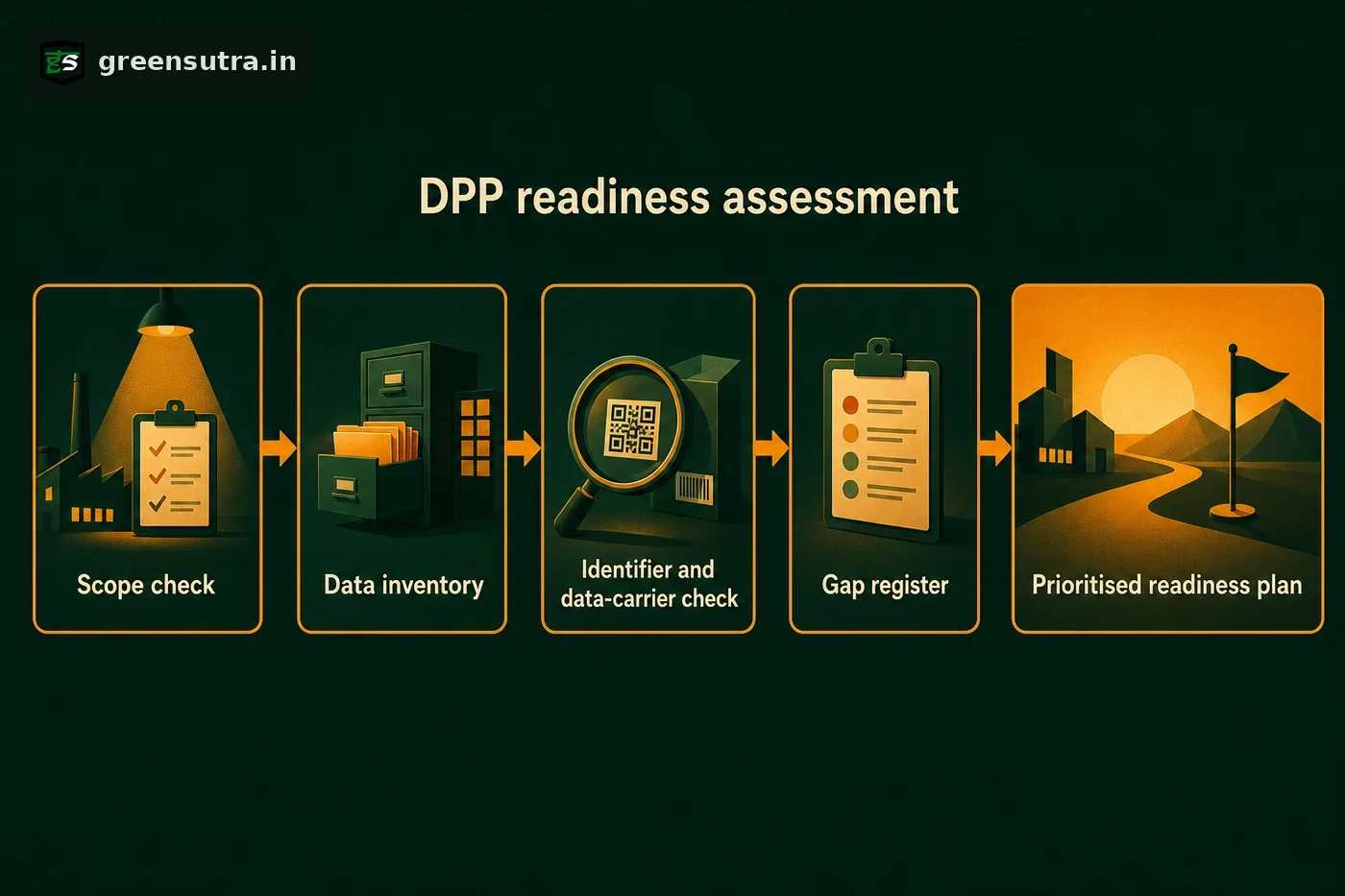
1. Scope: match each product to the passport laws that could reach it. Electric vehicle, light means of transport and industrial batteries above 2 kWh have a fixed date, 18 February 2027. Under the Ecodesign Regulation, iron and steel, textiles and apparel, tyres, aluminium, furniture and mattresses come first. Construction products, detergents, toys and vehicles have laws of their own.
2. Data inventory: list the product data held in-house and with suppliers, and compare it with that menu.
3. Identifiers and carrier: check whether the product, the business and its sites have unique identifiers, and plan a carrier such as a QR code.
4. Gap register: write down each missing item and the work needed to close it, most urgent first.
The result is a readiness plan timed against the Commission’s planned dates for each product group.
What comes after?
Filling the gaps, then keeping the data current once the passport is live. The identifiers also have to be ready for upload to the EU passport registry, which opened in July 2026 but was not yet taking passport registrations in October 2026.
Where this comes from: Ecodesign Regulation (EU) 2024/1781; Battery Regulation (EU) 2023/1542; ESPR Working Plan 2025 to 2030, COM(2025) 187 final.