

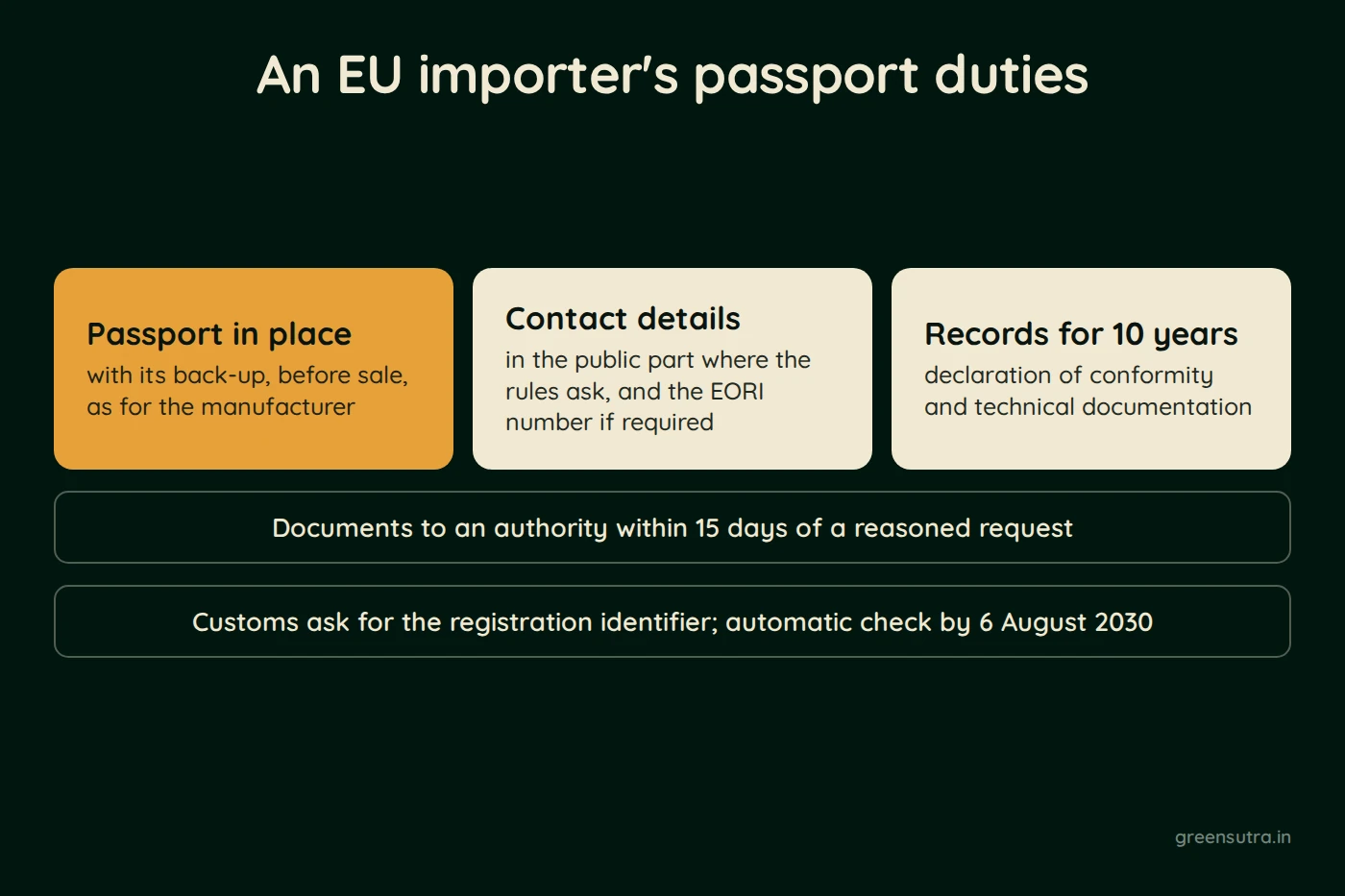
An EU importer must make sure every covered product it brings in has its Digital Product Passport (DPP), with a back-up copy, before it goes on sale. Under the EU’s Ecodesign Regulation, that is the same duty the manufacturer has. The importer does not usually build the passport, but it cannot sell the product without one. As of October 2026, no product group under the regulation needs a passport yet.
Does the importer have to create the passport?
Not as a rule. The manufacturer and the importer must each make sure a passport is available, with a back-up of the latest version held by a DPP service provider. Who actually creates it will be set by each product group’s rules. In practice, that means agreeing with the manufacturer abroad who will set the passport up.
What else falls on the importer?
- Its name and contact details go in the public part of the passport, where the rules ask for them, and its EORI customs number if required.
- It keeps a copy of the EU declaration of conformity for the authorities and makes sure the technical documentation can be produced. Both run for 10 years, unless the rules set another period.
- It hands over documents within 15 days of a reasoned request from an authority.
Who registers an imported product with the EU?
The business placing it on the EU market, which for imported goods is normally the importer. The EU registry is live, but its user guide says passports cannot be registered yet.
What will customs ask for?
The product’s registration identifier, given when the goods are declared for release. Customs match it against the registry; the automatic version of this customs check is due by 6 August 2030.
When does an importer become the manufacturer?
When it sells the product under its own name or brand, or changes a product already on the market in a way that affects its compliance. It then carries the manufacturer’s duties in full.
What about imported batteries?
From 18 February 2027, the battery passport sits with the business placing the battery on the market. For a battery made outside the EU, that is the importer, unless the manufacturer places it on the market itself. It can authorise another business in writing to act for it.
Where this comes from: Ecodesign Regulation (EU) 2024/1781, Articles 2(44), 9(2)(g), 13(4), 15, 27(1)(c), 29 and 34, and Annex III; Battery Regulation (EU) 2023/1542, Articles 3 and 77; registry user guide.